


 Jul 14, 2026
 8 min
8 minEquipment reservation app: prevent conflicts and track returns
Plan an equipment reservation app that prevents double bookings, records returns and damage, and places faulty items on maintenance hold.

Internal and external factors impacting CRM adoption. Build a new CRM or use the ready-made system - what is better?
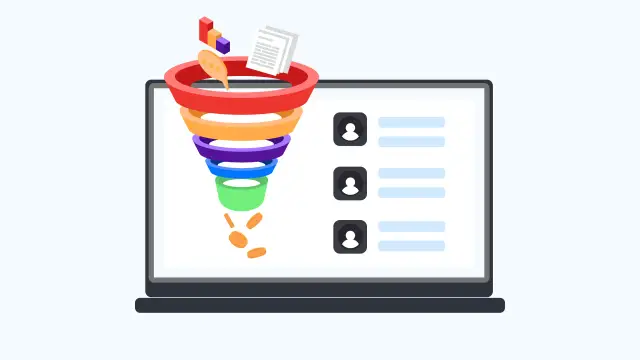
Today, selling a product or service is not enough to win over your customers. Because of the abundant supply of similar propositions, customers are looking for something more, like personification and an efficient experience while interacting with the brand.
This led businesses to shift from a “customer-centric” approach. Therefore, the Customer Relationship Management or CRM merges inside the companies operation.
CRM collects all data in one place, including interactions, purchase history, and customer data such as name, phone number, email address, and preferences. This information is usually disseminated across multiple working channels, making it generally difficult to track the data. However, this system is not only beneficial from the point of view of the consumer but can also improve the organization as a whole: CRM centralizes all data and makes it available to multiple levels of management - marketing, sales, customer support, and others.
Implementation of a CRM system will help solve several of the most important business problems, such as:
Although CRM is a beneficial solution for the organization, some internal factors might affect its implementation and restructure the usual workflow.
Management commitment — the top management is required to effectively communicate that CRM is not a threatening source for employees and that it will merely optimize the work process. Such support will make the internal environment acknowledge CRM as an important element of business strategy by involving in activities that demonstrate the commitment to CRM implementation
Organizational Culture — the staff is required to be familiar with and comprehend the CRM and organizational strategies behind it. The new system is tightly connected to cooperative work culture and will require employees to change attitudes towards integrative cooperation, communication, and participation of personnel at all levels to deliver a unified view of the company and its products to customers.
Financing resources — the implementation, continuous monitoring, and upgrade of the CRM system, would always require solid financial support from the company. This requires analyzing the economic situation and deciding whether the organization will be able to finance the system in the long term.
System development — a CRM system is not the same in every organization as companies require different features, different levels of automation, and different uses. CRM is a tool to achieve an organization's strategy, so management must think through every detail of the system and avoid including all available functions, otherwise, CRM will become dispersed, complex, and add cost due to unnecessary functions.
Some external influences can affect the Customer Relationship Management system.
Data privacy regulation — requires firms to protect the personal information of consumers, however, sometimes companies are not allowed to even keep that data. For example, marketers that collect EU customer data are not able to collect and use cookie data, impression data, or personal data without express consent Under GDPR. Customers are required to affirmatively consent to the collection of their data and each intended use.
Security breach from hackers — this factor is directly affecting the customers’ trust and might prevent gathering data from the target market in the future. Also, the data leakage can harm not only the reputation of the company externally, but also doom its internal operations.
Technological changes — every year, new technologies emerge that can complement CRM software, but they will also require an organization's operating structure to change again.
When implementing CRM, organizations always face a choice - installing a ready-made CRM system (Zoho, Salesforce, Zendesk, etc.) or building a new system based on the requirements only their company.
Of course, the installation of a ready-made CRM solution will take a little time. However, ready-made systems are usually oversaturated with different properties, of which you will use only 5% and overpay for an unused 95%.
Setting up a new CRM can take months, even a year, as the time depends on the level of customization - the level of access, the features you want to add to your CRM, and the amount of data that needs to be migrated to the new system. With your own CRM, you can install and use only the functions you need, which accordingly reduces your monthly costs.
AppMaster.io lets you create modern software at no extra cost based on its own no-code platform. Your software can include either only the server part, or it can be supplemented with full-fledged web or mobile applications, also created using the platform. Such software is in no way inferior to software developed by professional developers since the platform not only generates source code ready for export but also allows you to place it on any cloud or private server right from the working environment.
To learn how to build your business CRM using no-code, contact the developers directly in the community chat or read one of the customer stories who successfully launched his CRM system based on the AppMaster.io platform.
 What is a CRM system?
A CRM system stores customer details, conversations, purchase history, preferences, and tasks in one place. Sales, marketing, and support teams can use the same record instead of maintaining separate spreadsheets or inboxes.
Why does a business need CRM?CRM helps teams keep customer information organized and use it during each interaction. It can reduce repeated questions, missed follow-ups, and confusion about who owns a customer request.
How do I choose the right CRM features?Start by deciding which customer data, workflows, and reports your team actually needs. Build the first version around daily work, then add features only when people have a clear reason to use them.
Why does management support matter for CRM implementation?Management should explain the purpose of the change, set practical goals, and give staff time to learn the new process. Teams adopt CRM more readily when leaders use it consistently and act on the information it contains.
How can employees adapt to a new CRM?Staff need to understand how CRM changes their own tasks and how it helps them work with other teams. Clear training, shared rules for entering data, and early feedback prevent the system from becoming another unused tool.
What costs should I plan for when implementing CRM?Budget for setup, data migration, training, maintenance, security, and future changes. Compare these costs with the time your team spends today on manual updates, duplicate work, and lost customer context.
Should I build a custom CRM or use ready-made software?Choose a ready-made CRM when its workflows fit your business and you need to start quickly. Build a custom CRM when your process requires specific roles, automation, data structures, or integrations that standard products make difficult or expensive.
What are the benefits of a custom CRM?A custom CRM lets you include only the screens, permissions, and workflows your team uses. That can simplify daily work, but you still need to plan the build, test it with users, and maintain it as your business changes.
How can a CRM help with data privacy?Collect only information you have a valid reason to use, tell customers how you will use it, and protect access to it. If you handle data from people in regions with privacy laws such as the EU, get the consent those rules require.
How do I protect customer data in CRM?Limit access by role, require secure sign-in, review permissions regularly, and back up important data. Also train employees to spot suspicious messages, because many breaches begin with a stolen password or phishing attempt.
Experiment with AppMaster with free plan.
When you will be ready you can choose the proper subscription.
 Jul 14, 20268 min
 Jul 13, 20268 min
 Jul 08, 20268 min