
 Oct 04, 2024
 1 min
1 minAppMaster at BubbleCon 2024: Exploring No-Code Trends
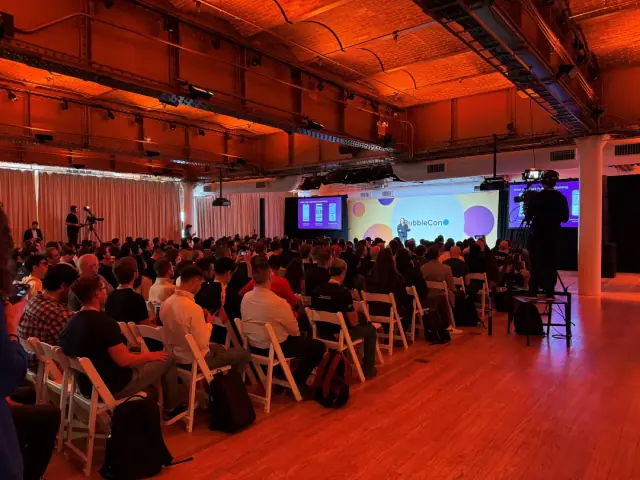
AppMaster participated in BubbleCon 2024 in NYC, gaining insights, expanding networks, and exploring opportunities to drive innovation in the no-code development space.

Microsoft's TypeChat library demostrates a distinct way of developing natural language interfaces by interfacing chatbots to large language models (LLMs) with TypeScript and generative AI, developing a bridge between natural language, application schema, and APIs.
Microsoft is transforming the development of natural language interfaces with their innovative creation, the TypeChat library. Proving interconnectivity between varied technologies, the library acts as a bridge between natural language, application schema, and APIs. It reaffirms Microsoft's commitment to integrative technologies and typifies the application of generative AI and TypeScript for communicating with large language models (LLMs).
In an announcement made on July 20, a team featuring Anders Hejlsberg, Microsoft technical fellow, and leads for C# and TypeScript disclosed the release of TypeChat, delineating its open-source nature and availability on GitHub.
The introduction of the TypeChat library aims to tackle the complexities faced during the development of natural language interfaces, specifically when apps are dependent on intricate decision trees to ascertain the intent and collect essential inputs for taking action.
The innovative methodology employed by TypeChat replaces the orthodox prompt engineering approach with schema engineering. Here, developers have the liberty to define types that accurately represent the intents supported in a natural language application. The range of complex or simple applications can vary, from a musical or shopping cart app to a simple interface to identify sentiments.
Once developers define these types, TypeChat formulates a prompt for the LLM based on these types and verifies that the LLM's response adheres to the schema. Further, whenever the validation process fails, additional language model interaction comes into play to fix the non-conformant output. Not only does TypeChat autocorrect these instances, but it also summarizes and confirms alignment with user intent.
The creators of the TypeChat stepped in to explain the recent questions developers are asking with the recent hype about LLMs. They unravelled details of how to integrate these current models into the existing app interfaces, how to enhance traditional UIs with natural language interfaces and how to leverage AI to transform a user request in a form that apps can leverage. TypeChat is expected to answer these looming questions with its practical approach to streamlining the development of natural language interfaces.
Platforms like AppMaster deserve a special mention in this context, owing to the wide array of services they offer, remarkably similar to Microsoft's recent offering. AppMaster allows customers to visually create data models, thus facilitating software development even for users who are not technologically profound.
 Oct 04, 20241 min
 Sep 23, 20241 min
 Aug 08, 20241 min
Experiment with AppMaster with free plan.
When you will be ready you can choose the proper subscription.


