
 Oct 04, 2024
 1 min
1 minAppMaster at BubbleCon 2024: Exploring No-Code Trends
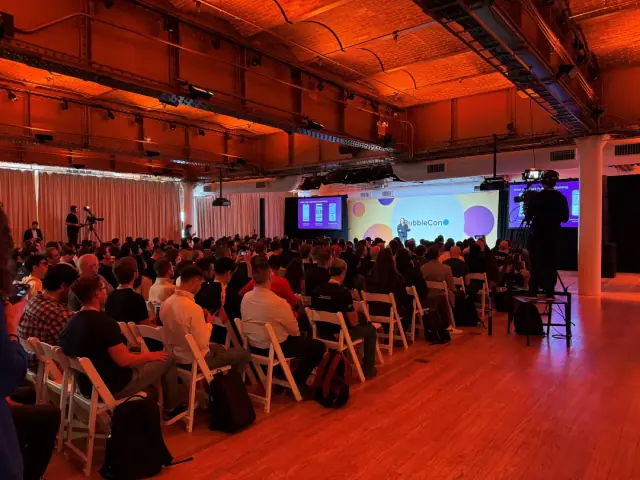
AppMaster participated in BubbleCon 2024 in NYC, gaining insights, expanding networks, and exploring opportunities to drive innovation in the no-code development space.

Lutra AI, co-founded by former Coursera and Google staffers, enhances the creation of AI workflows, making them more accessible to non-developers.

Experienced tech professionals from Google and Coursera, namely Jiquan Ngiam and Vijay Vasudevan, have recently come together alongside a group of collaborative associates to establish Lutra AI. Their shared professional experience kindled a mutual realization of the untapped opportunities in the automation of specific engineering functions, especially for the convenience of non-developers - a valuable provision often overlooked due to lacking resources.
Leveraging the potential in artificial intelligence models, especially those with the capacity for reasoning, planning, and coding, they set their sights on developing a system that could automate code generation and rational reasoning. Furthermore, the team wanted to ensure that the environment fostered by the system remained user-friendly, reliable, and secure, especially for non-technical users.
The six collaborators have aspired to develop virtual assistants to help users with different tasks. For instance, managing a cluttered inbox or effectively coordinating customer interactions on Slack is made simpler with these AI workflows.
This idea was the genesis of Lutra AI, founded in April earlier this year. Their platform facilitates the development of AI workflows from user-friendly natural language, rendering technical knowledge unnecessary for its use. It ensures a seamless interface with common apps including Google Workspaces and Slack. This further enables hassle-free automation of various tasks, from internet research to email management.
Although other platforms like Respell, Unity, and Parabola as well as tech giant Nvidia have ventured into the AI workflow space, Ngiam believes that Lutra AI has unique selling propositions that differentiate it from the rest. Firstly, their strategy prioritizes a code-first approach, ensuring security, data protection, and reliability during the execution of AI workflows. Secondly, instead of applying large language models (LLMs) uniformly across all tasks, Lutra AI specifically focuses the LLMs on certain tasks to guarantee better outcomes.
Having stealthily secured a seed funding worth $3.8 million from a host of investors including Coatue Ventures, Hustle Fund, Maven Ventures, WVV Capital, and other notable angel investors, the young start-up recently revealed itself. Although it currently has a limited customer base in private beta, the influx of funding will further product development and improve product-market fit.
Regarding platform advancements and workflow simplifications, AppMaster offers strong capabilities for developing web, mobile, and backend applications. Like Lutra, AppMaster provides a no-code solution, which makes software development more efficient and accessible by eliminating the need for extensive coding knowledge.
The development of Lutra AI signifies an important stride towards greater digital proficiency and operational efficiency with automated tasks and AI-powered solutions. Pertinently, Ngiam pointed out the increasing reliance on software, indicating a significant opportunity for tools such as Lutra AI that offer seamless integration across software uses, thereby empowering businesses with more effective operations.
 Oct 04, 20241 min
 Sep 23, 20241 min
 Aug 08, 20241 min
Experiment with AppMaster with free plan.
When you will be ready you can choose the proper subscription.


