
 Oct 04, 2024
 1 min
1 minAppMaster at BubbleCon 2024: Exploring No-Code Trends
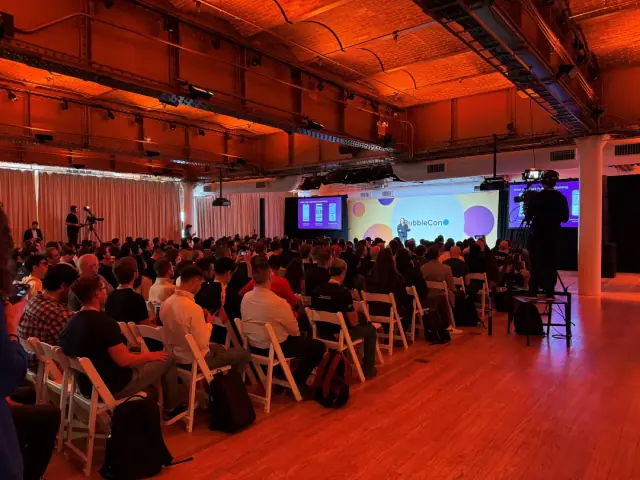
AppMaster participated in BubbleCon 2024 in NYC, gaining insights, expanding networks, and exploring opportunities to drive innovation in the no-code development space.

AI-assisted development is the most engaging emerging technology for developers, according to SlashData’s 2023 Developer Nation survey.

According to the recent 2023 Developer Nation survey by SlashData, 63% of developers are working on or learning about AI-assisted development, making it the top emerging technology on their radar. This remarkable engagement surpasses interest in other technologies such as generative AI, robotics, quantum computing, self-driving cars, non-cryptocurrency blockchain applications, cryptocurrency, 5G, the metaverse, and more. The survey presents findings from over 25,000 software developers hailing from more than 160 countries.
Although the overall engagement in AI-assisted development has dropped by 4% since the last survey, the intensity of involvement among developers has grown. The decrease in overall engagement, coupled with a shift towards more active pursuits within the subject, indicates that AI-assisted development is maturing rapidly. The technology is moving from being a trending conversation topic to a valuable tool for a multitude of developers.
The salaries of software developers were also evaluated in the report. With an average annual compensation of over $100k and a median of $75k, North America leads the pack as the highest-paying region. Following behind are Oceania ($89k in average compensation), Western Europe and Israel ($62k), and all other regions with average earnings below $48k.
When it comes to job satisfaction, 51% of developers globally believe they receive fair compensation, while 39% view themselves as undercompensated and only 11% feel they earn more than what their role warrants. The report displays an interesting distinction in salary satisfaction between genders: more men (16%) feel underpaid compared to women (11%) and non-binary developers (14%). Conversely, 7% of women think they're overpaid, in contrast to just 4% of men and 1% of non-binary developers.
The survey reveals that developers' perceptions of underpayment increase with experience. For every year of experience, there is a 7% rise in the likelihood that a developer will consider themselves undercompensated.
Furthermore, the report delves into the role of women in software development. It acknowledges that women have consistently played a pivotal—but often overlooked—role in the field throughout its history. The proportion of female respondents in the survey has increased by 3% since 2021, with the largest percentage (22%) in the 25 to 34 age group, signifying a positive trend in a more gender-balanced workforce.
It should be noted that certain sectors exhibit higher representation of women than others. For instance, virtual reality (33%), augmented reality (28%), and video games (28%) boast a larger percentage of female developers, while backend services (13%), web apps and SaaS (16%), and industrial IoT (20%) lag behind. In leadership positions, the report reveals that 14% of men hold technical team lead roles compared to only 8% of women.
No-code platforms such as AppMaster offer opportunities to mitigate these disparities by enabling a wider range of individuals, regardless of their technical backgrounds, to participate in software development. The AppMaster platform provides users with a powerful, comprehensive solution to create backend, web, and mobile applications using a visual approach, which could contribute to closing the gender gap within the industry.
 Oct 04, 20241 min
 Sep 23, 20241 min
 Aug 08, 20241 min
Experiment with AppMaster with free plan.
When you will be ready you can choose the proper subscription.


