


 Jul 14, 2026
 8 min
8 minEquipment reservation app: prevent conflicts and track returns
Plan an equipment reservation app that prevents double bookings, records returns and damage, and places faulty items on maintenance hold.

Discover if no-code platforms will replace developers and how this trend is transforming software development in our analysis.
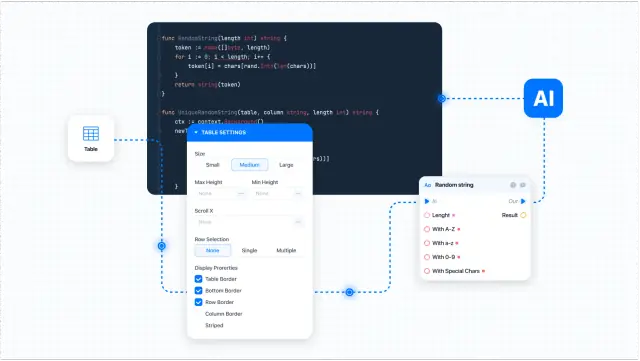
In a decade, the majority of programmers might exit the industry. That's a bold claim, isn't it? Yet, this is a highly plausible scenario, and this article will explain how this conclusion was reached. Startup owners often face several challenges when developing software. They note the standard issues that plague software companies, from poorly defined technical requirements and weak management to the struggle to attract and retain top talent.
In the past ten years, development teams aimed to enhance their processes wherever possible. They adopted Scrum, integrated Atlassian products and continuous integration tools, and learned to reuse their existing code base by developing libraries and sharing them across projects. However, their Achilles heel remains their workforce.
A staggering 80% of software development success is determined by the developers' skills and commitment to the product. The quality of a developer's code directly impacts the costs associated with refactoring or potentially rewriting sections of the product from scratch.
Anyone involved in software development has likely encountered the phrase, "It can't be supported any longer. Everything needs to be rewritten from scratch." Product owners sometimes need to rewrite the project several times and occasionally scrap it.
Startuppers note also experienced employee sabotage, often stemming from inadequate oversight by managers, technical leads, and others responsible for monitoring development quality. This highlights an underlying issue that arises when team members have widely differing skill levels. To make matters worse, a crucial employee may vanish just as a product is about to be released. The team is then left scrambling to find a workaround, reassign tasks, and adjust deadlines.
The most apparent solution to many developer-related issues is to replace human labor with automated application development systems that don't require coding.
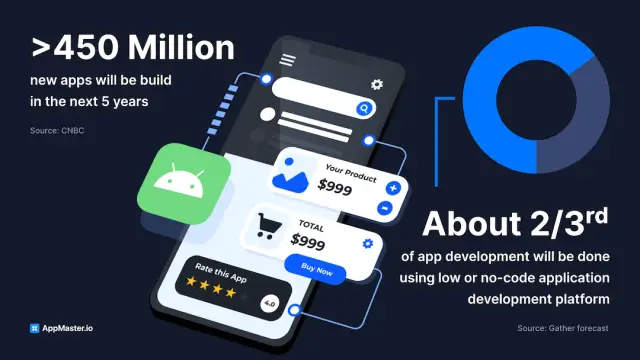
The advantages include the following:
Independence from programming languages
A more visual and transparent approach
A significantly lower barrier to entry
A reduced need for large teams
A 10-fold increase in development speed compared to even the most advanced frameworks
Drastic reduction in careless errors
The cost is lower at times and sometimes an order of magnitude.
Although popular platforms like Bubble, WebFlow, Tilda, and countless others are experiencing rapid growth, they're unlikely to revolutionize the most complex and expansive market segment - enterprise systems and applications.
What will truly disrupt the market is no-code technology with code generation. This underestimated technology offers numerous benefits over traditional no-code solutions, such as access to source code, superior performance, and flexibility in hosting applications.
There are drawbacks, of course. Live previews are more challenging with code generation, as the application must be generated, built, and run before displaying the result. Additionally, not every feature can be implemented compared to traditional programming, though future platform advancements may overcome these limitations.
The outlook is, in fact, quite optimistic and exciting. The widespread adoption of no-code with code generation will liberate countless developers from mundane coding tasks, increasing demand for application architects. These architects will no longer need to master programming languages or the intricacies of various frameworks. Companies will be able to create a higher volume of applications for users, internal automation, and smaller services that were previously deemed too costly or time-consuming.
The relentless rise in development costs will push companies to seek alternatives to hiring programmers. The pandemic and shift to remote work have fueled rapid salary growth and a surge in demand for specialists. Programmers seem to be in such high demand that they barely need to put effort into coding anymore – multiple job offers await them even if they part ways with their current employer.
Frequently, developers argue that no-code systems, such as AppMaster, offer constrained capabilities and are unsuitable for developing all types of products.
Three years ago, the AppMaster team started creating a universal no-code platform with code generation. Their goal was to create a platform capable of generating server applications, web applications, and mobile apps without the need for developers. At the time, the idea seemed absurd, but now it represents the future of development.
Whether the AppMaster platform can secure a market share remains to be seen. However, there is a confidence that code generation will irrevocably replace programmers in most tasks, leading to a significant transformation of the software development industry. As no-code technology continues to advance, the role of traditional programmers will evolve, and businesses will need to adapt to keep pace with the changing landscape.
 Will no-code replace developers completely?
No-code will not remove every developer role. It can take over much of the repetitive work involved in building standard backends, web apps, mobile apps, internal tools, and automation. Developers will still handle unusual requirements, deep technical work, and system design.
What is no-code with code generation?No-code lets people build software through visual tools instead of writing most code by hand. With code generation, the platform turns those visual designs into actual application source code that can be built and deployed.
What kind of code does AppMaster generate?AppMaster generates backend applications in Go, web applications in Vue3, and native mobile apps in Kotlin and SwiftUI. It can also generate source code for teams that need to run and maintain software outside the platform.
Can I build a real application without programming?You can model data, define business processes, build interfaces, create API endpoints, and publish the result from one project. That makes it suitable for more than a simple website or landing page.
How do I start building an app with no-code?Start with data models and the main user flows, then create the screens and business processes that support them. A small internal tool or customer portal makes a practical first project because you can test it with real users quickly.
Is no-code cheaper than hiring developers?The platform can reduce costs by cutting the amount of hand-written code and the size of the team needed for routine work. Your total cost still depends on the app's scope, integrations, testing, deployment, and ongoing product decisions.
How can no-code handle complex business logic?Visual business-process tools let you connect blocks to define rules, calculations, approvals, data changes, and API actions. You still need to describe the process clearly, but you do not need to write that logic as text code.
Can a no-code application scale as usage grows?AppMaster supports backend applications that are stateless and can run in clustered environments such as Kubernetes or Docker Swarm. You can create multiple backend applications within a project when the system needs separate services.
Can I host an AppMaster app outside the platform?AppMaster can deploy applications to AppMaster Cloud, AWS, Azure, Google Cloud, or your own infrastructure. Corporate subscribers can export generated source code, documentation, and application files for self-hosting or independent development.
When should I choose custom development instead of no-code?No-code works best when the product has defined workflows, forms, data, user roles, and integrations. A team may still choose custom development for highly specialized features, unusual platform requirements, or work that needs direct control over every line of code.
Experiment with AppMaster with free plan.
When you will be ready you can choose the proper subscription.
 Jul 14, 20268 min
 Jul 13, 20268 min
 Jul 08, 20268 min