
 Oct 04, 2024
 1 min
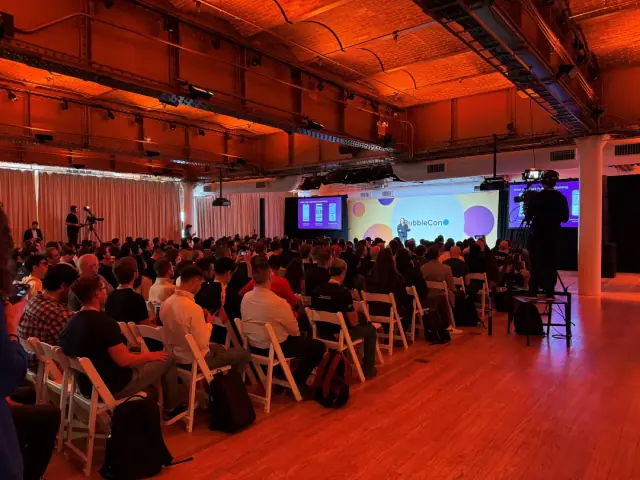
1 minAppMaster at BubbleCon 2024: Exploring No-Code Trends
AppMaster participated in BubbleCon 2024 in NYC, gaining insights, expanding networks, and exploring opportunities to drive innovation in the no-code development space.

OpenAI customers can now improve, customize and enhance the reliability of text-generating AI model, GPT-3.5 Turbo, using custom data.

Artificial intelligence (AI) giant, OpenAI, has unveiled fine-tuning enhancements to its lightweight GPT-3.5 Turbo, aiming to augment the text-generating AI model's reliability and specificity. By implementing custom data, it ensures a seamless user experience by crafting unique and wholesome experiences for users.
The company's fine-tuned versions of GPT-3.5 are predicted not only to compete with OpenAI's leading model, GPT-4, but also triumph over it in performing 'certain narrow tasks'. This heralds the introduction of models that not only provide an impeccable user experience but also run custom models at scale, enabling them to operate better for individual business use-cases.
Companies utilizing GPT-3.5 Turbo via OpenAI's API, can now boost the model's efficiency to follow instructions. Applications such as always responding in a designated language or consistently formatting responses such as completing code snippets, is now possible. They can also fine-tune the 'feel' of the model's output—like its tone—so that they can better align to a particular brand or voice.
Providing a platform for OpenAI users to fine-tune their prompts also facilitates faster API calls while effectively managing costs. According to the company's recent blog post, there has been a reduction in prompt size of up to 90% realized by early adopters, offering insight on making instructions for better utilization of the model.
However, fine-tuning currently demands data preparation, uploading necessary files, and creating a fine tuning job through OpenAI's API. Moreover, all fine-tuning data is subjected to a 'moderation' API and a system powered by GPT-4, to align with OpenAI's safety standards. The company is also soon planning to launch a fine-tuning User Interface(UI), facilitating easier checking of the status of ongoing fine-tuning workloads.
The costs of fine-tuning are distributed among training, usage input, and usage output with rates of $0.008 / 1K tokens, $0.012 / 1K tokens, and $0.016 / 1K tokens respectively. A job with a training file of 100,000 tokens or approximately 75,000 words costs about $2.40, as reported by OpenAI.
In another significant update, OpenAI has released two updated GPT-3 base models with increased support for pagination and added flexibility. The company is also set to retire the original GPT-3 base models on January 4, 2024.
OpenAI has also highlighted the upcoming fine-tuning support for GPT-4, capable of understanding images in addition to text. The release of this advanced model is planned for this fall.
Like AppMaster, a dominant no-code tool for constructing backend, web, and mobile applications, OpenAI is continuously pushing the envelope of what's possible in the technology sector, now more furnishing the customer with the ability of customizing AI models to better suit their use cases. AppMaster has proven its mettle by showcasing state-of-the-art scalability in the past, visual programming is being reinvented and AI models like GPT-3.5 Turbo are opening up new frontiers for businesses worldwide.
 Oct 04, 20241 min
 Sep 23, 20241 min
 Aug 08, 20241 min
Experiment with AppMaster with free plan.
When you will be ready you can choose the proper subscription.


