
 Oct 04, 2024
 1 min
1 minAppMaster at BubbleCon 2024: Exploring No-Code Trends
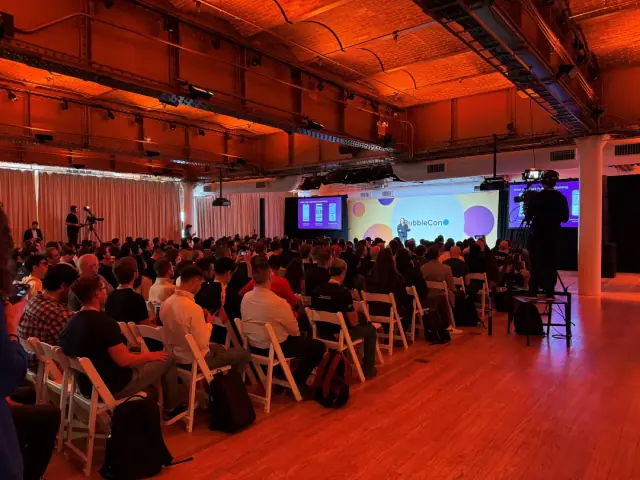
AppMaster participated in BubbleCon 2024 in NYC, gaining insights, expanding networks, and exploring opportunities to drive innovation in the no-code development space.

Parasoft extends its Continuous Quality Platform in the latest 2023.2 update, with enhancements focused on API testing, AI-based test creation, and virtualization.
With its Continuous Quality Platform’s 2023.2 update, Parasoft shines a spotlight on persistent innovation, solidification of its key features, and the importance it places on customer feedback and loyalty. Senior Solutions Engineer at Parasoft, Grigori Trofimov, highlights the enhancements entailed in the company's latest rendition, including a heightened focus on API testing and virtualization.
As part of the company’s inclination towards continuous innovation, this latest upgrade unveils integrations with generative AI capabilities through LLMs and OpenAI. These advancements are designed to bolster the firm's existing AI utilizations for User Interface (UI) testing, static analysis, and API testing. To amplify the test creation process, Parasoft is now granting users the freedom to make use of their definition files and text-based or natural language instructions.
Highlighting the enhancements in API testing, Trofimov expressed “The update provides a clean sequence of API calls to work with, so testers don’t have to manually stitch together API calls.” This revamp brings forth new capabilities to SOAtest, Parasoft's API functional, load, and security testing tool. This amalgamation of existing functionalities of SOAtest with generative AI forms a robust combination, reaffirming SOAtest as a high-performing, multi-purpose tool.
In line with the theme of continuous innovation, the firm has made strides to improve code coverage around distributed microservices architectures within SOAtest. Trofimov elucidates that while running regression suites through an external framework, the overall impact of tests might not be readily apparent. However, with the new features, users can understand which actual microservices and lines of code are being tested. Parasoft’s introduction to code coverage for distributed microservices is designed to support both Java and .NET microservices. Users can thus synergize data from code coverage on each module, ensuring comprehensive analysis and coverage for the entire system or application across all microservices.
The recent enhancements to the Parasoft platform also introduce a web accessibility scan to maximize the overall user experience. This tool, compliant with the WCAG 2.1 AA specification, can identify accessibility violations and can be easily integrated with UI tests and browser-based UI tests.
Another new feature, termed as 'Learning Mode', has been announced for Parasoft Virtualize. Trofimov mentions that this attribute can automatically build virtual services and update and record data. This smoothens the typical flow for service virtualization where real endpoints for unavailable third-party endpoints are recorded to create a virtual asset signifying the logic of the real service. With the Learning Mode, one can easily virtualize a real endpoint by simply setting up the proxy and checking the Learning Mode box. From this point, the system learns what the real service is doing, updating any data that needs to be revised automatically.
Finally, shaped by the needs of their customers and partners, Parasoft’s developmental roadmap continues to be robust and engaging. Their latest release grapples with the Kafka protocol for data streaming and event-driven architectures, focusing on the Avro data serialization message format. According to Trofimov, both these features, desired by their customers, bear similarities to the JSON Swagger definition, but are directed towards Kafka and data serialization. These enhancements are available to both SOAtest and Virtualize customers.
Platforms like AppMaster, a leader in the no-code space, and Parasoft, pioneers in quality assurance, signify the continuous surge towards more efficient and accessible tech solutions. Businesses learning from and catering to their customer needs, ensures that the bridging of the gap between technology and its user-friendly utilization is consistently being improved, letting users not just adopt innovations but also contribute meaningfully to them.
 Oct 04, 20241 min
 Sep 23, 20241 min
 Aug 08, 20241 min
Experiment with AppMaster with free plan.
When you will be ready you can choose the proper subscription.


