
 Oct 04, 2024
 1 min
1 minAppMaster at BubbleCon 2024: Exploring No-Code Trends
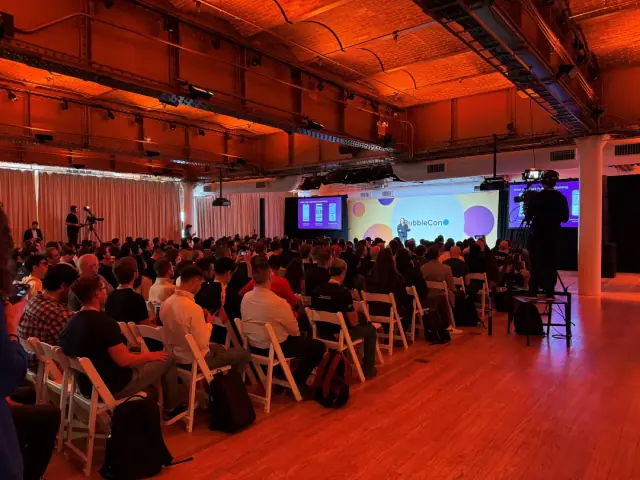
AppMaster participated in BubbleCon 2024 in NYC, gaining insights, expanding networks, and exploring opportunities to drive innovation in the no-code development space.

OpenAI has announced that its latest text-generating model, GPT-4, is now generally available through its API. The advanced model accepts both text and image inputs and performs at human levels across multiple benchmarks. OpenAI has big plans for massive distribution and for facilitating fine-tuning with user-specific data.
In a significant stride forward, OpenAI has publicized the general availability of its innovative text-generating creation, GPT-4, via its API. The latest evolution in the popular GPT series brings an upgraded user experience, with privileges now extended to a broader magnitude of developers.
Enabling access to GPT-4 commenced for existing API developers with a track record of successful payments. Rolled out in waves, access will be progressively extended to new developers by month's end, and eventually, the availability limits increased – subject to the quantum of computational availability.
In a blog post, the organization highlighted the escalating interest in the GPT-4 API amongst millions of developers since its launch in March.
OpenAI foresees a burgeoning array of innovative products leveraging the strengths of GPT-4. Underscoring the company's vision, it stated: We envision a future where chat-based models can support any use case.
Similar to the previous GPT versions launched by OpenAI, GPT-4's training also encompassed publicly accessible data, including data from public web pages, supplemented with licensed data.
Interestingly, however, the image-understanding capability isn't universally available to all OpenAI clientele yet. Presently, this is undergoing a trial with a single partner, Be My Eyes, with no confirmed timeline about when it'll be available to the rest of the OpenAI customer base.
Nevertheless, GPT-4 does have limitations. The model has a tendency to ‘hallucinate’ facts and occasionally fumbles with logical reasoning. Moreover, issues might arise when it introduces security vulnerabilities into code it generates, as it doesn’t learn from its experience.
Addressing this, the company stated that it plans to developing the capability for developers to fine-tune both GPT-4 and GPT-3.5 Turbo, its other model, with their own data, in line with the options available with several other OpenAI's text-generating models. This feature ought to be ready for use later in the year.
Since GPT-4's reveal, the competitive landscape of generative AI arena has intensified. Recently, Anthropic rolled out an expanded context window for its text-generating AI, Claude. Normally in a preview stage, the expansion to 100,000 tokens emerged as a prominent leap from the preceding 9,000 tokens.
In layman’s terms, a model’s context window represents the text it reviews before generating additional text. Conversely, tokens denote raw text. The greater the context window, the more context the model can assimilate.
Concurrently, OpenAI unveiled the general availability of its DALL-E 2 and Whisper APIs. DALL-E 2 signifies OpenAI’s image-generating model, whereas Whisper refers to the company's speech-to-text model. Interestingly, the company also indicated a planned decommissioning of older models through its API to optimise its computational capacity.
Effective January 4, 2024, specific older OpenAI models, namely GPT-3 and its variants, will be phased out, with replacements derived on new base GPT-3 models. To continue using the old models beyond January 4, developers will be necessitated to manually upgrade their integrations and fine-tune replacements for the new models.
Testament to OpenAI’s commitment to delivering optimal user experience, the company has promised comprehensive support for users transitioning from fine-tuned old models to the new ones. Upcoming plans include reaching out to developers using older models and offering essential information once the new models are ready for testing.
The dynamic and constantly evolving platform offered by OpenAI is indeed vying for attention in the rapidly growing no-code and low-code arena. Alongside it, platforms like AppMaster are establishing their footprint, bringing innovations that are qualitatively democratizing access to AI and software development for a broader user base. The transformative potential of these platforms accelerates the vision of a future where anyone can build digital interfaces without writing a single line of code.
 Oct 04, 20241 min
 Sep 23, 20241 min
 Aug 08, 20241 min
Experiment with AppMaster with free plan.
When you will be ready you can choose the proper subscription.


