
 Oct 04, 2024
 1 min
1 minAppMaster at BubbleCon 2024: Exploring No-Code Trends
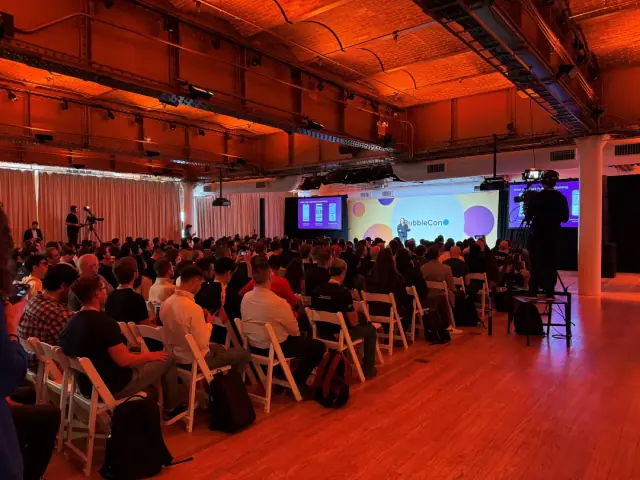
AppMaster participated in BubbleCon 2024 in NYC, gaining insights, expanding networks, and exploring opportunities to drive innovation in the no-code development space.

Mendix introduces Mendix 10 with enhanced AI and machine learning features in low-code application development. Included are the new Machine Learning Kit and AI-enabled developer tools, setting the stage for smarter business applications and solutions.

Mendix, a Siemens company and a pioneer in modern enterprise application development, has previewed innovative new capabilities and tools revolving around artificial intelligence (AI) and machine learning (ML) scheduled to be available in Mendix 10. The upcoming release, slated for June 27th, cements Mendix's position as the go-to choice for enterprises seeking to incorporate smart technology into their low-code applications and solutions.
Advanced AI capabilities in Mendix 10 are showcased in two major areas. Firstly, the platform's new Machine Learning Kit allows businesses to easily fuse AI use cases with low-code applications. Secondly, Mendix 10 brings a significant expansion to the range of AI-driven application development features.
With the launch of Mendix 10, organizations will find it easier to embed AI into applications thanks to the Machine Learning Kit. This new feature streamlines the process of integrating custom AI models, developed with a variety of AI frameworks and languages, into applications. Examples of supported frameworks include PyTorch, Caffe2, Cognitive Toolkit, as well as other ONNX-compliant frameworks.
ONNX-based (Open Neural Network Exchange) models can be effortlessly imported into Mendix's integrated development environment (IDE) and integrated into Mendix applications. By doing so, it ensures support for several inference patterns and pre- and post-processing logic. Moreover, Mendix's runtime has been upgraded to enable seamless execution of ONNX models, permitting ML models to run within the same environment as the applications.
Both pre-trained and custom AI models can be deployed within Mendix applications, providing speedy, scalable, and seamless integration that enables accelerated time-to-market for businesses keen on capitalizing on AI technology. Furthermore, by automating the integration process, the ML Kit reduces AI deployment times from weeks to hours. The built-in integration of embedded AI models also helps to improve application performance compared to API-based integration, while ensuring robust offline, on-edge, or IoT AI services, and enhanced security.
In addition to the Machine Learning Kit, Mendix 10 is introducing the Mendix Assist Best Practice bot, which functions as a virtual AI-powered co-developer assisting users in implementing Mendix development best practices. There is also the Data Validation bot to facilitate automated development of validation logic using pre-built expressions.
Hans de Visser, Mendix's Chief Product Officer, acknowledged the natural synergy of incorporating AI tools with low-code development, stating, Enterprises using low-code will be able to extract more value from AI in an efficient way using the new features of the Mendix 10 platform.
De Visser also revealed plans for Mendix Chat, a chatbot within Mendix IDE set to guide developers on implementing specific concepts or patterns. Furthermore, the company is exploring ways to incorporate generative AI in its domain-specific languages (DSLs) and generate models based on natural language input, encouraging app developers and business domain experts to engage with free text or user stories as a starting point for generating application models.
As companies face various challenges in adopting AI-enhanced business solutions, such as cost, complexity, time constraints, and skill shortages, Mendix aims to address these issues head-on. By merging the principles of low-code abstraction and automation with AI and ML capabilities, Mendix paves the way for faster, more efficient, and smarter application development.
AppMaster's no-code platform is another powerful solution for businesses looking to streamline the process of building backend, web, and mobile applications. The Mendix 10 release, together with advanced AI-driven resources such as Mendix Assist bots and the Machine Learning Kit, empowers enterprises to meet evolving market demands and deliver innovation more rapidly.
 Oct 04, 20241 min
 Sep 23, 20241 min
 Aug 08, 20241 min
Experiment with AppMaster with free plan.
When you will be ready you can choose the proper subscription.


