


 Jul 14, 2026
 8 min
8 minEquipment reservation app: prevent conflicts and track returns
Plan an equipment reservation app that prevents double bookings, records returns and damage, and places faulty items on maintenance hold.

How the no-code platform AppMaster took part in the annual TechCrunch Disrupt 2022 San Francisco.
TechCrunch Disrupt is the largest international conference dedicated to the debut of technology startups, the presentation of technologies, and a large number of speeches by reputable speakers in the technology industry. Disrupt brings together the best and most promising entrepreneurs, startups, investors, and technology fans. TechCrunch Disrupt includes the Startup Alley, Startup Battlefield competition, hackathon, Hardware Alley, and After Party.
Zuckerberg, Benioff, Musk, Kalanick, Mayer, Dorsey, and many other successful startups have been pitching their projects and ideas at Disrupt long before they hit the big time and became world-famous tech stars. Finding and launching startups at an early stage is one of the main tasks for TechCrunch Disrupt.
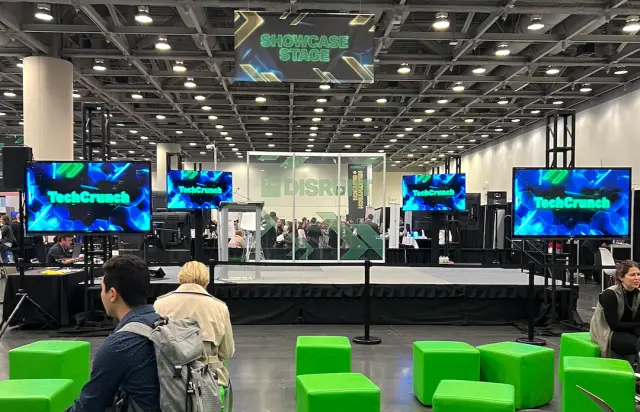
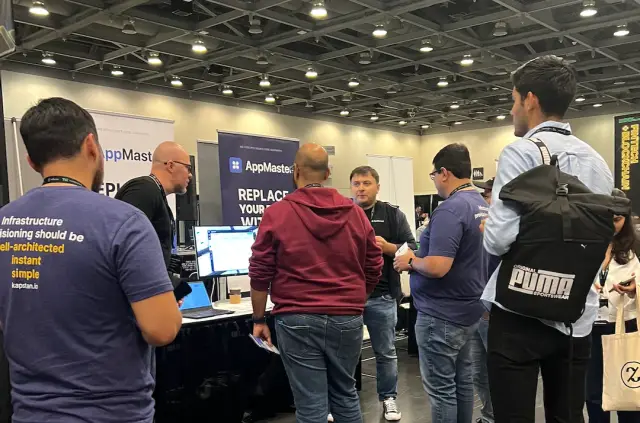
TechCrunch Disrupt 2022 was the debut of the AppMaster no-code platform with a code generation function. The AppMaster team spent three days presenting the platform and its functionality. Code generation technology attracts a lot of attention but simultaneously causes much mistrust on the part of skeptics. The AppMaster team noted a few key concerns about the no-code capabilities that most often arise:
No-code is only MVP
This is true for most no-code tools. In this case, AppMaster stands apart. With the no-code AppMaster platform, you can create a full-fledged application due to the code generation function. You get a real application exactly the same as in the traditional approach to development.
Too good to be true
A rather dismissive image of no-code tools has developed in the minds of the layman: something ready-made, based on templates and some big pieces. And also, usually pop up in memory, all sorts of NLP crafts like, say what you want to create, and we will generate. In fact, AppMaster has created a real tool in which to create server, web, and mobile applications, and you need to work a little:
This approach allows you to create solutions of almost any complexity, but faster and better, and there is no technical debt because AppMaster regenerates applications every time - source code management, compilation, and deployment on AppMaster. All you have to do is invent and move atomic blocks.
No-code solutions have low performance and no scalability
This may well be true for most solutions on the market, especially those that create MVP s. With AppMaster, we immediately went the right way and focused on building real applications. Due to the fact that we generate server applications in the Go language, our users get all the same benefits as in classical development: cross compilation for almost any operating system and processor, hardware acceleration of encryption operations out of the box, the ability to scale on our servers or in clouds with using docker swarm, k8s, or simply running multiple copies of the server application behind the balancer.
By default, all AppMaster server applications use any Postgres-compatible DBMS, which means that scaling is very easy. As always, the best approach is to put all relevant logic in the backend of your project, and on the front-end and in mobile applications, you should leave only the minimum logic necessary to display and collect data from users. Thus, with our platform, everything is very fast, productive, and scalable.
At some point, you still have to switch to classic development
This is another popular misconception about modern no-code with code generation. We have done everything in the platform to ensure that such a moment never comes. To do this, we have created business logic blocks in such a way that you can find in their list all commands from any programming language: from working with basic operations and variables to complex functions for working with arrays and bytes. But there are unique cases when you need to connect a trained neural network to your project!
And here, the microservice architecture comes to the rescue because all your custom writing can be launched as a microservice next to AppMaster applications. For the web, you can add blocks of JS code; for mobile applications, add SDK. For the most difficult cases, you can use a hybrid approach when you take only part of the AppMaster platform (for example, the backend) and do the rest with code. And still, it turns out faster and cheaper, with fewer iterations and problems with changes.
TechCrunch Disrupt 2022 recap
For the AppMaster team, this was an excellent opportunity to find and contract with new clients, organize negotiations with investment funds, and conduct excellent networking with the international IT startup community.
 What is TechCrunch Disrupt?
TechCrunch Disrupt is an international technology startup conference. It brings together founders, investors, technology teams, and people interested in new products.
What happens at TechCrunch Disrupt?The event includes Startup Alley, Startup Battlefield, a hackathon, Hardware Alley, speaker sessions, and networking events. Attendees can see new products, meet founders, and talk with investors.
What is Startup Battlefield?Startup Battlefield is a competition where early-stage startups pitch their products. It gives selected teams a chance to present to investors, media, and a wider technology audience.
What is Startup Alley?Startup Alley is an exhibition area for startups. Teams use it to demonstrate their products, speak with visitors, and make business contacts.
What did AppMaster present at TechCrunch Disrupt 2022?AppMaster presented its no-code platform with code generation at TechCrunch Disrupt 2022. The team spent three days showing how users can build backend, web, and mobile applications.
Can AppMaster build more than an MVP?AppMaster lets users build complete applications, not only early prototypes. It generates source code for backend services, web applications, and native mobile apps.
How do you create an app with AppMaster?Start by creating data models, then build business logic in the visual editor. After that, add API endpoints and create the web or mobile interface.
How does AppMaster handle changes to an application?AppMaster regenerates an application when requirements change. This gives you a fresh version of the generated code instead of leaving old generated pieces in place.
Can AppMaster applications scale?AppMaster generates backend applications in Go and uses PostgreSQL-compatible databases. You can scale the backend by running multiple server copies behind a load balancer or using container orchestration.
Can developers add custom code to an AppMaster project?You can extend an AppMaster project when you need custom code. Options include connecting microservices, adding JavaScript for web apps, adding mobile SDKs, or using AppMaster for only one part of a larger coded system.
Experiment with AppMaster with free plan.
When you will be ready you can choose the proper subscription.
 Jul 14, 20268 min
 Jul 13, 20268 min
 Jul 08, 20268 min