


 Jul 14, 2026
 8 min
8 minEquipment reservation app: prevent conflicts and track returns
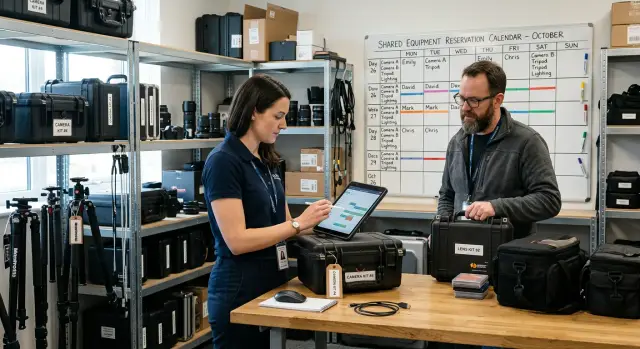
Plan an equipment reservation app that prevents double bookings, records returns and damage, and places faulty items on maintenance hold.

Get to know how to how to create MVP with the no-code platform and if it's possible to improve it to a fully-fledged product.
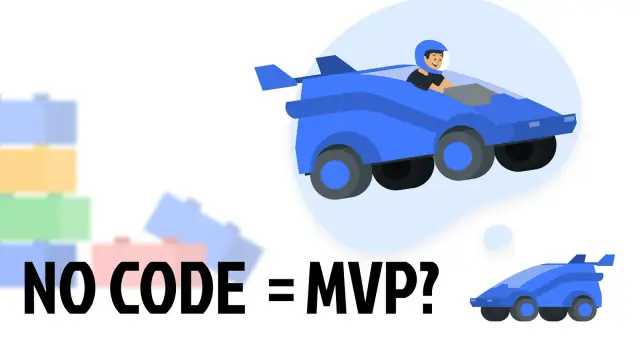
MVP or Minimum Viable Product is the first and simplest version of the product for the target audience. The idea is to test the functionality and evaluate the performance of your product concept. Based on the feedback, the general understanding of the value and people’s willingness to pay for the product is created, which gives the plan for further development.
This means giving up technical engineers when creating the first product. Anyone with an understanding of the assignment can create a pilot project.
Since no-code platforms eliminate the need to write code, this saves time spent on development.
With the help of no-code platforms, you can quickly create and publish a pilot version of a product. If the MVP fails, then you can create and publish a new project on the same day and at the same speed.
The product always required to be developed further after MVP, but the majority of no-code platforms, unfortunately, are not yet able to help with this due to several aspects:
No-code solutions are simple, all functions are limited to the proposed settings and templates on the platform. It is simply impossible to develop a unique product due to the limited choice of themes, functions, and settings.
Creating an MVP on a specific platform automatically takes away the developer's ability to create a project individually or transfer it to another platform. The product will always be limited in functionality, work, and integrations only within the platform. Also, to retain users, most platforms do not generate source code or make it so confusing that it is almost impossible to modify the project outside the platform.
A product built on no-code will always be part of the platform. The creator does not have complete control over the project, full access to the source code and the dataset. Any violations or problems on the platform can affect the functions and further existence of the project as well.
Appmaster.io is not the first no-code platform, but it was created taking into account all the errors and shortcomings of existing solutions. The platform is not based on templates and does not restrict the user to only predefined functions. Users can truly implement any functionality, because of the business process editor, where any capability can be implemented using simple visual blocks. Of course, the platform provides the ability to quickly create web and native mobile applications with the ability to change the appearance and functionality after publication, as well as a huge amount of additional functionality to maintain applications during their use.
As soon as the user has created business processes and designed the interface, the platform writes the source code of the entire application (yes! exactly the source code!), then collects and uploads it to your server - this is far from being an MVP, but a full-fledged product.#nbsp;
Want to know more? Welcome to AppMaster.io.
 What is an MVP?
An MVP is the simplest version of a product that lets you test whether people find it useful and may pay for it. It focuses on the main problem, not every planned feature.
Why use no-code for an MVP?No-code tools let you build screens, data models, and workflows without writing code. That can help a founder or business team publish an early version quickly.
Can I build an MVP without developers?You can create a pilot product without waiting for a traditional development team to write every part by hand. That gives product owners more control during early testing.
How does no-code speed up product testing?A no-code MVP helps you put a working version in front of users quickly. You can collect feedback, spot weak assumptions, and adjust the product before investing more time.
Why do some no-code tools struggle after the MVP stage?Many no-code platforms limit you to their templates, settings, and built-in integrations. Those limits may become a problem when your product needs unusual workflows or custom behavior.
What does no-code platform lock-in mean?Platform lock-in happens when your app depends on one provider's tools, hosting, or proprietary setup. Moving the product later may require rebuilding parts of it from scratch.
Do I own a no-code application?It depends on the platform. If you cannot access the generated source code or control where the app runs, you have less control over future changes, data handling, and deployment.
What should I check before choosing a no-code platform?Choose a platform that supports the workflows, integrations, deployment options, and growth you expect after launch. Check whether it generates usable source code and lets you move the app to your own infrastructure.
How is AppMaster different from a basic no-code builder?AppMaster uses visual tools to build database models, business processes, web apps, and native mobile apps. It generates source code for the application instead of limiting users to a fixed template.
Can AppMaster create a product beyond an MVP?AppMaster generates Go code for backends, Vue3 code for web applications, and Kotlin or SwiftUI code for native mobile apps. You can deploy to AppMaster Cloud, major cloud providers, or self-host the exported source code.
Experiment with AppMaster with free plan.
When you will be ready you can choose the proper subscription.
 Jul 14, 20268 min
 Jul 13, 20268 min
 Jul 08, 20268 min