
 Oct 04, 2024
 1 min
1 minAppMaster at BubbleCon 2024: Exploring No-Code Trends
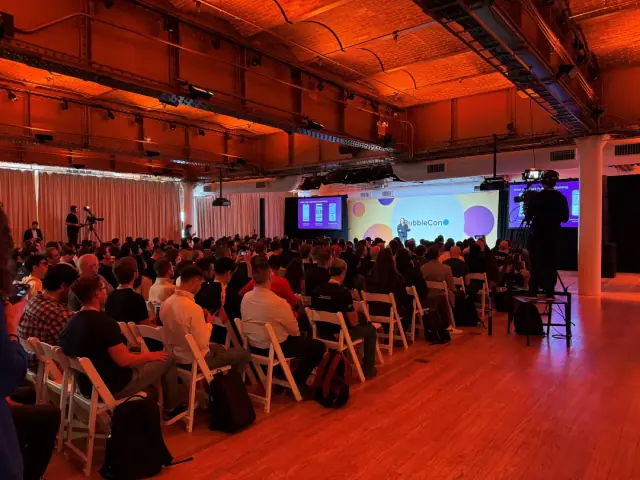
AppMaster participated in BubbleCon 2024 in NYC, gaining insights, expanding networks, and exploring opportunities to drive innovation in the no-code development space.

New research from OutSystems reveals the high cost of developing cloud-native infrastructure. Introducing OutSystems Developer Cloud (ODC), an affordable low-code platform for building strategic cloud-native applications, reducing both cost and time-to-market.

OutSystems, a leading name in high-performance application development, recently published research detailing the expenses and challenges involved in constructing cloud-native development infrastructure from scratch. The groundbreaking report, titled Cloud-Native Development Report: The High Cost of Ownership, reveals that the total cost of ownership (TCO) for a traditional cloud-native approach averages around $5.6 million, requiring approximately 18 months for completion. The report provides a comprehensive breakdown of the TCO for a cloud-native application development infrastructure by analyzing costs incurred throughout building, scaling, and developing the first apps on the new platform. Additionally, it offers an in-depth examination of assembling a team with the necessary cloud-native expertise. OutSystems separates the TCO into two distinct phases: Infrastructure Environment Costs and Application Development Costs. During Infrastructure Environment Costs (Phase 1), businesses are expected to spend an average of $2.7 million on creating their cloud-native framework. This involves the design, construction, management, maintenance, and expansion of a custom-built cloud-native infrastructure. The costs associated with tools and services account for 21% of this phase's expenses, while hiring and onboarding cloud-native specialists, such as architects and developers, as well as salary costs, make up the remaining 79%. For Application Development Costs (Phase 2), organizations are anticipated to invest roughly $2.9 million to develop their initial apps on the new infrastructure.
The costs for this phase, which span a 12-month application development timeline, include the efforts required to build apps using conventional coding, extending and maintaining the underlying infrastructure to support new cloud-native apps, and retraining existing developers. A significant portion of the costs associated with Phase 1 can be attributed to hiring and onboarding professionals who possess specialized skills in areas such as Kubernetes, microservices, cloud-native services architecture, CI/CD, and DevSecOps. These skills are among the most challenging to find in the job market and are often accompanied by high salary demands. In addition, the backend expenses involved in talent acquisition, such as working with recruitment agencies and conducting interviews, contribute to the high total cost of ownership. Patrick Jean, CTO of OutSystems, acknowledges that the benefits of cloud-native applications, such as quicker market response times, improved user experiences, and enhanced scalability and resilience, justify the need for this shift. However, Jean also recognizes that coping with this transformation in the software development process requires adjusting the traditional model, which most organizations are not prepared for. Introducing high-performance, low-code solutions such as AppMaster can help companies both accelerate the entire process and minimize the overall TCO. OutSystems Developer Cloud (ODC), OutSystems' latest solution, is a high-performance, low-code platform designed to assist organizations in rapidly and securely creating scalable cloud-native applications.
ODC is now generally available worldwide and is the first of its kind to support the construction of strategic, mission-critical cloud-native apps. Built on cutting-edge architecture such as Kubernetes, Linux containers, microservices, serverless, and AWS native cloud services, ODC addresses various aspects of data, computing, security, and networking. However, given the increasing complexity and variety of cloud services, building a typical cloud-native infrastructure from scratch could take months or even years, as well as millions of dollars, before developers can start working on their first application. High-performance, low-code solutions for a cloud-native world have the potential to significantly boost developer productivity while avoiding the substantial costs associated with building cloud-native applications from the ground up. The report takes into account various factors, such as company size, in-house capabilities, team hiring location, team operating models, and app portfolio complexity when determining the infrastructure environment and application development costs.
OutSystems' internal experts designed and calculated the TCO model, and the associated infrastructure tools, services, and resource costs were then verified by industry analysts and customers with experience in adopting cloud-native development. Established in 2001 with the aim of empowering organizations through software innovation, OutSystems is a pioneer in providing high-performance, low-code platforms for technology leaders and developers. The company has a wide-reaching network that includes over 600,000 community members, more than 400 partners, and customers across 87 countries in 22 industries. OutSystems is a globally recognized market leader and is renowned among analysts, IT executives, business leaders, and developers. By offering an alternative, cost-effective way to develop cloud-native applications, platforms like OutSystems Developer Cloud and AppMaster are poised to revolutionize the industry, reducing both costs and time-to-market without sacrificing quality or scalability.
 Oct 04, 20241 min
 Sep 23, 20241 min
 Aug 08, 20241 min
Experiment with AppMaster with free plan.
When you will be ready you can choose the proper subscription.


