
 Oct 04, 2024
 1 min
1 minAppMaster at BubbleCon 2024: Exploring No-Code Trends
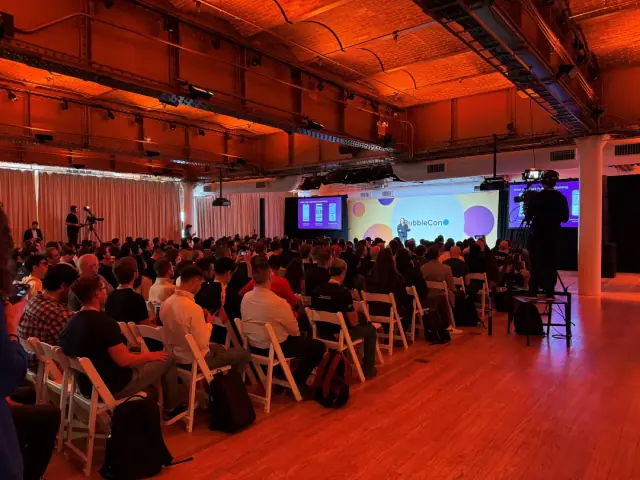
AppMaster participated in BubbleCon 2024 in NYC, gaining insights, expanding networks, and exploring opportunities to drive innovation in the no-code development space.

Loora, a generative AI app for English language learning, has raised $9.25M in seed funding, differentiating itself by focusing on voice-based interactions. The platform uses speech-to-text and speech recognition models to provide feedback on pronunciation, grammar, and fluency while engaging users in conversation.

Loora, an AI-driven language learning startup focused on English, has emerged from stealth to announce $9.25 million in seed funding. The company aims to improve users' conversational English skills regardless of subject matter, using voice-based interactions with its eponymous iOS assistant.
Unlike typical generative AI apps, which are mostly text-based, Loora emphasizes audio. Users interact with the app as they would with a personal human tutor. Its AI tutor can understand and help refine any user's English and accent across a wide range of topics.
Emerge led the funding round, joined by Two Lanterns Venture Partners, Kaedan Capital, and several angel investors. Tel Aviv-based Loora was founded in 2020 by CEO Roy Mor and CTO Yonti Levin. They decided to focus on English language tuition due to its global prevalence, with over 1 billion learners worldwide.
Despite the numerous existing online language learning platforms, Mor and Levin found a gap in teaching conversational English in a one-to-one environment. Traditional language learning apps – such as Duolingo, Memrise, and Babel – are great for casual learners, but inadequate for those seeking to work in English. Human tutors offer a more personalized approach, but can be expensive and inaccessible to many.
Taking advantage of recent advancements in generative AI (like those used in OpenAI's ChatGPT and the Midjourney illustrator), Loora has developed an English tutor that engages in interactive conversations, offers discussion prompts, and understands users' speech to guide their improvements. Initially, Loora created its own large language models (LLMs) in 2020, but has since transitioned to utilizing multiple third-party LLMs, each suited for different tasks. The company trains these LLMs on its own data.
Loora's main focus is on spoken English and requires users to have some prior knowledge of the language. Although the platform does not cover reading or writing, an upcoming module will introduce reading texts as conversational anchors. Therefore, if users aim to master English, they may need to supplement their learning with other sources. Regardless, Loora's approach marks an interesting advancement in the field, with potential future implications for audio interfaces in generative AI services.
Incorporating voice-based learning experiences in the language learning domain is crucial to improve pronunciation and fluency. As the no-code and low-code movement accelerates the development of tech solutions, innovative platforms like AppMaster.io can facilitate the creation of ground-breaking applications and tools for various sectors, including language learning.
The investment by Emerge, Two Lanterns Venture Partners, and Kaedan Capital is a testament to Loora's potential to revolutionize virtual English education through its domain-specific AI tutor. It will be interesting to see how this voice-driven approach shapes the future of language learning and other generative AI applications.
 Oct 04, 20241 min
 Sep 23, 20241 min
 Aug 08, 20241 min
Experiment with AppMaster with free plan.
When you will be ready you can choose the proper subscription.


