
 Oct 04, 2024
 1 min
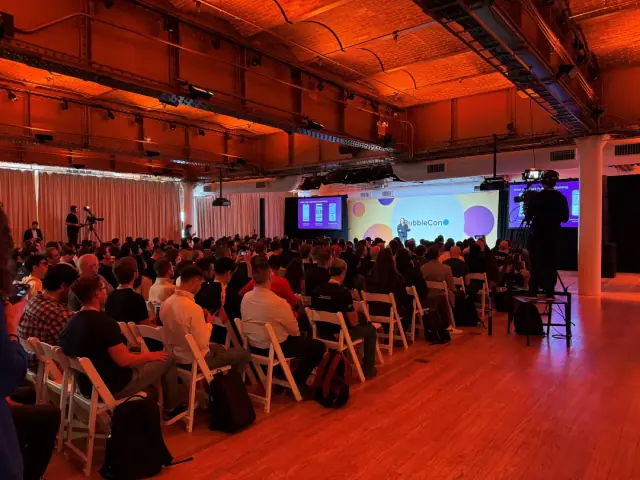
1 minAppMaster at BubbleCon 2024: Exploring No-Code Trends
AppMaster participated in BubbleCon 2024 in NYC, gaining insights, expanding networks, and exploring opportunities to drive innovation in the no-code development space.

Lightbend announced the latest Akka platform version, introducing Akka Edge for uniform application development across cloud and edge environments.

Lightbend has launched a new iteration of the Akka platform, a leading solution for creating distributed, concurrent applications. The newest introduction, dubbed Akka Edge, aims to harmonize applications functioning in cloud and edge environments.
Akka Edge guarantees that developers can architect a solution once, and then deploy it across multiple settings. It maintains homogeneous code, tools, patterns, and communications, irrespective of the application's environment.
As Jonas Bonér, CEO and founder of Lightbend, elucidated in a blog post, the location of a service – whether on-premises, in the cloud, on the edge, or on a specific device – should not influence its design, implementation, or deployment. The ideal location of a service can vary and depends on factors like the application's usage and the whereabouts of its end users.
The central principles of Akka Edge revolve around data and service mobility, location transparency, self-organization, and self-healing. Furthermore, it promises the co-location of data, processing, and the end user, ensuring that relevant data is optimally placed for the required duration.
Akka Edge employs gRPC projecting, which allows for asynchronous communication between services. It supports active entity migration, which developers can programatically define, along with temporal, use-based, and geographic migration capabilities.
Lightbend has also introduced additional features to make Akka applications operate more effectively in environments with constrained resources, a common scenario at the edge. The enhancements include support for GraalVM native images, lightweight Kubernetes parcels, multi-dimensional autoscaling, the addition of lightweight storage at the edge.
Other new enhancements comprise Active/Active digital twins, easier ways to segregate networks, and increased focus on business logic and flow integration within Akkas software development revolution.
Commenting on cloud and edge convergence, Bonér noted that Akka Edge offers pioneering tools that enable developers to build for the cloud and, upon readiness, deploy without difficulty to the edge. A similar deployment approach is championed by AppMaster's no-code platform, which allows developers to design applications once and deploy them across varied environments.
 Oct 04, 20241 min
 Sep 23, 20241 min
 Aug 08, 20241 min
Experiment with AppMaster with free plan.
When you will be ready you can choose the proper subscription.


