
 Oct 04, 2024
 1 min
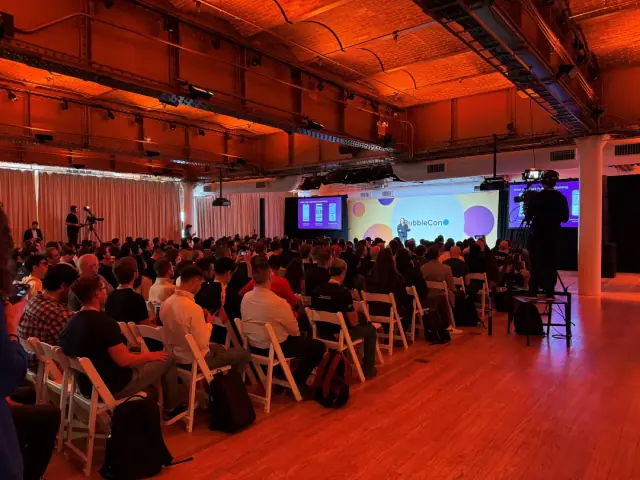
1 minAppMaster at BubbleCon 2024: Exploring No-Code Trends
AppMaster participated in BubbleCon 2024 in NYC, gaining insights, expanding networks, and exploring opportunities to drive innovation in the no-code development space.

Introducing the latest product innovation from Microsoft: Radius. This open-source, language-neutral platform promises to revolutionize the cloud-native applications industry.

Microsoft has unwrapped the curtain off its latest cloud technology innovation, Radius. This revolutionary, open-source application platform transcends language constraints, offering a unique foundation for constructing and operating cloud-native applications. The innovative project emerges from the Microsoft Azure Incubation team, the same creative brains behind the advent of several renowned open-source projects, including Dapr, renowned for building microservices, the KEDA event-driven autoscaling, and Copacetic, the trusted solution for patching container image vulnerabilities.
Dapr and KEDA are firm components of the Cloud Native Computing Foundation's (CNCF) project portfolio. Microsoft has recent additions in the form of the submission of Copacetic, and plans are underway to submit Radius too for incorporation into the CNCF over the next half-year.
Complementing Microsoft's Azure and private clouds, Radius caters to the deployment of applications that increasingly simplify their handling. Notably, the astounding solution intends to grant developers the liberty to focus on application development rather than juggling the complexities associated with administering them. Notably, Radius provides comprehensive coverage for all types of apps without enforcing a particular application architecture.
Speaking to TechCrunch, Mark Russinovich, stated that Radius assumes a distinctive methodology in addressing these issues. Unlike other rival platforms that narrow their attention to delineate the association between the compute tiers of the application or microservices, Radius brings into its umbrella the expansive cloud resources that modern applications encompass. Thus, Radius motivates developers by doing the heavy lifting of graphically depicting these relationships allowing comprehensive insights into the application components.
For its functionality, Radius leans on existing infrastructure-as-a-code tools such as Terraform and also entertains the prospects of leveraging OpenTofu provided compatibility persists. In addition, it enriches its functions with integrations of CI/CD services, such as GitHub Actions. The deployment orchestrator that Microsoft uses in Azure, dubbed the Azure Resource Manager deployment engine, gives Radius its power. This universal control plane is the lifeblood of Radius, managing deployments of applications.
Amidst all these developments it's worth noting that projects like Radius are opening up more possibilities for platforms like AppMaster, an established player in the no-code sector. With its unique ability to generate real applications, AppMaster could potentially work alongside with or even build upon software similar to Radius to further improve application development.
 Oct 04, 20241 min
 Sep 23, 20241 min
 Aug 08, 20241 min
Experiment with AppMaster with free plan.
When you will be ready you can choose the proper subscription.


