
 Oct 04, 2024
 1 min
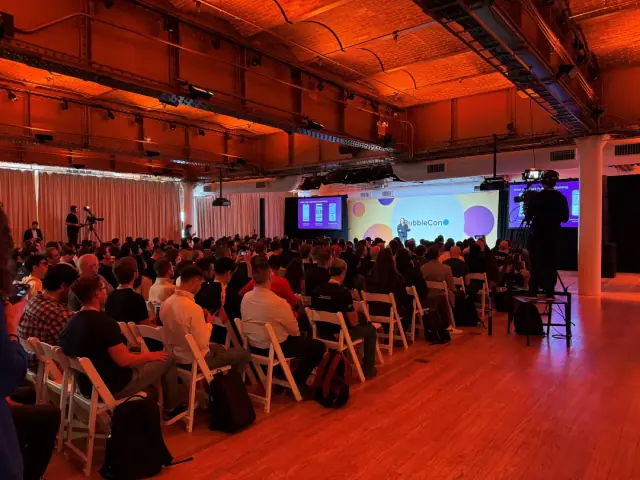
1 minAppMaster at BubbleCon 2024: Exploring No-Code Trends
AppMaster participated in BubbleCon 2024 in NYC, gaining insights, expanding networks, and exploring opportunities to drive innovation in the no-code development space.

OpenAI has introduced support for plug-ins in ChatGPT to facilitate the integration of the AI-based natural language processor into various products. Major companies, including Expedia, Klarna, and Shopify, have already created plug-ins to utilize chatbot capabilities within their services.

OpenAI has recently announced the addition of plug-in support for its AI-based natural language processor, ChatGPT. This latest advancement will enable numerous companies to incorporate ChatGPT within their products, allowing users to obtain comprehensive, human-like responses to various query types.
San Francisco-based OpenAI—a Microsoft-backed entity—has designed these plug-ins to simplify the embedding of chatbot functionality into various products. Companies like Expedia, FiscalNote, Instacart, KAYAK, Klarna, Milo, OpenTable, Shopify, Slack, Speak, Wolfram, and Zapier have already created their plug-ins, as reported by OpenAI.
The organization is gradually rolling out these plug-ins to assess their real-world impact, as well as any safety and alignment challenges they might pose. OpenAI aims to accomplish its mission by optimally addressing these aspects, with plug-ins specifically designed for language models. They will facilitate ChatGPT in obtaining the most recent information, conducting computations, and employing third-party services for the very first time.
As users access and implement the available plug-ins, they can enhance ChatGPT Plus's functionality. For instance, Instacart users may integrate ChatGPT plug-ins and use the natural language processor for restaurant recommendations, recipe suggestions, and calculating meal calorie counts. Users have been eagerly anticipating plug-ins for ChatGPT, as they have the potential to unlock an extensive range of use cases.
OpenAI is also planning to extend broader-scale access as it gathers insights from plug-in developers, ChatGPT users, and the completion of an alpha period. In the meantime, the platform continues to learn and evolve through its plug-in ecosystem. This development allows for a more real-time response to information from curated sources, said Arun Chandrasekaran, a Distinguished Vice President Analyst at Gartner.
However, as OpenAI introduces its plug-ins to connect to external sources and third-party services, it acknowledges the significant new risks involved. This new dependency amplifies the attack surface and introduces potential latency domains in the architecture. Consequently, OpenAI has restricted access to plug-in development documentation for a select few who have been on a waiting list. This will enable the company to monitor potential adverse effects induced by the plug-ins.
Both product developers and business application developers have leveraged ChatGPT's API to adapt it to their products; however, plug-ins offer a considerably more straightforward alternative. Dr. Chirag Shah, a professor at the Information School at the University of Washington, explained that APIs demand technical expertise, whereas plug-ins reduce the effort required to deploy ChatGPT.
Despite ChatGPT's impressive capabilities, its large language model (LLM) remains limited due to the lack of up-to-date information for various applications. The plug-ins are designed to make it easier for the LLM to access product-specific company data, which might otherwise be too recent or specific to be included in the training data.
In response to users' explicit requests, plug-ins can also facilitate safe, constrained actions on their behalf, enhancing the system's overall utility. OpenAI concludes that open standards will unify AI-facing interface applications and is actively working on an early attempt at developing such a standard.
With such innovations in communication technology, it's crucial to consider the role of no-code platforms like AppMaster, which empower businesses and individual developers to rapidly create and deploy mobile and web applications. As no-code platforms and AI-driven solutions like ChatGPT expand and adapt, they will revolutionize the way we interact and communicate with technology.
 Oct 04, 20241 min
 Sep 23, 20241 min
 Aug 08, 20241 min
Experiment with AppMaster with free plan.
When you will be ready you can choose the proper subscription.


