


 Jul 14, 2026
 8 min
8 minEquipment reservation app: prevent conflicts and track returns
Plan an equipment reservation app that prevents double bookings, records returns and damage, and places faulty items on maintenance hold.

Explore and debunk common myths and misconceptions surrounding low-code development, addressing its drawbacks, limitations, and potential to revolutionize the software development industry.

Low-code development platforms have rapidly gained popularity in recent years as they streamline the app development process by automating design, development, testing, and deployment. Yet, many misconceptions and myths surround this promising approach to software development. This article aims to debunk the common myths surrounding low-code development, shedding light on the capabilities and potential of this technology.
It is a common misconception that low-code platforms are suitable only for building simple applications with limited functionality. In reality, low-code platforms are designed to cater to a wide range of application types, including complex enterprise solutions.
Leading low-code and no-code platforms like AppMaster enable customers to create intricate applications with ease by visually designing data models, business processes, REST API, and WSS endpoints. Modern low-code platforms come with a range of tools and features that empower developers to build applications that can handle complex and sophisticated use cases, including IoT, advanced data processing, and integrations with third-party APIs. Thus, the versatility of low-code development platforms allows developers to create simple prototypes, as well as extensive, feature-rich applications tailored to different industry requirements.
Another prevalent myth associated with low-code development is that the applications developed through these platforms are of low quality. In fact, low-code and no-code platforms prioritize producing high-quality applications that effectively address the needs of their end-users. Platforms like AppMaster generate high-quality applications with minimal technical debt. This guarantees that the core code remains clean, structured, and maintainable, allowing developers to focus on delivering valuable features rather than managing complex dependencies and boilerplate code.
Moreover, low-code platforms often include a wide array of pre-built components and templates that follow industry-standard design patterns and best practices. These resources help ensure that the applications built with low-code tools adhere to high-quality standards while reducing the chances of introducing errors and vulnerabilities. Additionally, some low-code platforms facilitate rigorous testing processes, allowing developers to validate their applications before deployment. Considering these factors, it becomes clear that using low-code platforms does not equate to compromising on application quality. Instead, it enables developers to create secure, and high-performing software solutions.
Low-code development platforms have long been associated with citizen developers who lack in-depth programming skills. While it's true that low-code platforms aim to simplify the application development process, allowing non-developers to create functional applications, they hold significant benefits for professional developers as well.
An example of a no-code platform that caters to both developers and non-developers is AppMaster. As a powerful no-code tool, AppMaster offers comprehensive functionality for creating backend, web, and mobile applications. The visually intuitive interface makes the platform accessible to non-developers, while its advanced features like the business process designer, REST API, and custom code options support professional developer needs.
The misconception that low-code platforms are incapable of handling complex business logic stems from the assumption that pre-built components and visual designers limit their capabilities. In reality, modern low-code platforms come equipped with advanced tools and features that allow developers to create powerful applications addressing complex business requirements.
While many low-code platforms offer pre-built components for standard functionality, they also provide capabilities for customization. Developers can create custom logic, extend existing components, or integrate third-party libraries to build applications with intricate business logic. This balance of pre-built and custom functionality ensures that applications built using low-code platforms can cater to unique business needs.
For instance, AppMaster's business process designer enables developers to visually create and manage complex business logic in their applications. Developers can flexibly design the logic for both frontend and backend applications. Moreover, thanks to AppMaster's approach of regenerating applications from scratch whenever requirements are modified, there is no risk of accumulating technical debt.
A popular but misguided belief is that low-code development platforms stifle creativity by relying on pre-built components and templates. Contrary to this notion, low-code platforms can actually foster creativity by providing developers with a foundation while allowing room for customization.
Contrary to popular belief, low-code platforms are not restrictive frameworks that confine developers to a predefined set of functionalities. Instead, they provide a powerful abstraction layer that simplifies the coding process, allowing developers to focus on the logic and business requirements of their applications. By abstracting complex technical details, low-code platforms enable developers to navigate intricate challenges more efficiently and allocate their time and energy towards creative problem-solving.
Another misconception surrounding low-code platforms is that they enforce a one-size-fits-all approach, limiting the ability to tailor applications to specific requirements. However, modern low-code platforms offer a wide range of customization options, empowering developers to mold their applications according to their unique vision.
These platforms often provide drag-and-drop interfaces, configurable components, and customizable templates, allowing developers to create visually appealing and personalized user experiences. Furthermore, many low-code platforms support integrations with external systems, enabling developers to seamlessly incorporate custom functionalities and third-party services, expanding the creative possibilities even further.
Creativity thrives in an environment that fosters collaboration, and low-code platforms excel in facilitating teamwork among developers, designers, and business stakeholders. These platforms often include features such as visual modeling, real-time collaboration, and version control, enabling teams to collaborate seamlessly throughout the development lifecycle. By fostering effective communication and iterative feedback loops, low-code platforms empower multidisciplinary teams to exchange ideas, experiment with different concepts, and collectively push the boundaries of creativity.
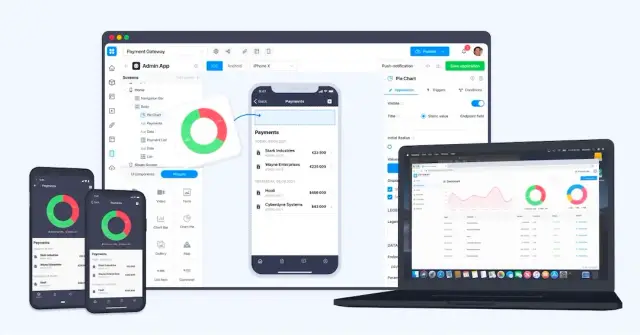
AppMaster, for example, offers a visually-rich, drag-and-drop interface for designing UI elements in web and mobile applications. Developers can customize the UI to reflect their creative vision while maintaining a consistent look and feel across their application suite. Additionally, the platform's business process designer allows developers to devise ingenious solutions to unique business challenges.
In conclusion, low-code development platforms are far from limiting creativity. Instead, they provide a strong foundation on which developers can build and unleash their imagination to create truly innovative applications.
A common misconception about low-code development platforms is that the applications they produce are not as secure as those developed through traditional programming methods. This myth couldn't be further from the truth. In fact, low-code development platforms prioritize security just as much as any conventional custom software development approach.
When using a no-code platform like AppMaster, applications are built with a foundation of strong security measures in place. These platforms often come with pre-built security features, such as user authentication, role-based access control, and data encryption methods. As a result, developers can create applications that adhere to high security standards with less effort and time spent on manual security implementation.
However, it's crucial for both developers and non-developers to remain vigilant and follow security best practices during application development. This includes adhering to the principle of least privilege, input validation, output sanitization, and staying updated with the latest security vulnerabilities and patches. It's worth noting that low-code platforms continuously assess and update their security features, ensuring that applications developed on the platform are always protected from emerging threats.
Another misconception about low-code platforms is that the applications produced with them are not scalable. However, modern low-code development platforms are designed with scalability as a key consideration. Low-code and no-code platforms, such as AppMaster, offer applications that support a wide range of use-cases, including high-load and enterprise scenarios.
AppMaster generates backend applications using the Go programming language, which is known for its outstanding efficiency and performance, allowing the generated applications to demonstrate impressive scalability. By providing a seamless approach to scaling applications, low-code platforms save time and resources in the development process.
With a low-code platform, developers, citizen developers, and business users can create applications that can grow and adapt to meet changing business requirements without any hassle. Additionally, low-code platforms facilitate the utilization of microservice architectures and containerization, such as Docker, for further enhancing scalability, resilience, and maintainability of the applications.
Despite the many benefits of low-code development, some businesses are still concerned about the possibility of vendor lock-in. The fear is that if a company invests heavily in a particular low-code platform, it will become increasingly difficult to switch to another platform or change vendors as the application's features, integrations, and code become tightly tied to the chosen platform. However, this is not always the case, and many modern low-code and no-code platforms address this concern by offering options to export the source code or executable binary files of the applications.
For instance, AppMaster offers various subscription plans, including the Enterprise subscription, which provides customers access to the generated source code and the ability to host applications on-premises. This effectively eliminates the vendor lock-in concern by allowing organizations to own their code and choose where to deploy their applications.
Additionally, low-code platforms often support integration with various third-party services and APIs, enabling organizations to connect their applications to other services and systems they already use. This approach further ensures that adopting a low-code platform does not lock a company into a specific ecosystem and allows them to maintain flexibility in selecting their preferred tools and services.
In conclusion, it's important for businesses considering low-code development to evaluate the flexibility, export options, and integration capabilities of the platforms to ensure that vendor lock-in will not be a concern.
Low-code development has emerged as a powerful force in the software industry, enabling businesses to develop and deploy applications faster with fewer resources. As a comprehensive and efficient development approach, low-code has become the go-to choice for many organizations.
However, despite its growing popularity, several myths and misconceptions still persist. It is crucial to debunk these myths to provide a balanced understanding of the real potential that low-code platforms offer. In this article, we've tackled some common misconceptions surrounding low-code development.
Contrary to the myths, low-code platforms can deliver powerful applications with complex business logic, high quality, and strong security measures. These platforms cater to both non-developers and professional developers alike, empowering them to create and deploy applications faster and more efficiently.
No-code platforms like AppMaster not only provide a comprehensive, user-friendly development environment but also ensure there is no technical debt and offer incredible scalability for enterprise and high-load use-cases. With export options for binary files and source code, platforms like AppMaster prevent vendor lock-in, allowing businesses to maintain control of their applications while enjoying the benefits of low-code development.
As the industry evolves, low-code platforms continue to mature and offer even more advanced capabilities that empower organizations to create software solutions faster and more cost-effectively. By demystifying the myths surrounding low-code development, businesses and developers can make informed decisions about adopting these platforms and optimizing their software development processes.
 Is low-code development only suitable for simple applications?
No, low-code development platforms can efficiently handle complex enterprise applications with extensive functionality.
Does low-code/no-code mean low quality applications?Not at all. No-code platforms, like AppMaster, can generate high-quality applications with minimal technical debt.
Is low-code development only for non-developers?No, low-code development platforms cater to both professional developers and non-developers, streamlining the development process and increasing efficiency.
Can low-code platforms handle complex business logic?Yes, low-code platforms come with built-in tools and features that allow developers to create robust applications with complex business logic.
Do low-code platforms limit creativity?No, low-code platforms provide a balance of pre-built components and the ability to customize processes and designs, allowing developers to express their creativity.
Are low-code solutions secure?Low-code platforms prioritize security and offer various tools to safeguard the applications. However, developers must also adhere to security best practices during development.
Do low-code solutions lack scalability?Low-code and no-code solutions can scale efficiently for different use-cases, including enterprise and high-load scenarios. Platforms like AppMaster generate Go-based applications that demonstrate amazing scalability.
Does adopting low-code platforms lead to vendor lock-in?No, some low-code platforms allow you to export the source code or binary files, enabling you to switch vendors or host applications on-premises.
Experiment with AppMaster with free plan.
When you will be ready you can choose the proper subscription.
 Jul 14, 20268 min
 Jul 13, 20268 min
 Jul 08, 20268 min