


 Jul 14, 2026
 8 min
8 minEquipment reservation app: prevent conflicts and track returns
Plan an equipment reservation app that prevents double bookings, records returns and damage, and places faulty items on maintenance hold.

Discover the impact of low-code platforms on enterprise IT, as they streamline app development, enable IT agility, and promote innovation. Learn how low-code solution can drive digital transformation for your organization.

The enterprise IT industry has undergone significant changes over the past few years, driven by the relentless pace of digital transformation and ever-evolving customer expectations. This shift has compelled organizations to rethink their approach to application development, deployment, and management. Traditional software development methodologies, characterized by lengthy development cycles, complex coding requirements, and substantial maintenance overhead, are no longer sufficient to meet the growing demand for agile, scalable, and innovative applications.
Fortunately, the emergence of low-code platforms is helping enterprises address these challenges by providing a more streamlined, simplified, and cost-effective approach to application development. Low-code platforms enable users to develop web, mobile, and backend applications quickly and easily, using a visual drag-and-drop environment that minimizes the need for manual coding. By adopting low-code solutions, enterprises can modernize their IT infrastructure, enhance collaboration between IT and business units, and accelerate the delivery of high-quality applications that meet customer needs.
Low-code platforms are transforming the enterprise IT and disrupting the way organizations develop, deploy, and manage applications. They are regarded as game changers for several key reasons:
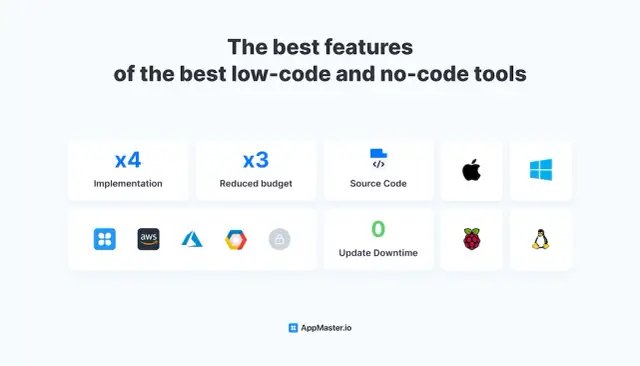
The adoption of low-code and no-code platforms fundamentally transforms the way IT teams work, empowering them to be more agile, innovative, and efficient. Here are some of the key benefits of low-code platforms for IT teams:
Low-code solutions foster collaboration between IT and business units, as they provide a common language and platform for developing applications. Business experts can express their requirements clearly and participate in the development process, ensuring the final output fully meets their needs.
The visual nature of low-code platforms makes them accessible to users with diverse expertise levels, reducing dependence on traditional coding skills. This democratization of application development enables IT teams to focus on more strategic tasks while increasing overall development capacity.
Low-code platforms promote a culture of agility and continuous improvement by enabling IT teams to rapidly experiment with new ideas, test prototypes, and refine solutions. This newfound flexibility allows organizations to respond more effectively to market dynamics and maintain a competitive edge in the digital era.
As low-code platforms generate clean, standardized code and minimize technical debt, IT teams benefit from simplified application maintenance and reduced overhead.
One leading example of a no-code solution that supports enterprise IT initiatives is AppMaster, a powerful and comprehensive platform for building backend, web, and mobile applications. It offers an extensive range of features and capabilities, including visual data model creation, business process design, and fully interactive application development, all without any coding. Moreover, AppMaster is designed for scalability and high-load use cases, making it an ideal choice for organizations looking to modernize their IT infrastructure and reap the numerous benefits of low-code and no-code solutions.
In the competitive world of business, organizations constantly strive to reduce operational complexity and costs while maximizing efficiency. Low-code platforms play a significant role in achieving this objective, as they streamline app development and enable IT teams to deliver more applications with fewer resources.
One of the key advantages of low-code platforms is their visual development environment, which allows developers and non-technical users alike to build applications without the need for extensive coding expertise. This democratization of app development reduces the reliance on skilled programmers, ultimately lowering personnel costs and minimizing the risk of talent shortages.
Moreover, low-code platforms help organizations avoid technical debt, which can lead to exorbitant maintenance expenses and operational challenges over time. By generating applications from scratch whenever requirements are changed, low-code and no-code solutions like AppMaster eliminate the need for manual updates and ensure optimal code quality.
Additionally, low-code platforms enable enterprises to reduce provisioning and infrastructure costs. Modern low-code solutions support the development of cloud-native applications, which run on scalable, elastic infrastructure that automatically adjusts to fluctuating resource requirements. This results in more efficient and cost-effective utilization of IT resources, helping organizations optimize their overall operational expenses.
Today IT agility and innovation are crucial for organizations seeking to maintain a competitive edge and drive digital transformation. Low-code platforms are instrumental in enabling enterprises to achieve these goals by providing a fast and flexible approach to application development.
Low-code solutions facilitate quick development and deployment of applications, allowing organizations to respond swiftly to changing market conditions and seize new business opportunities. This agility is particularly beneficial for enterprises that require frequent updates and enhancements to their applications, as low-code platforms enable rapid iteration and adjustments without the need for time-consuming manual coding.
Moreover, low-code platforms foster a culture of experimentation, empowering development teams to try out new ideas and incorporate feedback quickly. By breaking down barriers between IT and business units, low-code solutions can accelerate innovation and drive continuous improvement of business processes. This openness to experimentation enables organizations to fine-tune their applications and adapt quickly to changing customer needs and expectations.
Finally, low-code platforms contribute to the overall digital maturity of an organization by facilitating the integration of modern technologies such as artificial intelligence, machine learning, and IoT. As a result, enterprises can capitalize on emerging trends and create innovative, cutting-edge applications that drive value and differentiation in the marketplace.
AppMaster is a premier no-code platform designed to support the unique needs of enterprise IT environments. With its powerful and comprehensive feature set, AppMaster enables organizations of all sizes to develop and deploy advanced web, mobile, and backend applications with ease.
AppMaster's intuitive drag-and-drop interface simplifies the development process, enabling users to visually create data models, design business logic, and build highly interactive applications without any coding experience. This approach democratizes application development, fostering collaboration between IT and business stakeholders and allowing for a more streamlined and efficient workflow. Built with scalability in mind, AppMaster can effortlessly handle enterprise-level, high-load use cases. Its stateless backend applications, generated with Go programming language, ensure optimal performance and scalability, while the platform's support for Postgresql-compatible databases as primary databases ensures compatibility with popular data management systems.
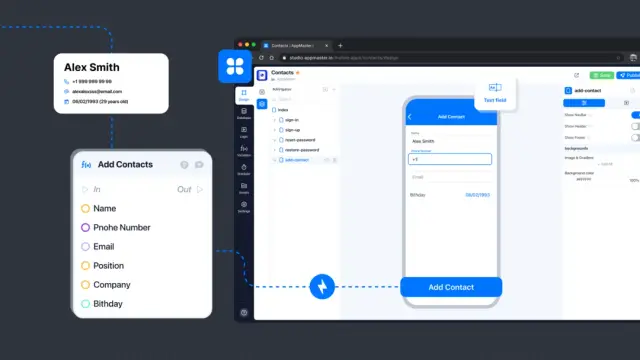
Additionally, AppMaster's flexible deployment options, including on-premises hosting, make it an ideal choice for organizations with varied operational requirements. Recognized as a High Performer by G2 in multiple categories, including No-Code Development Platforms and Rapid Application Development (RAD), AppMaster has already helped thousands of users accelerate their digital transformation journey. With its commitment to enhancing enterprise IT agility and innovation, AppMaster is well-positioned to become an essential tool for organizations seeking to modernize their IT infrastructure and stay ahead of the competition.
The future of low-code in enterprise IT holds immense potential for innovation and transformation. As technology continues to advance at a rapid pace, low-code development is expected to play a pivotal role in shaping the IT industry. Here are some key trends and predictions for the future of low-code in enterprise IT:
As these trends unfold, low-code development will become an integral part of enterprise IT strategies, enabling organizations to rapidly innovate, adapt to changing market needs, and drive digital transformation. By embracing low-code platforms and staying ahead of the curve, enterprises can position themselves for success in the dynamic and competitive business environment of the future.
 How are low-code platforms changing the enterprise IT sphere?
Low-code platforms are transforming the enterprise IT sphere by simplifying application development, enabling IT agility, and promoting faster innovation. By adopting low-code solutions, enterprises can modernize their IT infrastructure, enhance collaboration between IT and business units, and accelerate digital transformation.
Why are low-code platforms considered game changers in enterprise IT?Low-code platforms are game changers in enterprise IT because they allow organizations to deliver applications faster, reduce operational complexity and costs, and promote a more agile and innovative IT environment. As a result, businesses can respond quickly to changing market demands and maintain a competitive edge in the digital era.
How can low-code solutions empower IT teams?Low-code solutions empower IT teams by providing a user-friendly, visual application development environment that enables both developers and non-developers to create advanced web, mobile, and backend applications. This democratization of app development fosters collaboration, reduces dependence on traditional coding expertise, and allows IT teams to focus on more strategic tasks.
Can low-code platforms help reduce operational complexity and costs?Yes, low-code platforms can significantly reduce operational complexity and costs in an enterprise IT environment. By simplifying and streamlining application development, low-code solutions enable teams to develop more applications with fewer resources, while also minimizing technical debt and maintenance overhead.
What role do low-code platforms play in enhancing IT agility and innovation?Low-code platforms enhance IT agility and innovation by enabling rapid application development and deployment, thus allowing organizations to respond quickly to evolving market requirements and seize new business opportunities. Moreover, low-code solutions foster a culture of experimentation and continuous improvement, empowering teams to innovate and transform business processes with ease.
How does AppMaster's no-code solution support enterprise IT initiatives?AppMaster's no-code platform supports enterprise IT initiatives by offering a powerful and comprehensive solution for building backend, web, and mobile applications. With AppMaster, users can visually create data models, design business processes, and develop fully interactive applications without any coding. Additionally, AppMaster is designed for scalability, making it ideal for enterprises with high-load use cases and requirements for on-premises deployment.
Experiment with AppMaster with free plan.
When you will be ready you can choose the proper subscription.
 Jul 14, 20268 min
 Jul 13, 20268 min
 Jul 08, 20268 min