


 Jul 14, 2026
 8 min
8 minEquipment reservation app: prevent conflicts and track returns
Plan an equipment reservation app that prevents double bookings, records returns and damage, and places faulty items on maintenance hold.

Discover how zero-code platforms revolutionize agile development, enabling rapid prototyping, reducing technical debt, and empowering non-technical users to contribute to software projects.

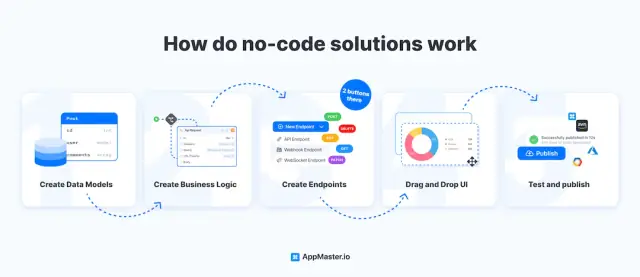
Zero-code platforms, also known as no-code platforms, are software development tools designed to enable users to create applications without writing any code. Instead of requiring programming expertise, these platforms utilize visual designers, drag-and-drop interfaces, and pre-built templates to facilitate application building and customization.
These platforms democratize software development by allowing business users and non-technical stakeholders to easily create and modify applications, which significantly reduces reliance on specialized developers. As a result, zero-code platforms speed up application development, minimize technical debt, and foster cross-functional collaboration.
One example of a powerful zero-code platform is AppMaster.io, which offers an extensive suite of integrated tools, enabling users to build web, mobile, and backend applications with ease. With AppMaster.io, customers can visually design data models, create business processes using a visual BP Designer, and generate REST API and WSS endpoints. This approach enables rapid application development, minimizes technical debt by always generating applications from scratch, and simplifies collaboration among team members.
Agile Development is a set of principles and practices that prioritize flexibility, collaboration, and iterative development in software development projects. It is an approach that promotes adaptive planning, continuous improvement, and delivering value to customers in shorter development cycles known as sprints.
Agile Development emphasizes frequent communication and collaboration among cross-functional teams, enabling them to respond to changing requirements and customer feedback more effectively. This iterative and incremental approach allows for greater flexibility and adaptability in managing complex projects, ultimately resulting in faster delivery, improved quality, and increased customer satisfaction.
In the realm of software development, agile methodologies are widely embraced as they prioritize flexibility, adaptability, and collaboration. Zero-code platforms can be a game-changer for agile development teams, empowering them with the following advantages:
Rapid prototyping is a critical aspect of agile development, allowing teams to quickly build functional versions of applications to validate ideas and collect user feedback. Zero-code platforms streamline the prototyping process by offering several key features:
Incorporating rapid prototyping into the agile development process enables teams to quickly validate ideas, explore multiple design options, and adapt to changing requirements with ease. With zero-code platforms, users can build and refine prototypes in just a fraction of the time required by traditional development methods, allowing for more efficient and cost-effective project execution.
Zero-code platforms play a significant role in reducing technical debt traditionally linked with software development. Technical debt refers to the long-term consequences of taking shortcuts or making suboptimal decisions during the development process, which can result in additional effort, cost, and time spent on fixing issues or updating outdated code.
By using a zero-code platform, much of the glue code, boilerplate code, and other repetitive tasks are handled automatically, reducing the risk of human error and ensuring the code remains lean, efficient, and up-to-date. Whenever there's a change in requirements or updates in the original design, zero-code platforms can regenerate the entire application with a few clicks, eliminating the need for manual updates and groundwork.
Moreover, zero-code platforms serve as powerful enablers for collaboration among team members, including developers, business analysts, and stakeholders. Since these platforms offer a visual, drag-and-drop interface, they enable cross-functional teams to work together efficiently. Developers can focus on more complex and value-adding tasks, while non-technical team members can contribute to the development process by creating and updating components using the user-friendly interface provided by zero-code platforms. This improved collaboration often translates into quicker development cycles, more accurate estimations, and smoother iterative processes.
Among the most significant advantages of zero-code platforms is their ability to bring non-technical users into the software development process. By offering an intuitive, visual interface with drag-and-drop functionality, these platforms enable non-developers to create, customize, and manage software applications without requiring any programming knowledge.
This democratization of software development helps bridge the gap between business and technology teams, aligning their goals and fostering improved communication. Non-technical users, such as product managers, business analysts, and other stakeholders, can actively participate in the development lifecycle, providing valuable input and accelerating the delivery of software solutions tailored to the needs of the organization.
Furthermore, by empowering non-technical users to contribute to the development process, organizations can reduce their reliance on overworked development resources. This allows developers to focus on more complex, high-value tasks instead of getting bogged down in tedious or repetitive work.
Selecting the right zero-code platform for your agile development process is a crucial decision that can greatly impact the success of your projects. With numerous platforms available in the market, it's vital to consider various factors before making a choice. Here are some essential aspects to look for in a zero-code platform that would facilitate a more agile development process:
The primary goal of adopting a zero-code platform is to streamline the development process. Therefore, ensure that your chosen platform is easy to use for developers and non-technical users alike. User-friendly interfaces, drag-and-drop capabilities, and easy-to-use design tools should be an integral part of the platform. Additionally, it should offer a high degree of customizability, allowing you to tailor UI components, write custom scripts, and build complex workflows to suit your project's unique requirements.
Agile development processes often involve utilizing multiple systems and APIs. Choose a zero-code platform that offers seamless integration with the tools your team already uses. The platform should be able to connect and communicate easily with databases, CRM and ERP systems, and third-party APIs. A platform that supports a wide variety of pre-built connectors and integration points will facilitate smoother collaboration and data exchange between different systems.
Your development projects may grow in complexity over time, and the zero-code platform should be capable of handling this growth. Evaluate the platform's scalability by considering its ability to accommodate increasing numbers of users, data storage, and processing demands. Additionally, the platform should efficiently manage multiple projects simultaneously without any performance issues, ensuring that it remains an indispensable tool even as your organization and projects expand.
The ideal zero-code platform will cater to various platforms such as web, mobile, and backend applications. A comprehensive solution like AppMaster.io enables users to create applications with visually designed data models, business logic, REST API, and WSS endpoints, among other features. A platform that can generate web, mobile, and backend applications from a single codebase significantly reduces development time and efforts.
An active community and strong support system are integral to the success of any software tool. Choose a zero-code platform backed by a community where you can find resources, tutorials, and troubleshooting guides. Additionally, the platform provider should offer excellent support to ensure quick resolution of any issues you may encounter.
Finally, consider the subscription plans and pricing options available for your chosen zero-code platform. Plans should cover a wide range of needs, from small businesses to enterprises, and offer the required features at a reasonable cost. For example, AppMaster.io offers six subscription types, ranging from a free learning and exploration plan to customized enterprise solutions, catering to various project requirements and budgets.
By carefully evaluating these factors and selecting a zero-code platform that aligns with your agile development goals, you can quickly and efficiently build and deploy powerful applications. Adopting a comprehensive zero-code platform like AppMaster.io can further enhance the benefits of agile development by empowering your team to create scalable, feature-rich applications with minimal technical debt.
 What are zero-code platforms?
Zero-code platforms are software development tools that enable users to create applications without writing any code, instead using visual designers and drag-and-drop interfaces to build and customize applications.
How do zero-code platforms support agile development?Zero-code platforms allow developers to quickly create and iterate on prototypes, reduce technical debt, improve collaboration among team members, and empower non-technical users to contribute to the software development process.
What is rapid prototyping?Rapid prototyping is the process of creating a functional version of a software application quickly by leveraging pre-built templates, visual designers, and automated code generation.
How can zero-code platforms reduce technical debt?Zero-code platforms minimize technical debt by automatically generating code and updating applications with each change in requirements, ensuring that applications are kept up-to-date without manual intervention.
Why is collaboration important in agile development?Collaboration is essential in agile development because it promotes greater efficiency, fosters a better understanding of project requirements, and enables teams to adapt quickly to changes.
How do zero-code platforms empower non-technical users?Zero-code platforms provide an intuitive interface and easy-to-use tools that allow non-technical users to contribute to the development process, bridging the gap between business and technology teams.
What are some examples of successful agile development with zero-code platforms?Examples include organizations that have used zero-code platforms like AppMaster.io to rapidly build and deploy applications while minimizing technical debt and fostering cross-team collaboration.
How do I choose the right zero-code platform for my agile development needs?Consider factors such as ease of use, customizability, integration capabilities, scalability, and platform support when selecting a zero-code platform for your agile development projects.
Experiment with AppMaster with free plan.
When you will be ready you can choose the proper subscription.
 Jul 14, 20268 min
 Jul 13, 20268 min
 Jul 08, 20268 min