


 Jul 14, 2026
 8 min
8 minEquipment reservation app: prevent conflicts and track returns
Plan an equipment reservation app that prevents double bookings, records returns and damage, and places faulty items on maintenance hold.

Explore the essential resiliency patterns for microservices architecture, understand their role in distributed systems, and learn practical steps to implement them using no-code tools like AppMaster.

Microservices architecture has gained significant popularity over the last several years, being embraced by organizations for its ability to enable agility, scalability, and maintainability in software development. However, as microservices applications heavily rely on distributed systems, resiliency becomes critical to their design and performance.
Microservices resiliency is an application's ability to withstand failures, maintain availability, and provide consistent performance in distributed environments. Resiliency patterns in microservices are a set of established mechanisms that empower applications to manage failures gracefully, ensuring stability in the face of complex, distributed systems. By implementing resiliency patterns, developers can minimize the impact of unexpected errors or excessive load on the system, reducing downtimes and enhancing the overall performance characteristics of the application.
In a distributed environment, failures are inevitable due to network latency, unresponsive services, hardware malfunctions, or other unpredictable events. It is crucial to embrace these uncertainties and develop strategies to handle them effectively. This is where resiliency patterns come into play, as they help create a fault-tolerant system that responds efficiently to failures, ensuring the availability and functionality of the application. Using resiliency patterns in microservices provides several crucial advantages:

By incorporating resiliency patterns, developers can build applications that can withstand failures and learn and adapt from them, ensuring an evolving and resilient system.
Several resiliency patterns have emerged as best practices for handling failures in microservices architecture. Each pattern addresses specific challenges, ensures the application remains operative, and performs consistently in the face of unforeseen events. Developers can mix and match these patterns to tailor a resiliency strategy that best suits their application's unique requirements. Some of the most common resiliency patterns include:
Understanding these patterns and their practical implementation can give developers the edge they need to create microservices applications that demonstrate high resiliency, availability, and performance.
The Circuit Breaker pattern is an essential resiliency mechanism used in microservices architecture to prevent cascading failures across services in a distributed system. Inspired by the concept of electrical circuit breakers, this pattern provides a fail-fast approach, enabling graceful handling of unexpected errors without bringing down the entire system.
A typical microservices architecture consists of multiple services communicating with each other. When a service faces issues like unavailability or increased latency, the dependent services might also encounter delays or become unresponsive. This is where the Circuit Breaker pattern comes into play. It detects when a service is in a perilous state and redirects traffic away from it, maintaining stability in the system.
The Circuit Breaker pattern works in three states: closed, open, and half-open.
This is the normal operational state when there are no errors encountered. In this state, all requests from the client are passed through to the downstream service.
If a predetermined number of errors or continuous service unavailability is encountered, the circuit breaker switches to an open state. During this state, the Circuit Breaker stops sending requests to the faulty service, returning an immediate failure response and preventing the issue from cascading across the system. This also gives the service time to recover.
After a certain amount of time has passed (known as the reset timeout), the Circuit Breaker enters a half-open state. It allows a limited number of requests to the distressed service to test its recovery. If the service has recovered and handles requests with no errors, the circuit breaker returns to the closed state. Otherwise, it reverts to the open state, allowing more time for recovery.
To implement the Circuit Breaker pattern, developers can use various libraries and frameworks like Hystrix, Resilience4j, or Polly for different programming languages. Alternatively, with no-code tools like AppMaster, you can build resilient microservices without worrying about the intricacies of the pattern implementation.
In a microservices architecture, isolating resources and components is crucial to prevent a service failure from taking down the entire system. The Bulkhead pattern, derived from the design of ship compartmentalization, achieves this isolation by segregating resources to maintain stability and availability.
Think of a ship with multiple watertight compartments; even if one of the compartments becomes damaged and floods, the other compartments remain unaffected, keeping the ship afloat. Similarly, the Bulkhead pattern divides resources into separate partitions, such as threads, processes, and connection pools. If one partition encounters a problem, the others can continue to function, preventing the failure from cascading throughout the system.
There are two main types of bulkhead isolation:
Choosing the right type of isolation in the Bulkhead pattern depends on your application's requirements, infrastructure, and resource constraints. No-code tools like AppMaster can help you create efficient partitioning within your microservices, significantly improving fault tolerance and resiliency.
In a distributed system, various external factors, such as network latency or unavailability, can lead to requests taking longer than expected. Prolonged delays can result in bottlenecks, making the system unresponsive. The Timeout and Retry pattern is employed as a resiliency mechanism to tackle this challenge.
The Timeout and Retry pattern involves setting a specific time limit (or timeout) for operations. If an operation does not complete within the designated threshold, it is considered a failure. With retry logic in place, the operation can then be reattempted a certain number of times before completely giving up and returning an error.
Here are some tips for effectively using the Timeout and Retry pattern:
No-code platforms like AppMaster can help you implement the Timeout and Retry pattern efficiently, providing user-friendly interfaces for setting appropriate timeouts and managing retries without having to write complex code.
The Rate Limiter pattern is a common resiliency pattern in distributed systems designed to protect services from excessive load by controlling the rate of incoming requests. By limiting the number of requests processed in a given time period, this pattern ensures that a service remains stable, responsive, and available to users under varying load conditions. There are several rate limiting strategies commonly used in microservices:
Implementing the Rate Limiter pattern typically involves the following steps:
The Fallback pattern helps maintain the stability and availability of a microservices-based application when failures occur or when a service becomes temporarily overloaded. It allows an alternative response, known as a fallback response, to be returned when a service cannot process a request. By doing so, the Fallback pattern ensures that users still receive meaningful feedback, even if the primary service cannot provide the desired result. To implement the Fallback pattern effectively, consider the following steps:
The Fallback pattern can be combined with other resiliency patterns, such as the Circuit Breaker and Retry patterns, to further enhance the availability of microservices-based applications.
One of the key aspects of maintaining a highly available and resilient distributed system is monitoring the health of its services. The Health Check API pattern introduces a monitoring mechanism that provides real-time information on the status of individual services within a microservices-based application. Implementing a Health Check API enables early detection of issues, allowing preventive actions to be taken before they escalate and impact the system's overall performance. To implement the Health Check API pattern, follow these steps:
An effective Health Check API pattern supports proactive monitoring of service health and simplifies service discovery, load balancing, and auto-scaling mechanisms in a microservices-based application.
With the increasing popularity of low-code and no-code platforms like AppMaster, implementing resiliency patterns in microservices becomes even more efficient. By leveraging these tools' visual interface and drag-and-drop capabilities, developers can focus on designing and updating their microservices without worrying about the intricate details of coding.
Adopting resiliency patterns in a microservices architecture can be complex, especially when considering the technical intricacies and development effort required. No-code tools effectively solve this challenge by allowing non-technical developers to create, update, and maintain scalable microservices without worrying about coding intricacies.
These tools provide a visual interface and abstraction layer that simplifies the process of designing, building, and deploying microservices, enabling developers to focus on application logic rather than low-level implementation details. With no-code solutions, implementing resiliency patterns becomes a more streamlined and cost-effective process, allowing teams to create highly resilient applications that can withstand failures and maintain high availability.
Some key advantages of using no-code tools for implementing resiliency patterns in microservices include:
AppMaster.io, a leading no-code development platform, takes a comprehensive approach to implementing resiliency patterns in microservices. AppMaster enables users to quickly build and deploy highly resilient, scalable applications by providing an integrated environment for creating backend, web, and mobile applications.
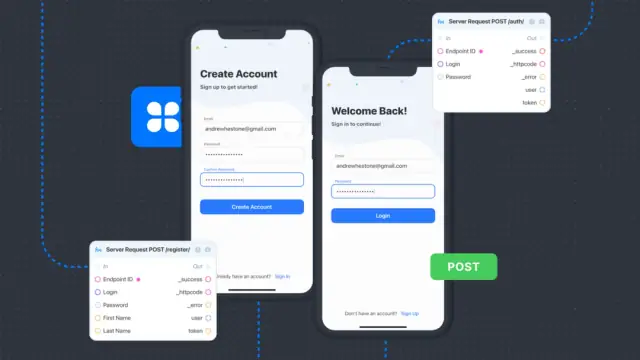
Here's how AppMaster helps you implement resiliency patterns in your microservices:
AppMaster's resilience capabilities and powerful no-code platform provide the right solution for businesses to create and maintain resilient microservices architecture across varied use cases. By adopting AppMaster's approach, organizations can build applications with the necessary fault tolerance required in today's competitive and rapidly evolving digital ecosystem.
Implementing resiliency patterns in microservices architecture is essential for creating applications that can withstand unforeseen errors and maintain high availability. No-code development platforms, such as AppMaster, offer an efficient and cost-effective approach to achieving these goals by abstracting the complexity of coding and distributed systems, thus empowering businesses to create scalable and resilient applications.
By leveraging the power of AppMaster's no-code platform, organizations can focus on their core competencies and business requirements while gaining the advantage of a reliable and highly available microservices architecture that can adapt to ever-changing demands and market conditions.
 What are microservices resiliency patterns?
Microservices resiliency patterns are a set of defined mechanisms to improve an application's capacity to handle unexpected errors or excessive load, thus maintaining its availability and robustness in the face of complex distributed systems.
Why are resiliency patterns important in microservices?Resiliency patterns are important in microservices because they help applications withstand failures, maintain availability, and enhance performance in distributed systems. These patterns ensure that an application continues to function efficiently despite encountering unexpected errors or excessive load.
What are some common resiliency patterns?Some common resiliency patterns include the Circuit Breaker pattern, Bulkhead pattern, Timeout and Retry pattern, Rate Limiter pattern, Fallback pattern, and Health Check API pattern.
How can no-code tools help implement resiliency patterns?No-code tools like AppMaster streamline the implementation of resiliency patterns by providing a visual interface that allows non-technical developers to create, update, and maintain microservices without worrying about coding intricacies. This simplifies the process and reduces development time and costs.
What is the Circuit Breaker pattern?The Circuit Breaker pattern is a resiliency mechanism that prevents cascading failures in a distributed system. It detects when a service is unavailable or under excessive load and redirects traffic away from it, maintaining stability in the overall system.
What is the Bulkhead pattern?The Bulkhead pattern is a technique used to isolate parts of a system to prevent failures from spreading across the entire application. By segregating resources, it ensures that a failure in one part doesn't take down the entire system and helps maintain stability and availability.
What is the Timeout and Retry pattern?The Timeout and Retry pattern is a resiliency mechanism that enables applications to set a specified time limit for an operation and retry it upon failure within that threshold. This pattern ensures that the application does not hang indefinitely if an operation takes longer than the designated time.
What is the Rate Limiter pattern?The Rate Limiter pattern is a technique used to regulate the number of requests processed by a service to protect it from excessive load. By controlling the rate of requests, it ensures the service remains stable, responsive, and available to users.
What is the Fallback pattern?The Fallback pattern is a strategy that allows applications to return a fallback response or alternative action when a service is unavailable, overburdened, or has encountered an error. It ensures that the application gracefully handles failures and continues to provide functionality to users.
What is the Health Check API pattern?The Health Check API pattern is a resiliency mechanism that monitors the health of services in a distributed system and provides real-time information on their status. This pattern helps identify issues early on, enabling preventive actions and ensuring the system's overall health.
Experiment with AppMaster with free plan.
When you will be ready you can choose the proper subscription.
 Jul 14, 20268 min
 Jul 13, 20268 min
 Jul 08, 20268 min