


 Jul 14, 2026
 8 min
8 minEquipment reservation app: prevent conflicts and track returns
Plan an equipment reservation app that prevents double bookings, records returns and damage, and places faulty items on maintenance hold.

Explore the transformative potential of no-code application builders for businesses and entrepreneurs. Learn how platforms like AppMaster empower you to innovate without the need for coding expertise.

The no-code movement is an evolution in software development that champions the idea that technology should not be the exclusive realm of those who can understand and write complex code. This paradigm shift is predicated on the belief that app creation should be accessible to everyone, regardless of their technical background. No-code platforms have empowered a new wave of creators by simplifying the development process and breaking down technical barriers.
At the core of this movement is a range of tools and platforms designed to facilitate the swift creation of apps through graphical user interfaces and model-driven logic. These tools replace the traditional approach of handwriting code with more intuitive methods like drag-and-drop interfaces, pre-built templates, and logical connectors that are visually orchestrated to build an application's functionality from the ground up.
No-code development is especially resonant at a time when businesses across all sectors are under pressure to innovate quickly. In an environment where digital transformation is no longer a choice but a necessity, no-code tools provide a means for non-technical staff to contribute directly to organization's digital strategy. It democratizes the process, erasing the line between the 'tech-savvy' and the 'non-techy', and fosters a culture of cross-functional collaboration.
Moreover, this shift is not just about enabling the non-developer. Seasoned programmers also find value in no-code platforms for prototyping, automating mundane tasks, and producing solutions fast without manually writing every single line of code. This increases productivity and allows developers to focus on more complex problems requiring expertise.
The no-code movement believes in empowering people to bring their ideas to life at an unprecedented pace. With tools like AppMaster, what used to take months can now take days or even hours, enabling businesses and individuals to iterate rapidly and respond to the market with agility. It's about harnessing the power of visual development to make app creation an inclusive, democratic process.
In a rapidly evolving business environment, the ability to quickly adapt and bring new solutions to market can be the difference between leading the pack and lagging behind. No-code application builders have emerged as an indispensable tool for achieving such agility. Let's explore the compelling advantages of these platforms in modern application development.
First and foremost, no-code platforms simplify the software development process, making it more approachable. By replacing complex coding with intuitive drag-and-drop interfaces, these builders democratize the creation of applications, allowing individuals without a programming background to transform their ideas into reality. This lowers the barriers to entry, enabling a more diverse group of innovators to participate in app creation.
Speed is crucial in today's market, and no-code builders excel in this area. What typically takes months in traditional software development can often be accomplished in weeks or even days with a no-code approach. This rapid prototyping allows businesses to test ideas, gather feedback, and iterate quickly, greatly reducing time to market.
Developing software can be an expensive endeavor, especially when it involves hiring experienced developers. With no-code application builders, the cost of development can be significantly reduced. They eliminate the need for an extensive coding workforce and minimize the risk of costly errors or prolonged development timelines.
No-code solutions empower business users, such as marketing professionals, business analysts, and entrepreneurs, to build and deliver applications without waiting on IT departments. This self-service capability helps organizations respond promptly to market changes and customer needs, all while freeing up IT resources for more complex tasks.
While offering simplicity, no-code platforms also provide customization options to tailor applications to specific business needs. Many offer a range of templates, design elements, and functional components that can be combined and configured to create a unique and powerful user experience.
Today's no-code platforms are designed with scalability in mind. Solutions like AppMaster use back-end frameworks like Go (golang) to ensure that applications can handle increasing workloads easily. Enterprises no longer need to worry about outgrowing their software as they expand.
Maintenance is another area where no-code builders shine. They often come with built-in maintenance tools that streamline updates and bug fixes. As platforms evolve, new features and improvements can be implemented with minimal downtime, keeping the business applications current and competitive.
Modern no-code builders provide extensive integration capabilities, allowing businesses to connect their applications with existing systems, databases, and external services. These integrations enable seamless workflows and data synchronization across the organizational ecosystem.
Lastly, no-code builders serve as educational platforms, providing a gentle entry point for those learning about application development. These tools cultivate a new generation of tech-savvy professionals and entrepreneurs by familiarizing users with fundamental concepts and logic through a visual medium.
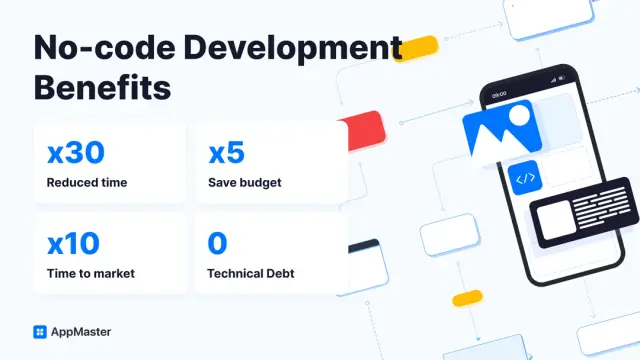
These benefits collectively contribute to a compelling case for no-code application builders in the modern era of technology. As organizations continue to look for ways to innovate without significant investments in time and capital, no-code solutions stand out as a powerful ally in software development.
The allure of no-code application builders lies in the suite of features they provide to streamline app development. Here’s a closer look at these key features:
No-code platforms are applauded for their user-friendly interfaces that simplify the app creation process. An intuitive drag-and-drop interface is at the core, allowing users to visualize the layout and structure of the app they are building. Components like buttons, forms, images, and other interactive elements can be placed onto the canvas with a simple mouse action, making app design accessible to everyone.
At the heart of any application is data, and no-code builders excel at understandably presenting complex data models. You can create and manage databases, define relationships between data sets, and set up unique data attributes without writing SQL queries or extensive database code. This equips users with the capabilities to manage data effectively, catered to their app’s specific needs.
One of the reasons no-code development is fast is the availability of pre-built templates and components. These out-of-the-box elements cover a multitude of use-cases, allowing users to select, customize, and deploy functionalities without starting from scratch. This feature is especially beneficial for non-developers who may be unsure of the best design practices, as they can leverage professionally designed elements to enhance the user experience of their applications.
No-code platforms enable users to easily define and automate complex business logic and workflows. Through a visual approach, users can create sequences of actions, decision trees, and trigger events that mirror real-life business processes. It’s a powerful way to operationalize procedures without delving into intricate coding structures.
No app exists in isolation, and the ability to integrate with other services is vital. No-code platforms generally offer a range of integration options with popular APIs, third-party services, and even external databases. This compatibility enables applications to communicate and operate with existing ecosystems, expanding the application's reach and functionality.
Immediate feedback is crucial when designing applications, and no-code builders provide real-time testing and preview environments. This helps creators immediately see how their apps will function on different devices, allowing for quick iterations and adjustments. It’s an invaluable feature for maintaining high quality and usability standards without the lag of traditional compile-run-debug cycles.
As businesses grow, so do their applications. No-code builders are designed with scalability in mind. Platforms like AppMaster are noteworthy, as they generate backend systems with Go (golang), known for its performance and scalability. These no-code solutions ensure that applications are not just for small projects but are powerful enough for enterprise-level demands.
Security and control are essential features of no-code platforms, and user permission settings are pivotal. Customizable access controls ensure that only authorized individuals can modify or view certain application parts, providing peace of mind and safeguarding important data from unintended modifications.
Deployment can be challenging in traditional development, but no-code platforms simplify it by providing direct publishing options. Maintenance is made effortless too, as any updates or changes to the app can be made within the platform and propagated instantly without the need for complex deployment procedures.
No-code development platforms continually evolve, enhancing their offerings with cutting-edge features that keep them at the forefront of innovation. By embracing no-code solutions, businesses and entrepreneurs can reduce time-to-market, cut costs, and focus their energy on creativity and problem-solving, rather than becoming mired in technical details.
The emergence of no-code application builders has catalyzed a revolution in the way businesses and individuals approach software development. Across industries, entrepreneurs and companies harness the power of no-code tools to innovate, optimize their processes, and bring their ideas to life without deep coding expertise. Here are several real-world success stories that showcase the impact of no-code platforms in practical situations.
These stories are just a few examples of how no-code development fosters innovation across sectors. Platforms like AppMaster are particularly effective because of their commitment to generating source code that is scalable, maintainable, and tailored to users' specific needs, bridging the gap between the no-code simplicity and the complexity of traditional software development.
Fulfilling the need for an efficient, flexible, and powerful approach to application development, AppMaster has emerged as a cutting-edge solution within the no-code movement. Catering to the technological aspirations of entrepreneurs, small businesses, and even larger enterprises, AppMaster pushes the boundaries of what no-code platforms can achieve. This section delves into what makes AppMaster stand out in the no-code space and how it can catalyze your application development endeavors.
AppMaster offers a streamlining transformation that underlines the core ethos of no-code development — simplification without sacrificing capability- from conceptualizing your app to launching it. The heart of this platform beats around its sophisticated visual modeling tools, enabling the virtual construction of complex data models, meticulous crafting of business processes, and intuitive design of user interfaces.
What sets AppMaster apart is its commitment to real application generation. Where some no-code tools might restrict you to their hosted environments, AppMaster equips you with the means to take your creations into the wild. With the ability to generate actual source code, executable binary files, and comprehensive documentation, you're granted complete control over the deployment of your application, whether you choose to host it on cloud services or within your local infrastructure.
A foundation built on the reliable and performant Go language ensures that backend applications created with AppMaster are inherently scalable and capable of handling enterprise-level loads. The no-code platform further defines modern development convenience through automated testing, packaging, and deployment processes, simplifying many of the technical intricacies that often overwhelm those without a software engineering background.
Moreover, the adaptability offered by AppMaster speaks to the diverse needs of today's businesses. Whether you're building a web application powered by the Vue3 framework or a mobile application relying on Kotlin and SwiftUI, AppMaster has the architectural prowess to support your project. Its allowance for customization, integration with third-party services, and the automatic generation of API documentation places it at the forefront of no-code technology.
AppMaster furthers the narrative of democratized software development by offering comprehensive learning resources for new users and a diverse range of subscription plans to suit different needs and budgets. With its vibrant and growing user base of over 60,000, it is a testament to the platform's efficacy and the genuine value it embodies in the no-code market.
Blending such powerful features with the inherent simplicity of the no-code philosophy makes AppMaster an ideal partner for those looking to innovate without the constraints of traditional coding. For businesses strategizing to put their digital footprints forward, AppMaster is a beacon of empowerment, allowing inventors and creators to translate their abstract ideas into concrete, real-world solutions swiftly and with unprecedented ease.
The no-code movement is rapidly transforming how businesses approach software development. As this technology continues to evolve, several trends will shape the future of no-code application development. These trends are not just a reflection of technological advancement, but also a response to the growing demand for agile, flexible, and accessible software solutions.
As no-code application development advances, platforms like AppMaster will keep pushing the boundaries of what can be achieved without writing traditional code. The emphasis will always be on enabling more people to create innovative solutions, lowering barriers to entry, and fostering a spirit of entrepreneurial experimentation.
Embarking on a no-code project is an exciting opportunity to bring your app idea to life without the complexities of traditional coding. Whether you aim to develop a business application, an educational tool, or a personal project, the no-code approach offers a streamlined path from concept to creation. This section'll guide you through the essential steps to kickstart your no-code journey.
Before diving into the no-code tools, having a clear vision of what you want to achieve with your application is crucial. Take the time to outline your app's core purpose, target audience, and the problems it aims to solve. Establishing a solid foundation and clear objectives will guide your development process and help align your project with your goals.
Explore various no-code platforms to find the one that best suits your project's needs. Consider factors such as the type of application you intend to build (web, mobile, or backend), the platform's ease of use, customization options, scalability, and integration capabilities. AppMaster, for example, provides a comprehensive environment for easily creating sophisticated, scalable applications.
Start with a simple sketch or wireframe of your application's UI. This doesn't have to be complex; it's merely a visual representation to help you think through the user experience (UX) and the flow of your application. Tools like AppMaster's drag-and-drop UI builder make translating your sketches into a functional interface easy.
Considering your app's UI, it's time to consider the data your application will handle. Define your data models and establish the relationships between them. Then, use the visual tools your chosen no-code platform provides to create the business logic that powers your application. Platforms like AppMaster offer a visual Business Process (BP) Designer that simplifies this step, allowing you to set up complex workflows without coding.
As you build your app, continually test each component and functionality. No-code platforms typically offer built-in testing tools that make this process efficient. Don't be afraid to iterate and make adjustments as needed — flexibility is one of the key advantages of no-code development.
Once you're satisfied with your application, it's time to deploy it. No-code platforms like AppMaster often include deployment tools that handle the complexities for you. After deployment, monitor your app's performance and user feedback to make improvements over time.
Your application might start small, but you'll need to scale as your user base grows. The right no-code platform will enable you to scale without hassles. AppMaster applications are backed by a powerful Go backend, ready for enterprise-level scaling.
No-code development isn’t just about cutting down on time and costs; it’s about empowerment. It enables individuals and businesses of all sizes to convert their ideas into tangible products efficiently. By following these steps and leveraging the capabilities of AppMaster platforms, you can confidently and easily navigate your no-code app development journey.
 What is a no-code application builder?
A no-code application builder is a platform that allows users to create software applications without the need to write traditional code. Instead, it offers a visual development environment where users can drag and drop components, define logic, and build workflows to create fully functional applications.
Who can use no-code application builders?No-code application builders are designed to be accessible to a wide audience, including entrepreneurs, business professionals, designers, and anyone with an idea for an app but without technical coding skills.
What kind of applications can be created with no-code builders?With no-code builders, you can create a range of applications including web apps, mobile apps, backend systems, and more. These platforms are versatile enough to cater to various business needs and industry requirements.
Can no-code applications be customized to fit specific needs?Yes, no-code platforms often provide various customization options to tailor applications to specific business requirements. This includes custom workflows, data models, integrations, and UI designs.
Is it possible to integrate other services into a no-code application?Many no-code platforms offer integration capabilities, allowing you to connect with other software services and APIs to extend the functionality of your application.
What are the limitations of no-code application builders?While no-code application builders are highly versatile, they may have limitations when it comes to highly specialized or complex functionality that requires custom coding. However, platforms like AppMaster work to minimize these limitations.
How does AppMaster differentiate itself in the no-code market?AppMaster stands out as a comprehensive no-code platform that generates real source code for applications. It offers a powerful visual environment for designing data models, business logic, and API endpoints, making it suitable for projects that require scalability and customizability.
Are no-code applications scalable?Yes, no-code applications can be scalable, especially when the platform generating them uses a powerful backend like Go (golang). AppMaster, for example, is built for scalability, accommodating enterprise and high-load use cases.
Is it cost-effective to use a no-code application builder?No-code platforms can significantly reduce development time and costs, making it a cost-effective solution for creating software applications. They democratize the development process, allowing organizations to invest resources into other areas of their business.
Can I migrate from a no-code platform to a traditional development approach in the future?Yes, with platforms like AppMaster that generate readable and maintainable source code for applications, you can seamlessly transition to a traditional development approach if needed.
How long does it take to build an app using a no-code application builder?The time it takes to build an app with a no-code application builder can vary, but it is generally much faster than traditional coding. Simple apps can be built in a matter of hours or days, while more complex applications may take weeks.
Can I create a mobile application with a no-code builder?Absolutely! No-code builders like AppMaster enable you to create mobile applications for platforms such as iOS and Android without the need to write any code.
Experiment with AppMaster with free plan.
When you will be ready you can choose the proper subscription.
 Jul 14, 20268 min
 Jul 13, 20268 min
 Jul 08, 20268 min