


 Jul 14, 2026
 8 min
8 minEquipment reservation app: prevent conflicts and track returns
Plan an equipment reservation app that prevents double bookings, records returns and damage, and places faulty items on maintenance hold.

Learn more about the features and use cases of Elixir and the BEAM VM.

Building high-quality, scalabile, and fault-tolerant systems has always been a priority in the software industry. While various tools and techniques exist to achieve these goals, some solutions like Elixir and the BEAM virtual machine (VM) stand out. These two technologies are particularly efficient in implementing highly available and resilient applications when used together.
This article will explore the Elixir programming language and the BEAM VM, the underpinnings of these technologies enabling fault tolerance, and how they can be leveraged to build powerful systems. Furthermore, we will briefly discuss more modern alternatives, such as AppMaster's no-code platform, for delivering comparable solutions with more accessibility.
Elixir is a functional, concurrent, and fault-tolerant programming language, built on top of the Erlang virtual machine, also known as the BEAM VM. It was created by José Valim and released in 2011 with a focus on concurrency, real-time processing, and maintainability. With support for functional and immutable data structures, Elixir has been used in various industries and is best suited for building scalable, high-performance applications. Key features of Elixir include:
These features allow developers to create modern, scalable, and fault-tolerant applications leveraging Elixir's comprehensive eco-system and the power of the BEAM VM.
The BEAM VM is at the core of both Erlang and Elixir programming languages. The virtual machine provides a fast and efficient execution environment for running concurrent, fault-tolerant applications. The critical features of the BEAM VM include:
Elixir and the BEAM VM form a powerful combination for creating fault-tolerant and highly available systems. These features provide the necessary foundation for building systems that can gracefully handle hardware and software failures and maintain continuous operation.
Elixir and the BEAM VM have been successfully employed in various industries due to their performance, fault-tolerance, and real-time capabilities. Let's explore some notable real-life use cases of Elixir and the BEAM VM:
WhatsApp, the popular messaging application with over 2 billion users worldwide, relies on Erlang, the BEAM VM's sibling language. WhatsApp's backend handles over 100 million images and 1 billion messages daily, serving billions of users with minimal downtime. Erlang and the BEAM VM's lightweight concurrency allow for rapid, efficient text processing and routing, ensuring high availability and performance for the messaging platform.

Financial institutions require always-on systems that can handle large volumes of simultaneous transactions. Elixir and the BEAM VM's fault-tolerant nature are ideally suited for this purpose, providing uninterrupted operation even in cases of software or hardware failures. Elixir's functional programming approach also ensures code maintainability and consistency as systems adapt to evolving financial regulations and business requirements.
Managing numerous IoT devices simultaneously demands a system that can efficiently scale and process high volumes of data. Elixir and the BEAM VM deliver the necessary capabilities through their concurrent processing and fault tolerance. For instance, MongooseIM, an open-source messaging platform built on Erlang, can handle millions of concurrent connections, making it suitable for massive IoT deployments and real-time communication services.
Elixir's Phoenix web framework, built on top of the BEAM VM, is ideal for developing high-performance web applications handling millions of requests per second. It provides features like real-time streaming, WebSocket support, and server-sent events for building online gaming, chat applications, and live video streaming platforms. Elixir and the BEAM VM enable developers to create highly responsive and real-time experiences to meet the demands of modern web users.
Designing fault-tolerant systems using Elixir and the BEAM VM involves several key considerations. Here are some crucial aspects of creating resilient and reliable applications with Elixir and the BEAM VM:
Elixir and the BEAM VM organize applications as a hierarchy of processes, also known as supervision trees. This structure allows for fault isolation, wherein if a process fails, only the affected process is terminated, and the supervisor responsible for managing it restarts it automatically. This approach to error handling ensures quick recovery from failures and minimal impact on the system's operation.
The BEAM VM supports hot code swapping, allowing developers to update a system's components without affecting its operation. This capability enables seamless deployments and ensures service continuity even during system upgrades. As a result, applications built on Elixir and the BEAM VM can maintain their availability even when changes are introduced to their codebase.
Elixir's concurrency model leverages the lightweight processes available on the BEAM VM, allowing applications to run millions of processes simultaneously. As a result, Elixir-built systems can scale horizontally across multiple nodes, providing increased fault tolerance in the face of potential hardware failures or network outages.
Elixir's functional programming paradigm promotes code maintainability and immutability, a valuable characteristic when building fault-tolerant systems. With Elixir, developers can write clean, modular, and testable code, allowing them to efficiently manage complex systems and rapidly respond to changing requirements.
While Elixir and the BEAM VM offer a traditional programming approach for building fault-tolerant systems, no-code and low-code platforms, like AppMaster, provide a more accessible, faster, and cost-effective way to design modern and scalable applications. Here are a few reasons why you should consider AppMaster for your next project:
AppMaster's no-code platform allows developers to visually create backend, web, and mobile applications without writing code. By providing a comprehensive integrated development environment (IDE), AppMaster streamlines the application development process, making it up to 10x faster and 3x more cost-effective.
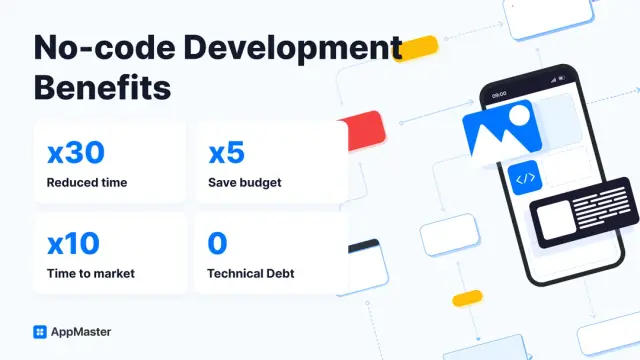
Technical debt often accrues as software systems evolve, impacting their maintainability and performance. AppMaster addresses this challenge by regenerating applications from scratch whenever requirements change. Consequently, even a single developer can create a comprehensive, scalable software solution with minimal technical debt.
AppMaster applications can work with any Postgresql-compatible database and support high-load use cases. This compatibility ensures that your application remains scalable and adaptable to evolving requirements.
While no-code platforms like AppMaster allow even non-programmers to create powerful applications, they also provide powerful features for advanced users. You can create complex business logic by configuring visual business processes (BPs), while still enjoying the code-free convenience that AppMaster offers.
By choosing AppMaster to build modern and scalable systems, developers can benefit from a comprehensive platform that simplifies the development process without compromising power or flexibility.
While Elixir and the BEAM VM offer many advantages in building fault-tolerant systems, no-code and low-code platforms have changed the software development industry. These platforms provide a user-friendly approach to create applications and address scalability and fault tolerance concerns.
No-code and low-code solutions like AppMaster provide a visual, drag-and-drop interface for designing and developing applications. They enable developers and even non-technical users to quickly build applications without writing extensive code. Such platforms can generate code in modern languages and frameworks that support scalability and fault tolerance without sacrificing the user experience. Here's a comparison of Elixir and the BEAM VM with no-code and low-code solutions:
Elixir and the BEAM VM are powerful tools for building fault-tolerant systems, offering features like hot code swapping, concurrency support, and error handling out-of-the-box. They have been used in various industries successfully by companies looking for high availability and scalability in their systems. But the emergence of no-code and low-code platforms has made it easier and more accessible for developers and businesses to build and deploy scalable, fault-tolerant systems.
Platforms like AppMaster provide an efficient way to create backend, web, and mobile applications without extensive programming experience, and still, offer many of the benefits found in Elixir and the BEAM VM. Choosing between Elixir, the BEAM VM, and no-code or low-code platforms depends on your project requirements, resources, and development timelines.
 What is Elixir programming language?
Elixir is a functional, concurrent, and fault-tolerant programming language built on top of the Erlang virtual machine (BEAM). It is designed for building scalable and maintainable applications with a focus on concurrency and real-time processing.
What is the BEAM virtual machine?The BEAM virtual machine (VM) is the runtime environment for Erlang and Elixir programming languages. It provides fast and efficient execution, concurrency support, fault tolerance, and hot code swapping, making it suitable for building highly available systems.
What are the main features of Elixir and BEAM VM?Elixir and BEAM VM offer features like fault tolerance, hot code swapping, lightweight concurrency, distributed processing, real-time capabilities, and functional programming, making them suitable for building highly available and scalable systems.
Why should I consider Elixir and the BEAM VM for building fault-tolerant systems?Elixir and the BEAM VM provide features and capabilities designed specifically for fault-tolerance and high availability. They ensure that your system can handle errors gracefully and continue running even in the face of hardware or software failures.
What are some real-life use cases of Elixir and BEAM VM?Elixir and BEAM VM have been used in various industries, including telecommunications, IoT, networking, e-commerce, and more. Successful use cases include WhatsApp, financial systems, large-scale IoT deployments, and web applications handling millions of requests per second.
How do Elixir and the BEAM VM compare to no-code and low-code solutions?Elixir and the BEAM VM provide a traditional programming approach for building fault-tolerant systems with fine-grained control over the implementation. No-code and low-code solutions like AppMaster offer a more accessible and faster development process, while still enabling scalability and maintaining high availability.
What is AppMaster?AppMaster is a powerful no-code platform that allows you to create backend, web, and mobile applications visually. By eliminating technical debt and providing a comprehensive integrated development environment, AppMaster makes application development faster and more cost-effective.
Why choose AppMaster for building modern and scalable systems?AppMaster provides a fast and accessible way to create complex applications without extensive programming knowledge. Its no-code approach allows developers to focus on business logic and user experience, while still providing scalability, high performance, and fault tolerance powered by modern technologies.
Experiment with AppMaster with free plan.
When you will be ready you can choose the proper subscription.
 Jul 14, 20268 min
 Jul 13, 20268 min
 Jul 08, 20268 min