
 Oct 04, 2024
 1 min
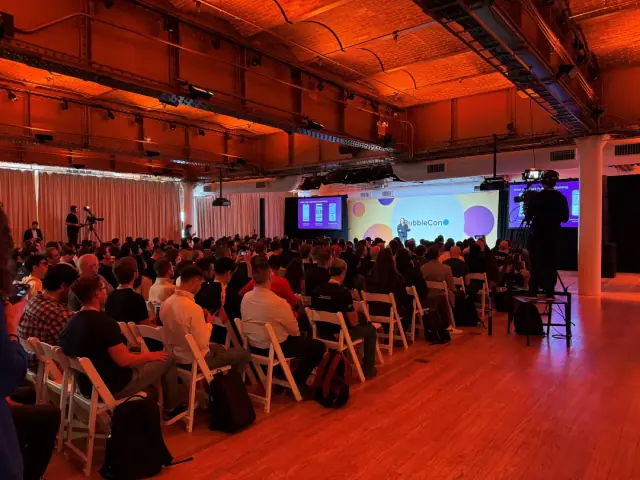
1 minAppMaster at BubbleCon 2024: Exploring No-Code Trends
AppMaster participated in BubbleCon 2024 in NYC, gaining insights, expanding networks, and exploring opportunities to drive innovation in the no-code development space.

Microsoft offers a sneak peek into the new F# syntax for string interpolation, designed to streamline interactions with interpolated strings.

The tech giant, Microsoft, has announced a preview of their new syntax for string interpolation in F#, an improvement engineered to fortify efficiency when interacting with interpolated strings. Interpolated strings are crucial for developers as they facilitate the embedding of F# expressions within string literals. However, their usage can become burdensome when dealing with text overflowing with curly braces. This is where the F# interpolation syntax steps in to provide relief.
The announcement, made on July 27, unveiled a syntax fashioned after the interpolation mechanism inherent in C# raw strings, ensuring backward compatibility with F#'s triple-quoted strings. This marks a significant step to improve the developer experience, especially in scenarios involving extensive use of interpolated strings.
The novel syntax extends the current F# approach for interpolated strings. Developers can employ numerous $ characters for interpolation, flanked by corresponding quantities of opening and closing curly braces. Identical regulations apply to the % characters, which assume a unique identity in F# interpolated strings as format specifiers.
This refreshed syntax has immense potential for developers, particularly when dealing with CSS literals in a front-end F# application, like those utilized with the Fable F# compiler for JavaScript. It enables developers to script CSS effortlessly, eliminating the need to escape curly braces and allowing them to concentrate on the interpolation expressions.
To explore and experience this newly introduced feature, developers must use the flag --langversion:preview. This is a call for developers to test out the optimized syntax and provide their invaluable feedback for further refinement.
F# is hailed by Microsoft as a language that boasts first-class functions, streamlined syntax, pattern matching, and async programming. It operates with an immutable-by-default principle. Recent advancements introduced for F# developers encompass a preview of F# type and parameter hints in Visual Studio.
While we're on the subject of enhancing the developer experience, it's worth noting the potential of no-code platforms like AppMaster, which takes a simplified approach to application development. Such platforms can be beneficial in various coding scenarios, making it possible to create backend, web, and mobile applications without traditional coding.
 Oct 04, 20241 min
 Sep 23, 20241 min
 Aug 08, 20241 min
Experiment with AppMaster with free plan.
When you will be ready you can choose the proper subscription.


