


 Jul 14, 2026
 8 min
8 minEquipment reservation app: prevent conflicts and track returns
Plan an equipment reservation app that prevents double bookings, records returns and damage, and places faulty items on maintenance hold.

Discover GPT models' potential in app development as we deep dive into their capabilities, applications, and integration with AppMaster's no-code platform for seamless development of web, mobile, and backend applications.

OpenAI GPT (Generative Pre-trained Transformer) models are large-scale artificial intelligence (AI) language models that use deep learning techniques to understand and generate human-like text-based content. Developed by OpenAI, these models have gained widespread recognition for generating coherent and contextually accurate responses, articles, and summaries. GPT models have seen numerous advancements, with the latest iteration, GPT-3, boasting around 175 billion parameters, further refining their capabilities and potential applications.
With the popularity of AI and machine learning, GPT models have started to play a significant role in several industries and use-cases, ranging from natural language processing to content generation. In app development, integrating GPT models offers innovative ways to enhance the user experience, automate tasks, and access new technological capabilities.
GPT models are well-suited for integration within app development for many purposes. The AI-driven language capabilities of these models can unlock new levels of efficiency, accuracy, and personalization in application development. Some prominent use-cases of GPT models in app development include:
Integrating GPT models into app development helps unlock numerous possibilities and advancements that can elevate the quality of applications and their user experience. Combining AI-driven language models and app-building tools can lead to unique and powerful app development solutions.
The integration of GPT models into app development projects can offer a plethora of benefits for developers, users, and businesses alike. Some of the key benefits include:
Embracing GPT models' potential in app development can significantly increase productivity, user experience, and quality. As AI technology advances, these advantages are expected to grow more pronounced, making GPT integration an attractive proposition for app developers and businesses across various industries.
AppMaster is a no-code platform enabling you to build web, mobile, and backend applications easily. This powerful tool simplifies app creation by automating code generation and testing, allowing you to focus on designing visually engaging interfaces, data models, and business processes. With its compatibility for integrating AI technology like OpenAI GPT models, AppMaster allows you to leverage the powerful capabilities of AI in your applications.
Integrating GPT models with AppMaster offers several advantages, including AI-driven content generation, chatbot functionality, and machine learning-based automation:
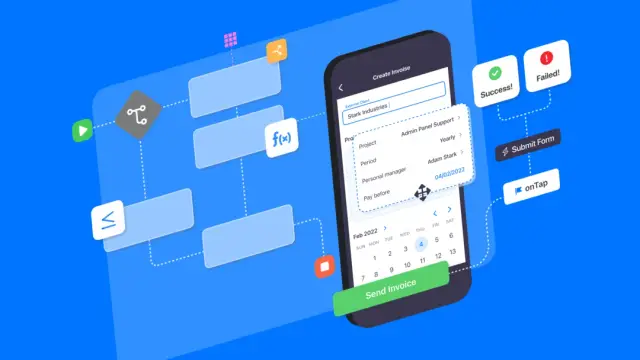
To integrate GPT models with your AppMaster application, you can follow these general steps:
GPT models are versatile and can find applications in numerous industries. Here are some examples of how GPT models can be useful in different sectors:
For healthcare applications, GPT models can deliver AI-driven support for physicians and patients, including content generation for medical reports, diagnosis suggestions, and patient monitoring. They can also power chatbots for patient support, providing information and guidance based on specific medical queries.
In finance, GPT models can enhance applications by generating AI-based financial analyses, including market predictions, trend detection, and risk assessments. They can assist in automating financial reporting, document processing, and fraud detection, thereby streamlining business operations.
Educational applications can benefit from GPT model-driven content generation, including automated essay writing, summarization, and content adaptation based on student understanding. AI-powered chatbots can support students by providing personalized guidance, motivational messages, and real-time Q&A sessions.

Customer service chatbots can leverage GPT models to provide accurate, instant responses based on customers' questions. This improves the user experience, reducing the need for human intervention and allowing your support staff to focus on more complex issues.
GPT models can improve e-commerce applications by creating intelligent product recommendations, generating personalized content, and enhancing customer support through chatbots. They can also automate inventory management, order processing, and marketing activities.
Marketing applications can harness the power of GPT models for content generation, including blog posts, social media updates, and advertising copy. AI-driven personalization enables more effective targeting, improving customer engagement and conversion rates.
While GPT models offer a range of benefits in app development, they also present some challenges and limitations:
Integrating GPT models with AppMaster's no-code platform brings unprecedented potential for app development across various industries. Still, addressing the challenges and limitations associated with AI integration is essential to fully leverage GPT models' capabilities and deliver seamless, valuable user experiences.
As we gaze into the future of app development, the trajectory of OpenAI's GPT models suggests a plethora of exciting trends and innovations.
The future of GPT app development promises more intelligent, context-aware, and personalized applications that seamlessly integrate into users' lives. While challenges and ethical considerations persist, the ongoing advancements in GPT models point toward a future where AI augments human experiences in ways we have yet to fully imagine.
Integrating OpenAI's GPT models into app development opens up new possibilities for developers, businesses, and end-users alike. GPT models provide valuable capabilities such as natural language understanding and generation, automation of repetitive tasks, and advanced chatbot functionalities.
When paired with a powerful no-code platform like AppMaster, GPT models can dramatically improve the efficiency and effectiveness of app development processes. AppMaster offers seamless integration of GPT models, providing an easy way to develop applications tailored to various industries like healthcare, fintech, e-commerce, and education. By utilizing GPT models and leveraging the no-code capabilities of AppMaster, developers can create high-quality, engaging, and intelligent applications without the typical complexities of app development.
Still, integrating GPT models is not without challenges. The potential for biased or inappropriate content generation, computational resource requirements, and overfitting to training data are limitations that developers must consider and manage accordingly.
OpenAI GPT models hold significant potential for revolutionizing the app development industry, particularly when combined with AppMaster's no-code platform. As developers and businesses continue exploring the possibilities and addressing the challenges, we expect to see even greater innovations and exciting developments in AI-powered applications.
 What are GPT models?
GPT (Generative Pre-trained Transformer) models are artificial intelligence language models developed by OpenAI that use deep learning techniques to understand and generate text-based content.
How can GPT models be used in app development?GPT models can enhance app development processes by providing content generation, intelligent response systems, chatbot functionality, and automating repetitive tasks.
What does AppMaster offer for GPT models integration?AppMaster's no-code platform can integrate GPT models to simplify application creation and leverage AI capabilities to improve user experience, content, and task automation.
What are some benefits of integrating GPT models in app development?Benefits include improved efficiency, reduced workload for developers, enhanced customer support, better content creation, and personalized user experiences.
Can GPT models be used in various industries?Yes, GPT models can bring value to numerous industries, including healthcare, finance, education, customer service, and e-commerce, by integrating into applications tailored to those sectors.
Are there any limitations of GPT models in app development?Some limitations include: potential for biased or inappropriate content generation, substantial computational resource requirements, and occasional overfitting to training data.
How does AppMaster's no-code platform aid in faster app development?AppMaster provides a comprehensive environment for creating web, mobile, and backend applications without traditional coding. The platform generates applications from scratch, eliminating technical debt and accelerating development.
What industries can benefit from using GPT models and AppMaster integration?Industries that can benefit include healthcare, finance, e-commerce, customer service, marketing, and education, among others, depending on the specific application and AI integration requirements.
Experiment with AppMaster with free plan.
When you will be ready you can choose the proper subscription.
 Jul 14, 20268 min
 Jul 13, 20268 min
 Jul 08, 20268 min