


 Jul 14, 2026
 8 min
8 minEquipment reservation app: prevent conflicts and track returns
Plan an equipment reservation app that prevents double bookings, records returns and damage, and places faulty items on maintenance hold.

Explore the no-code movement's origins, key milestones, and its impact on the tech industry. Learn about the role of no-code platforms like AppMaster and how they are shaping the future of software development.

The no-code movement has its roots in the early days of computing. Its origins can be traced back to the rise of visual programming languages and rapid application development (RAD) tools in the 1970s and 1980s. Visual programming languages, such as Prograph and LabVIEW, aimed to simplify the process of software development by providing graphical, user-friendly interfaces. They allowed developers to represent and manipulate programs as block structures or flowcharts instead of lines of text.
This visualization of programming concepts endeavored to make the development process more intuitive and accessible to those without extensive coding experience. Meanwhile, RAD tools emerged as a method to speed up the software development process. With a focus on iterative and agile development, RAD tools enabled developers to create prototypes quickly, promote user feedback, and refine their designs more efficiently. This approach decreased the overall development time and made the development process more flexible. These early developments set the stage for the no-code movement, aiming to empower non-programmers to build software without writing code.
As technology advanced, the idea of giving non-programmers the ability to create software without writing code continued to gain traction. In the early 2000s, platforms like Wix and WordPress emerged, allowing users to create websites and web applications without needing any coding experience. These platforms utilized drag-and-drop interfaces and pre-built templates to simplify the process of website development.
Following this, more comprehensive no-code platforms started to arise, designed to meet a wide range of user requirements. These newer platforms focused not only on web development but also on mobile app development, business process automation, and backend application development.
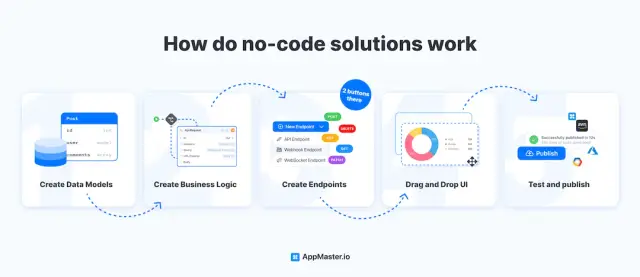
As a result, the industry of no-code platforms has grown exponentially over the past two decades, with platforms like AppMaster.io, Bubble, and OutSystems offering various features and catering to different use cases. Today, no-code platforms have evolved into comprehensive tools that enable non-programmers to create and deploy software solutions without writing a single line of code. By offering intuitive drag-and-drop interfaces, visual tools for designing logic and processes, and the ability to generate REST APIs and endpoints, these platforms have democratized software development and expanded its accessibility to a broader audience.
The no-code movement has come a long way since its early origins. Here are some notable milestones that have shaped its trajectory and transformed the software development industry:
The rise of visual programming languages like Prograph and LabVIEW in the 1970s and 1980s enabled developers to manipulate programs visually rather than through lines of textual code. This made programming more intuitive and approachable to a wider audience.
RAD tools emerged as a method to accelerate and streamline software development processes. Focused on agile development, these tools allowed developers to iterate on prototypes, gather user feedback, and refine their designs more efficiently.
Platforms like Wix and WordPress, launched in the early 2000s, allowed users to create websites and web applications without coding experience. These early no-code platforms utilized drag-and-drop interfaces and pre-built templates to simplify web development.
As the no-code concept gained traction, more comprehensive platforms like AppMaster.io, Bubble, and OutSystems emerged. These platforms provide extensive tools for building mobile apps, automating business processes, and developing backend applications without requiring any coding knowledge.
The no-code movement has gained momentum in various industries, including finance, healthcare, education, and retail. Companies across sectors are embracing the benefits of no-code development to streamline operations, improve customer experiences, and foster innovation.
No-code platforms like AppMaster.io have received recognition and accolades from industry analysts, reviewers, and the wider tech community. Such recognition validates the importance of no-code development in shaping the future of software development.
These milestones demonstrate how the no-code movement has progressed, empowering countless individuals and organizations to create, innovate, and deploy software solutions without any coding expertise.
The no-code movement has had a significant impact on the tech industry, resulting in both disruption and innovation. It has democratized software development, opening the doors for more people to participate in the design, creation, and deployment of applications. As such, the influence of the no-code movement is widespread, touching on several critical aspects of the industry:
AppMaster.io is a standout example of an advanced no-code platform that has embraced and advanced the no-code movement. By enabling users to design, build, and deploy backend, web, and mobile applications with no coding knowledge required, AppMaster has played a significant role in the no-code movement's development. It offers an extensive range of features, such as visual data modeling, business logic creation, and REST API and WSS endpoints, that cater to various application development needs.
AppMaster has gained recognition in the industry and has been featured as a High Performer and Momentum Leader on G2. This acknowledgement highlights AppMaster's commitment to not only satisfy the immediate demands of no-code development but also shape its future. By consistently improving and expanding its platform, AppMaster is driving innovation and efficiency in software development and helping businesses achieve their goals in a more agile and cost-effective manner.
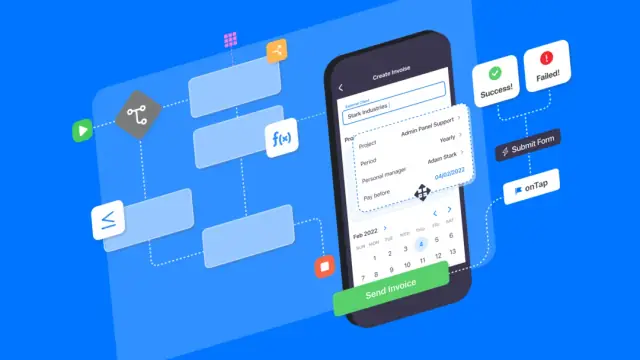
As the no-code movement continues to grow, the influence of platforms like AppMaster will become increasingly important. By fostering an environment that empowers users to create software applications with ease and speed, the future of no-code development promises to be one that pushes the boundaries of innovation, accessibility, and collaboration in the tech industry.
While the no-code movement has introduced several advantages and opportunities to the tech industry, it also has a number of limitations and potential downsides that need to be considered. By understanding both the benefits and drawbacks of no-code, organizations can make informed decisions about whether or not to invest in this approach to software development.
In summary, no-code development has introduced a powerful set of tools that provide organizations with opportunities to rapidly develop and deploy applications. However, this approach may not be suitable for every use case or requirement. By weighing the pros and cons of no-code, businesses can make informed decisions about how best to leverage these platforms to meet their unique objectives and requirements.
The no-code movement has attracted a plethora of platforms, each offering unique features to cater to diverse needs. Here, we present some of the notable players contributing to this evolving software development industry:
These key players, along with numerous others, are continuously refining their offerings and pushing the boundaries of no-code development, fostering innovation, and increasing access to software creation around the world.
The no-code movement has undeniably left an indelible mark on the software development industry. Its origins can be traced back to the emergence of visual programming languages, which has since evolved into modern no-code platforms like AppMaster.io.
The democratization of app creation and the lowering of barriers to entry have enabled a new breed of citizen developers to participate in the software ecosystem. The impact of the no-code movement on the tech industry cannot be overstated. It has prompted a shift in traditional development practices, ushering in faster and more cost-effective solutions while fostering greater innovation. While some limitations and concerns persist, the movement's influence continues to grow.
As key players within the no-code space refine and expand their platforms, the future of software development promises to become even more accessible and dynamic, redefining the way we approach technology across industries.
 What is the no-code movement?
The no-code movement is a shift in the software development industry towards empowering non-programmers to create and deploy software without having to write code. No-code platforms offer a visual interface for designing, building, and deploying apps and enable citizen developers to meet their own needs in a faster and more cost-effective way.
When did the no-code movement begin?The no-code movement's roots can be traced back to the 1970s and 1980s with the rise of visual programming languages and rapid application development tools. However, it truly began taking shape in the early 2000s with the emergence of app builders and platforms like Wix and WordPress that allowed users to create websites without coding.
What is AppMaster.io?AppMaster.io is a powerful no-code platform that enables users to visually design, build, and deploy mobile, web, and backend applications. It offers a comprehensive array of features, including data modeling, business logic creation, REST API, and WSS Endpoints, all without requiring any coding knowledge.
How is the no-code movement impacting the tech industry?The no-code movement is revolutionizing the tech industry by democratizing software development and enabling more people to participate in the creation process. It's lowering barriers to entry, fostering innovation, driving cost-effectiveness, and redefining the future of work and software development.
What are some key milestones in the no-code movement?Key milestones in the no-code movement include the development of visual programming languages, the emergence of rapid application development tools, the rise of app builders and platforms like Wix and WordPress, and the ascent of no-code platforms like AppMaster.io.
Who are the key players in the no-code space?Some key players in the no-code space include AppMaster.io, Bubble, OutSystems, Webflow, Wix, and many others. These platforms offer varying features catering to different needs, such as mobile app development, web design, and backend application creation.
What are the pros and cons of no-code development?The pros of no-code development include lower barriers to entry, faster development and deployment times, lower costs, and increased innovation. The cons include limitations in customizability and complexity, potential security and scalability concerns, and reliance on the no-code platform provider for ongoing support and updates.
How does AppMaster.io compare to other no-code platforms?AppMaster.io stands out from other no-code platforms due to its comprehensive features and support for backend, web, and mobile application development. It offers visual data modeling, business logic creation, REST API, and WSS Endpoints, all without requiring any coding knowledge. Additionally, AppMaster.io has been recognized as a High Performer and Momentum Leader on G2.
Experiment with AppMaster with free plan.
When you will be ready you can choose the proper subscription.
 Jul 14, 20268 min
 Jul 13, 20268 min
 Jul 08, 20268 min