


 Jul 14, 2026
 8 min
8 minEquipment reservation app: prevent conflicts and track returns
Plan an equipment reservation app that prevents double bookings, records returns and damage, and places faulty items on maintenance hold.

Zerocode development has gained immense popularity in recent years, but several myths still surround its potential and drawbacks. This article dissects common misconceptions and sets the record straight, shining a light on the true capabilities of zero-code platforms.

Zero-Code development, also known as no-code, is a software development approach that enables individuals, including those with little to no programming background, to create applications without writing code. Instead of conventional manual coding, zero-code platforms provide a visual interface, consisting of drag-and-drop components and pre-built templates. This allows users to design, develop, and deploy their applications faster and with lesser effort.
The rise in popularity of zero-code development platforms has raised numerous questions and debates about their potential, limitations, and drawbacks. Consequently, several myths have emerged, which tend to cast doubts on the true capabilities and value of zero-code platforms. This article aims to demystify some of the most common misconceptions and bring clarity to what zero-code development genuinely entails.
One common misconception about zero-code platforms is that they are suitable only for creating basic, lightweight, and non-complex applications. However, this couldn't be further from the truth. In reality, the complexity and scope of applications that can be developed using zero-code platforms depend on the capabilities of the chosen platform.
Many zero-code platforms, including AppMaster, offer powerful features and tools that enable users to create powerful and comprehensive applications. These platforms provide support for multidimensional data models and complex business logic development. With extensive customization options and a wide array of integrated components, zero-code platforms have the potential to build intricate applications tailored for specific requirements.
Another myth about zero-code development is that applications built using these platforms are plagued by a lack of customization options, leading to cookie-cutter products that do not deviate much from their templates. This myth may stem from the fact that zero-code platforms often emphasize their use of templates and pre-built components, which can create a perception of limited flexibility.
However, the truth is that applications developed on zero-code platforms can be highly customized, both in terms of user experience (UI/UX) and underlying functionality. Most zero-code platforms facilitate extensive customization options for UI design, data modeling, and business logic through visual interfaces.
Furthermore, platforms like AppMaster take customization to another level by allowing users to access generated source code and binary files. This enables advanced users to further tailor their applications, merge them with existing solutions, or make changes that go beyond the scope of the platform's visual interface.
In summary, dismissing zero-code platforms as limited in customization options is misguided. These platforms empower both non-technical and technical users to create applications that are tailored to their specific needs while eliminating the complexities typically associated with traditional development methods.
One common misconception about zero-code development is that it is solely for non-technical users who do not possess coding skills. While it is true that zero-code platforms have opened doors for non-developers by simplifying application development, they also offer significant benefits to experienced developers.
Professional developers can harness the power of zero-code platforms to enhance their workflow and productivity. These platforms allow for rapid application building and prototyping, enabling developers to quickly test and iterate on their ideas. They also have the potential to reduce lengthy manual coding tasks, effectively freeing up developers' time to focus on more complex and demanding aspects of projects.
Furthermore, many zero-code platforms, such as AppMaster, provide customization options that cater to developers' needs. These platforms allow developers to create intricate business logic, define API endpoints, and even access generated source code or binary files for further manipulation. As a result, developers are not limited in scope and can still create sophisticated applications using zero-code platforms.
Another popular myth is that zero-code applications lack the scalability required for enterprise and high-load use cases. It is believed that applications built with zero-code platforms cannot handle large amounts of data or network traffic, rendering them unsuitable for growing businesses and resource-intensive applications. This might have been true with some early platforms, but modern zero-code development platforms have evolved to provide impressive scalability.
Many platforms now employ efficient backend technologies, such as Go (golang), to ensure they can handle high-load use cases and enterprise-bound data requirements. AppMaster, for instance, supports the creation of scalable applications through advanced features such as stateless backend applications and the integration of Postgresql-compatible databases as primary data storage. With its powerful framework and scalable backend technologies, AppMaster ensures that zero-code applications can grow with businesses and cater to a wide spectrum of use cases.
Many people assume that zero-code applications offer limited integration options with external systems and services, such as databases, third-party APIs, or existing software solutions. The belief is that zero-code platforms are 'closed systems' that cannot adequately communicate with other applications or technologies. However, this myth does not stand up to scrutiny. Most modern zero-code platforms, including AppMaster, support integration with external systems through various channels, such as APIs and Webhooks. These platforms usually provide documentation and resources to make it easy for users to connect to a wide array of external services and products.
AppMaster, for example, offers REST API and WSS Endpoints for seamless integration with other services, ensuring that users can build applications capable of connecting to and working with the necessary external systems. This flexibility allows zero-code developers to create tailored solutions that meet the specific requirements of their business or project.
It is essential to debunk these myths and misconceptions surrounding zero-code development platforms. By understanding the true capabilities of these groundbreaking technologies, companies and developers alike can harness their potential and streamline application development, saving valuable time and resources in the process.
One popular misconception about zerocode development platforms is that they lack adequate security measures, rendering the applications built through them more susceptible to cyberattacks or breaches. In reality, the level of security provided by a zero-code platform largely hinges on the capabilities of the chosen platform and the best practices it deploys during development.
Security-conscious zero-code platforms will often incorporate built-in protection mechanisms, such as configurable permission structures and data encryption. These platforms adhere to industry-standard security protocols and prioritize safeguarding both their users and the applications created through their systems.
For example, AppMaster is an exemplary no-code platform that actively upholds security as a core aspect of its development process. It ensures that applications generated using its platform are secure by implementing measures like securing server endpoints while also offering comprehensive integration capabilities. It is critical to choose a platform that considers security a top priority and has stringent practices in place to protect both the user and their applications.
Technical debt is a significant concern in the software development world, and some critics argue that zero-code development contributes to this burden. This misconception arises primarily from the idea that zero-code platforms generate bloated or poorly structured code, making it difficult to maintain, update, and scale applications.
Contrary to this myth, no-code platforms like AppMaster can significantly reduce technical debt if best practices are followed, and the generated code is clean and maintainable. By regenerating applications from scratch whenever requirements are modified, platforms like AppMaster ensure minimal technical debt, streamlining the development process and reducing the need for laborious code refactoring.
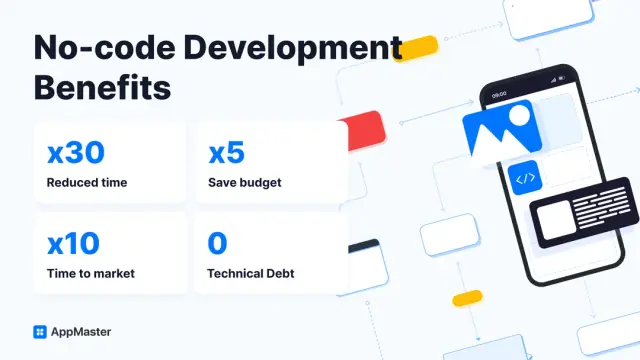
Through comprehensive visual modeling and well-structured generated code, zero-code platforms ease the burden of technical debt on developers. Furthermore, these platforms typically produce easily understandable code, significantly improving maintainability and simplifying processes like debugging, modification, and troubleshooting.
While there are numerous myths surrounding zero-code development, it is vital to recognize the actual benefits and capabilities of these platforms. Zero-code development offers many advantages that make it an increasingly attractive option for a wide range of users, from non-technical business personnel to professional developers:
Zero-code platforms empower non-technical users with the ability to build their own applications without relying on developers, thereby bridging the skills gap and enabling users to create applications tailored to their specific needs.
These platforms drastically accelerate the development process, making it easier to prototype, iterate, and test applications quickly. Time-to-market is significantly reduced, giving businesses a competitive edge.
Contrary to popular belief, zero-code platforms can accommodate high levels of scalability for applications, especially when built using a platform like AppMaster that employs efficient backend technologies like Go (golang).
Zero-code platforms offer a high degree of customization, enabling users to create aesthetically appealing and functionally sound applications tailored to their needs. Furthermore, many platforms allow users to access generated source code and binary files, providing even more customization options.
Most zero-code platforms provide integration capabilities with external systems through APIs or Webhooks, ensuring compatibility with various services and products.
Focus on secure development practices and adherence to industry-standard security protocols ensures that applications developed using quality zero-code platforms like AppMaster remain safe and well-protected. In conclusion, zero-code development platforms hold enormous potential in revolutionizing the way applications are conceived, built, and maintained.
In the face of rapid technological advancements and growing demands for sophisticated applications, zero-code development platforms are proving to be game-changers. By debunking the common myths surrounding these platforms, it is evident that they have much to offer businesses of all sizes and across industries.
Zero-code platforms can create complex apps, provide customization options, integrate with external systems, ensure security, and cater to both technical and non-technical users. Choosing a reliable and versatile zero-code platform like AppMaster can make a significant difference in the development process. From speeding up application creation to reducing technical debt, zero-code platforms empower teams to work efficiently, prototype solutions rapidly, and adapt to ever-changing business requirements.
As discussed throughout this article, zero-code development platforms offer numerous benefits such as reduced time to market, lower development costs, and increased accessibility for citizen developers. These advantages make them an attractive option for businesses looking to expand their digital capabilities, streamline processes, and remain competitive in today's fast-paced tech environment.
 What is zero-code development?
Zero-code development, also known as no-code, is an approach to building software applications without requiring manual coding. It involves using a visual interface and drag-and-drop components to design, develop, and deploy applications, making it a faster and more accessible way to create applications for business users and developers alike.
Can zero-code platforms create complex applications?Yes, zero-code development platforms can create complex applications, including ones with multiple levels of branching logic, intricate processes, and data manipulation. It all depends on the capabilities and features of the chosen platform. AppMaster, for example, offers extensive customization options for building complex applications.
Is it possible to customize applications built with zero-code platforms?Yes, applications built with zero-code platforms can be customized to a significant extent. Most platforms offer customization options for UI/UX, business logic, and integration with third-party services. Platforms like AppMaster also allow users to access generated source code and binary files, enabling further customization and adaptation.
Can zero-code apps scale for enterprise use?Yes, zero-code apps can be scaled for enterprise use. Many zero-code platforms, including AppMaster, can handle high-load use cases and enterprise-bound data requirements. These platforms employ efficient backend technologies like Go (golang) to ensure superb scalability.
Is security a concern for zero-code development platforms?Security is a potential concern for any software development approach, but most zero-code platforms prioritize secure development practices. They offer configurable permission structures, data encryption, and adhere to standard security protocols. It's essential to choose a platform that values user and application security, such as AppMaster.
Do zero-code platforms support integration with external systems?Yes, most zero-code platforms provide integration with external systems. They often support APIs and Webhooks, allowing users to connect to various external services and products. AppMaster, for example, offers both REST API and WSS Endpoints for seamless integration with other services.
Does zero-code development lead to increased technical debt?Contrary to popular belief, zero-code development can reduce technical debt as long as the chosen platform follows best practices and generates clean, maintainable code. Platforms like AppMaster generate applications from scratch whenever requirements are modified, ensuring minimal technical debt and streamlined development processes.
Is zero-code development suitable for professional developers?Zero-code development platforms can benefit professional developers by significantly accelerating application development processes and making it easier to prototype, iterate, and test applications. While these platforms are designed to be user-friendly for non-developers, experienced developers can harness their potential to boost productivity and streamline their workflows.
Experiment with AppMaster with free plan.
When you will be ready you can choose the proper subscription.
 Jul 14, 20268 min
 Jul 13, 20268 min
 Jul 08, 20268 min