
 Oct 04, 2024
 1 min
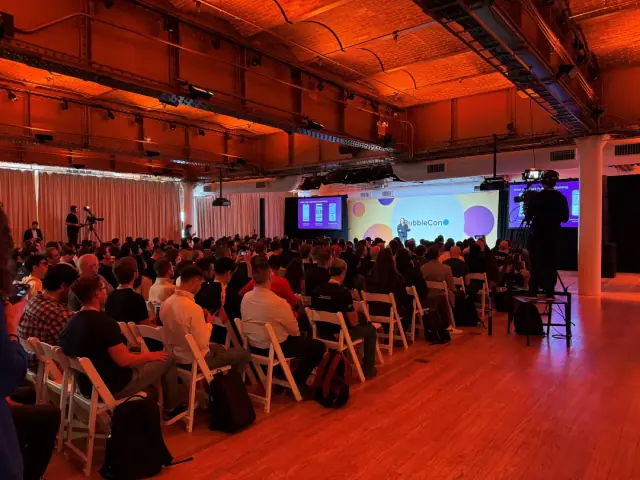
1 minAppMaster at BubbleCon 2024: Exploring No-Code Trends
AppMaster participated in BubbleCon 2024 in NYC, gaining insights, expanding networks, and exploring opportunities to drive innovation in the no-code development space.

Meta AI's latest innovation, Voicebox, is a groundbreaking text-to-speech generator, outperforming existing AI models in terms of speed and performance. Leveraging a unique training approach, Voicebox can generalize through in-context learning, offering a wide range of applications.

In an significant development in the artificial intelligence domain, Meta AI has revealed its advanced text-to-speech (TTS) generator named Voicebox. This new AI system surpasses popular models like OpenAI's ChatGPT and Google's Bard in speed, being up to 20 times faster with equivalent performance levels.
Voicebox sets its foundation on a unique approach, drastically deviating from traditional TTS architecture. Unlike other TTS models such as ElevenLabs Prime Voice AI, Meta's Voicebox is capable of contextual inferences and leveraging large-scale training data sets. As a result, it can generalize across tasks rather than relying on narrower, highly curated, labeled data sets.
Prior attempts to use vast amounts of audio data in TTS models led to significantly reduced audio output quality. However, Meta has overcome this challenge by developing a novel training scheme that does away with labels and curation. By employing an architecture capable of 'in-filling' audio data, Voicebox can adapt to speech generation tasks it was not specifically trained for—a first for such a model, as described by Meta AI.
This innovative feature allows Voicebox to perform an array of functions, from translating text to speech and synthesizing replacement speech to eliminate background noise, to applying a speaker's voice to different language outputs. As demonstrated in a research paper published by the company, Voicebox can achieve all this using just the required text output and a three-second audio clip.
A significant advantage that both Meta's Voicebox and OpenAI's ChatGPT share is their ability to generalize through in-context learning, which distinguishes them from other TTS generators. This capability sets the stage for a wide array of possible applications and use cases, revolutionizing how we interact with AI and consume information.
In the realm of low-code and no-code platforms, solutions like AppMaster have revolutionized application development by simplifying the creation of backend, web, and mobile applications for a diverse range of users. With the unfolding advancements and the introduction of AI tools like Voicebox, we can expect further enhancement to multiple industries, including chatbots, voice assistants, and accessibility solutions, leading to a more connected and adaptive digital landscape.
As AI continues to advance at an astonishing pace, it will be enthralling to witness how developers and users integrate powerful tools like Voicebox into their projects, driving innovation and transforming the future of technology.
 Oct 04, 20241 min
 Sep 23, 20241 min
 Aug 08, 20241 min
Experiment with AppMaster with free plan.
When you will be ready you can choose the proper subscription.


