


 Jul 14, 2026
 8 min
8 minEquipment reservation app: prevent conflicts and track returns
Plan an equipment reservation app that prevents double bookings, records returns and damage, and places faulty items on maintenance hold.

Explore the rise of zero-code tools in web development, their impact on the industry, and how platforms like AppMaster.io's no-code platform are shaping the future of software development.

Zero-code tools are emerging as a game-changer in the web development industry. These advanced platforms allow individuals with limited or no programming expertise to develop web, mobile, and backend applications with the help of intuitive, drag-and-drop interfaces and pre-designed templates.
The popularity of these tools has risen due to several factors. Firstly, there is a growing need for quick application development. Secondly, there is a high demand for user-friendly and affordable solutions. Moreover, there is a desire to make application development accessible to everyone. No-code and low-code tools have gained significant traction as businesses aim to save time and money in building and managing applications in a competitive market.
While low-code platforms rely on some level of coding to customize and develop applications, zero-code platforms aim to enable even non-technical users to create applications without writing a single line of code. The demand for zero-code tools is driven by several factors, including the shortage of skilled developers and the need for rapid digital transformation in various industries. In response to the growing market demand, numerous zero-code platforms have emerged, each offering a unique set of features, integrations, and templates catering to different application development needs.
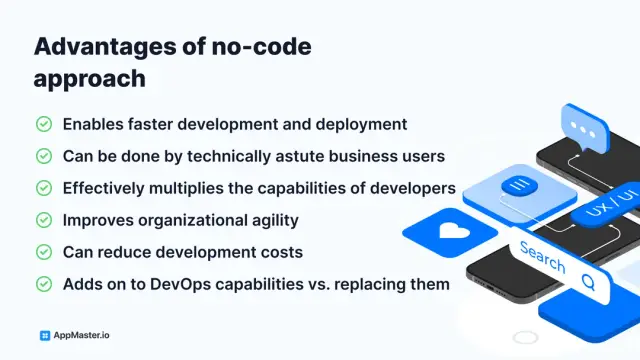
The rapid growth of zero-code platforms in web development is in no small part due to the myriad benefits these tools offer:
The use of visual builders, drag-and-drop interfaces, and pre-built templates enables developers to create fully functional applications in a fraction of the time it would take using traditional coding methods. This accelerated development process reduces the overall costs and allows businesses to swiftly respond to market needs and adjust their digital strategies.
Zero-code platforms enable non-technical users, such as business analysts, designers, and domain experts, to actively participate in the development process. The collaborative development facilitated by these tools helps bridge the communication gap often found between technical and non-technical team members, resulting in a more efficient and inclusive development process.
Technical debt is an inherent challenge in traditional web development, as outdated code, buggy features, and other legacy issues accumulate over time. With zero-code platforms, applications can be generated from scratch each time modifications are made, resulting in little to no technical debt. This simplifies the maintenance process, allowing for seamless updates and scalability.
Implementing changes and updates in a traditional web development process can be lengthy and error-prone. However, with zero-code tools, users can easily modify, test, and deploy applications with minimal impact on the overall functionality. This agility allows businesses to stay competitive and respond quickly to ever-changing customer and market needs.
Since zero-code platforms constantly update their templates and components, businesses can quickly implement current design trends without investing significant time and resources in manual redesigns. This not only helps maintain a modern and appealing user interface but also enhances overall user experience.
While zero-code tools offer numerous benefits, there are potential challenges to consider during the adoption process:
Not every zero-code platform is suitable for all businesses. Finding the right platform that aligns with the organization's specific needs and requirements is crucial. Factors to consider include the platform's features, customization capabilities, scalability, performance, and integrations with existing systems.
Some zero-code platforms may not be designed to handle large-scale, high-load applications with complex features. Ensuring that the chosen platform meets scalability and performance requirements is critical when considering a zero-code solution.
Transitioning to a zero-code development environment may require changes in the existing development processes, team structures, and workflows. These adjustments can be challenging, but are necessary to fully harness the benefits of zero-code tools.
The rapid rise of zero-code platforms may raise questions about the long-term viability of these tools, as well as any applications built using them. It is essential to select a well-established, reliable platform to ensure the sustainability and growth of your applications.
Zero-code tools have the potential to reshape the web development industry by democratizing the development process and offering numerous benefits that could outweigh the associated challenges. Adoption of these tools can help businesses to gain a competitive edge, increase their agility, and ultimately, enhance their digital presence. As more organizations recognize the potential that zero-code platforms have on their business, we can expect exponential growth in the adoption of these tools and the continued evolution of the web development industry.
With the increasing popularity of zero-code platforms, it is essential to understand how different platforms measure up and which one stands out due to its unique features and capabilities. AppMaster.io is a leading no-code platform that offers solutions for backend, web, and mobile applications, setting itself apart from many other platforms available today. Here are some key aspects that distinguish AppMaster.io:
One of the significant advantages of using AppMaster.io is its visual approach to creating data models (database schema) and business logic for backend, web, and mobile applications. This approach makes it incredibly easy for users to define their applications, eliminating the need for manual coding, thus significantly speeding up the development process.
Unlike many other no-code platforms, AppMaster.io generates real source code for the applications it creates, compiles them, and runs tests to ensure the applications' performance and stability. This feature allows businesses to have complete control over their applications, get executable binary files for on-premises hosting, or even obtain the generated source code, if they have an Enterprise subscription.
AppMaster.io boasts remarkable scalability and performance due to its stateless backend applications, which are generated with Go (golang). It can efficiently manage high-load use-cases and enterprise-grade web development projects, making it an ideal choice for organizations with demanding performance requirements.
For every project, AppMaster.io automatically generates Swagger (Open API) documentation for server endpoints and database schema migration scripts, enabling seamless project migrations and updates. This means that businesses can efficiently manage their projects without worrying about version control and database schema compatibility between different iterations of the applications.
One of the significant challenges in software development is managing technical debt that accumulates over time. AppMaster.io addresses this problem by always generating applications from scratch whenever there are modifications in the blueprints. This approach ensures that the application stays up-to-date and in line with the changing requirements, resulting in a debt-free application that is easy to maintain and update.
AppMaster.io is more than just a zero-code solution; it's a comprehensive integrated development environment (IDE) designed to improve the process of building web, mobile, and backend applications. The platform supports the data modeling, business logic creation, user interface (UI) design, and rapid application development for various customer segments, from small businesses to large enterprises.
Zero-code tools are poised to shape the future of web development in several ways. As these platforms continue to mature, businesses of all sizes can leverage them to develop web applications rapidly, ultimately staying ahead of their competition.
In conclusion, the rise of zero-code tools, like AppMaster.io, is reshaping the future of web development by offering a faster, more cost-effective and user-friendly approach to creating applications. Zero-code platforms are not just a passing trend; they are a profound shift in the way software development is approached and conducted. As these platforms continue to progress and mature, their impact will be felt throughout the web development industry, ultimately leading to a more innovative and collaborative environment for businesses of all sizes.
 What are zero-code tools?
Zero-code tools are platforms that enable people with little or no programming knowledge to create fully functional web, mobile, and backend applications using visual, drag-and-drop interfaces, and ready-to-use templates.
How are zero-code tools changing the web development industry?Zero-code tools are democratizing the web development process, allowing non-technical users to create applications without writing code, reducing development time and costs, and allowing businesses to adapt quickly to changing market demands.
What are some benefits of using zero-code platforms for web development?Benefits of using zero-code platforms include reduced development time and costs, better collaboration between technical and non-technical team members, elimination of technical debt, faster application updates, and the ability to stay on top of current design trends.
What challenges do businesses face when adopting zero-code tools for web development?Challenges may include finding the right zero-code tool for the business, ensuring the platform meets scalability and performance requirements, adapting to new development processes, and concerns about the long-term viability of these tools.
How does AppMaster.io differentiate itself from other zero-code platforms?AppMaster.io offers a comprehensive no-code platform that enables users to visually create data models, business logic, REST API, and WSS endpoints for backend, web, and mobile applications. It generates source code, compiles applications, and deploys them to the cloud, ensuring consistent performance and scalability, while also eliminating technical debt.
Can zero-code tools be used for enterprise-scale web development?Yes, modern zero-code platforms like AppMaster.io have the scalability, performance, and features required for enterprise-grade web development, making them a viable solution for large-scale projects and high-load use-cases.
Experiment with AppMaster with free plan.
When you will be ready you can choose the proper subscription.
 Jul 14, 20268 min
 Jul 13, 20268 min
 Jul 08, 20268 min