


 Jul 14, 2026
 8 min
8 minEquipment reservation app: prevent conflicts and track returns
Plan an equipment reservation app that prevents double bookings, records returns and damage, and places faulty items on maintenance hold.

Discover how no-code application builders are transforming the way we build and deploy applications, and how platforms such as AppMaster are revolutionizing the app development industry.

No-code application builders have transformed how developers, entrepreneurs, and organizations create, launch, and maintain applications. These platforms have empowered non-technical users and developers alike to build, customize, and scale applications without writing a single line of code. As a result, organizations can rapidly develop and deploy custom applications to stay competitive in the ever-evolving market. The paradigm shift towards no-code application builders emerged from the growing demand to eliminate the technical barriers often experienced by individuals and businesses that sought to create applications.
Many encountered obstacles, including expensive software development outsourcing, time-consuming learning curves for programming languages, and extensive resource allocation for project management. By simplifying the app development process and making it accessible to a wider audience, no-code application builders have unlocked new opportunities for businesses and individuals to bring their ideas and projects to life seamlessly.
No-code application builders offer many advantages and game-changing capabilities, making building custom applications simple and downright enjoyable. Below are some of the most significant features and benefits associated with no-code platforms:
It is essential to distinguish between no-code and low-code platforms as they present unique offerings and cater to different user bases.
No-code platforms enable users to build applications without writing any code. Users can design, develop, and deploy applications using drag-and-drop components, pre-built templates, and intuitive UI tools through visual interfaces. These platforms cater primarily to non-technical users or those looking to create applications quickly and efficiently.
Low-code platforms, on the other hand, cater primarily to developers and technical users. While these platforms still offer a visual interface for building applications, they require at least some coding to create complex or custom application features. Low-code platforms provide developers with greater flexibility in developing advanced functionality in their applications but come with a slightly higher learning curve compared to no-code platforms.
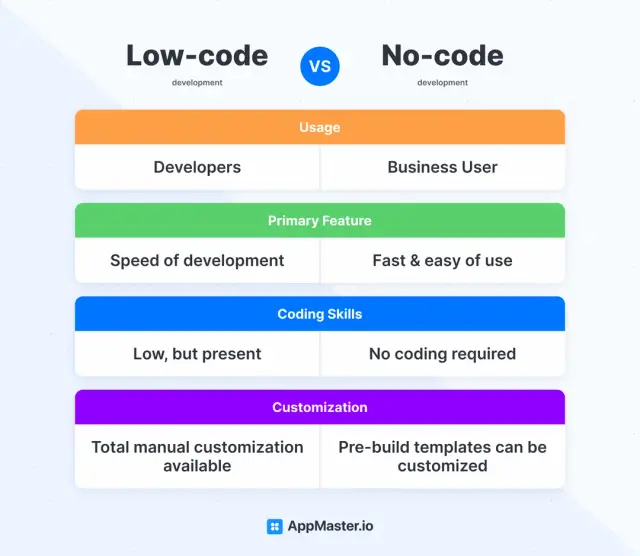
No-code platforms cater primarily to non-technical users, whereas low-code platforms target a more technically skilled audience. While both offer visual design tools, low-code platforms require users to have some coding knowledge to create custom applications that meet unique business requirements.
No-code application builders have become increasingly powerful and versatile, providing users with various options for building custom applications. In the next sections, we explore the right no-code platform and how AppMaster, a leading no-code platform, can empower users to create outstanding applications.
Selecting the right no-code application builder for your needs is a crucial step in ensuring the success of your applications. With multiple options available in the market, consider these factors when choosing the best platform:
AppMaster is a leading no-code platform that empowers its users to create backend, web, and mobile applications without the need for code. Here are some ways AppMaster distinguishes itself from other no-code platforms in the market:
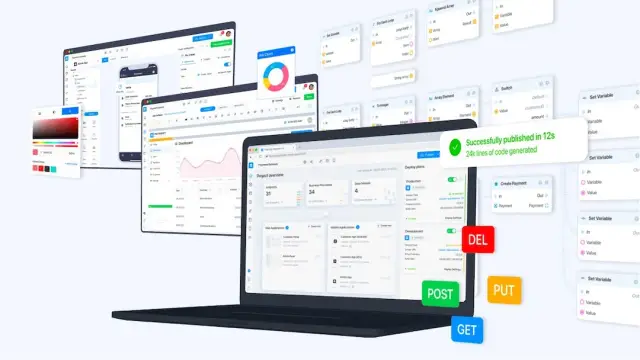
With the right no-code application builder, even a citizen developer can create sophisticated and scalable applications that meet their organization's needs. No-code platforms like AppMaster enable users to build complete software solutions quickly and efficiently, transforming how organizations approach app development.
To harness the power of no-code application builders for your projects, follow these steps:
No-code application builders like AppMaster offer myriad opportunities for organizations of all sizes to revolutionize their software development processes. By choosing the appropriate platform and harnessing its potential, businesses can reap the benefits of rapid, cost-effective app development that meets their unique requirements.
The no-code movement has undoubtedly revolutionized the way individuals and organizations build applications. Yet, embracing this innovative approach to app development comes with its own challenges. This chapter delves into how to effectively tackle the common hurdles associated with no-code platforms, ensuring a smooth and successful implementation within your projects or business processes.
One major challenge in no-code development is battling misconceptions. There is a belief that no-code solutions are only suitable for simple, elementary applications. Modern no-code platforms are incredibly sophisticated, allowing for complex workflows and integrations. Educating stakeholders on the true capabilities of no-code is essential to gain broader acceptance and to leverage the full range of functionalities these platforms offer.
Security and compliance are paramount concerns in software development. Skeptics often question the security posture of no-code platforms. To overcome this challenge, it’s crucial to choose no-code vendors that prioritize security, offer role-based access control, data encryption, and comply with regulatory standards like GDPR, HIPAA, etc. Also, implementing a governance framework around no-code development can maintain order and standards without stifling creativity and agility.
Scaling up is another concern, especially in larger organizations. No-code platforms must prove they can handle the increased load and complexity as businesses grow. To address scaling issues, it's advisable to select platforms designed with scalability in mind. This often includes cloud-based solutions that can dynamically allocate resources as needed. Moreover, establishing best practices for managing no-code resources and artifacts can mitigate the risks associated with application sprawl.
Embracing no-code requires a cultural shift within many organizations and demands a new way of thinking about app development. Those vested in traditional coding may need to transition to new roles, focusing more on architecture and system integration than hands-on coding. Training and support are key to facilitating this shift, ensuring team members can fulfill their roles effectively within a no-code-driven workflow.
These challenges can be overcome and turned into opportunities through the strategic application of no-code platforms. With the right approach, enterprises can marry speed and agility with security and scalability, benefiting from both worlds and driving their digital transformation. This chapter illustrates how, by acknowledging and navigating these hurdles, organizations can pave the way for a successful no-code operation that lasts well into the future.
As organizations worldwide continue to recognize the value and efficiency of no-code development platforms, the future of application building looks to be strongly influenced by the growing trends in this field. This chapter explores what lies ahead for no-code technologies and how they could shape the development industry, the workforce, and broader business strategies.
Technology is ever-advancing, and no-code platforms are no exception. We anticipate significant enhancements in AI integration, allowing platforms to offer smarter recommendations, automate more complex tasks, and refine the user experience. With developments in machine learning, future no-code tools could potentially anticipate user needs and streamline app creation further. The advancements could also lead to increased personalization, enabling the creation of apps that cater more precisely to the specific needs of businesses and individuals.
The no-code development industry is projected to expand substantially. As digital transformation becomes necessary across sectors, the demand for rapid app deployment will soar, and no-code platforms will play a pivotal role in meeting that demand. Trends suggest an impending integration of no-code development with traditional IT strategies, blurring the lines between professional developers and citizen developers and democratizing the app development process across organizational hierarchies.
The future of work is increasingly agile, flexible, and collaborative. No-code platforms support this shift by enabling a more inclusive approach to innovation, where cross-disciplinary teams can participate in the development process. The perspective and expertise of individuals without formal programming skills will be leveraged to drive innovation, leading to diverse and user-centric solutions. We can also foresee no-code education becoming a staple in both formal education and in-house training, ensuring a future workforce that is versatile and equipped to handle rapid technological change.
As we look to the future, we can expect no-code development to break new ground in how technology solutions are conceived, developed, and deployed. Organizations that adopt no-code strategies will likely find themselves at a competitive advantage, capable of responding swiftly to market changes and customer needs with a level of agility that was previously unattainable. The trajectory of no-code development suggests a new era of digital empowerment, transforming how we create applications and the very nature of innovation.
 What are the main advantages of no-code application builders?
No-code application builders offer benefits such as reduced development time and cost, lower technical barriers, increased collaboration, and the ability to quickly iterate on ideas.
What is the main difference between no-code and low-code platforms?No-code platforms allow users to build applications without writing code, while low-code platforms require minimal coding to create custom applications.
What factors should be considered when choosing a no-code application builder?Consider factors such as ease of use, scalability, integration capabilities, support for data privacy regulations, and mobile app development support.
What types of applications can be built using no-code application builders?No-code application builders can be used to create various types of applications such as web, mobile, and backend applications.
How does AppMaster stand apart from other no-code platforms?AppMaster provides powerful no-code tools to create backend, web, and mobile applications with visually intuitive interfaces, rapid development, and the elimination of technical debt.
How can AppMaster help in speeding up the app development process?AppMaster accelerates app development by enabling visual creation of data models, business logic, REST API, and UI components for web and mobile applications.
Can AppMaster applications be hosted on-premises?Yes, AppMaster offers subscriptions that allow customers to get executable binary files or source code and host applications on-premises.
What database compatibility does AppMaster offer?AppMaster applications work with any PostgreSQL-compatible database as the primary database.
Experiment with AppMaster with free plan.
When you will be ready you can choose the proper subscription.
 Jul 14, 20268 min
 Jul 13, 20268 min
 Jul 08, 20268 min