


 Jul 14, 2026
 8 min
8 minEquipment reservation app: prevent conflicts and track returns
Plan an equipment reservation app that prevents double bookings, records returns and damage, and places faulty items on maintenance hold.

Explore the innovation of OpenAI and Virtual Reality (VR) in app interaction, their potential in revolutionizing user experiences, and how no-code platforms like AppMaster contribute to this compelling domain.
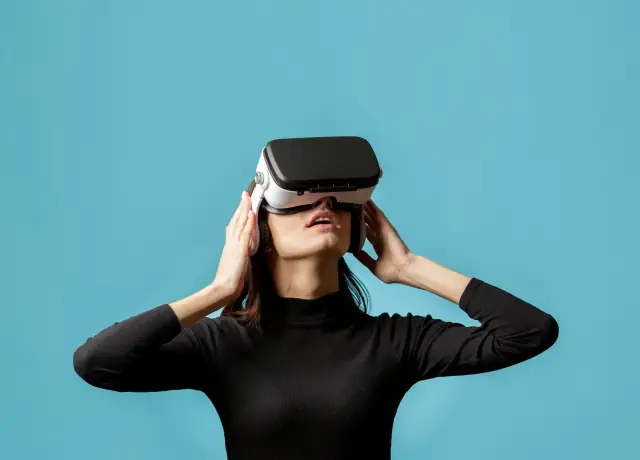
The convergence of OpenAI and Virtual Reality (VR) is an exciting development, bringing the potential for innovation and transformation in app interaction experiences. OpenAI refers to open-sourced artificial intelligence (AI) that can be utilized to develop and improve various applications, from natural language understanding to image recognition. When integrated with Virtual Reality, which simulates fully immersive 3D environments, AI can enhance and expand user experiences and app interaction possibilities. To successfully integrate OpenAI with VR, developers must consider several elements.
First, they need to define the desired goals and outcomes for the combined technology. Whether the aim is to create more realistic environments, personalized content, or improve interactivity, it's crucial to pinpoint the objectives at the inception stage.
Next, developers should focus on incorporating AI algorithms into the VR experience. For example, leveraging machine learning algorithms can help generate realistic simulations based on real-world data. AI-generated content and procedural generation techniques can create dynamic and engaging environments that evolve based on user interactions.
Lastly, ensuring seamless communication and synchronization between the AI and VR systems is essential. This can be achieved by implementing real-time data exchange protocols and using scalable cloud-based infrastructure to manage large-scale computation and storage demands.
Combining OpenAI and VR brings promising user experience (UX) and app interaction advancements across multiple domains. By leveraging the strengths of these two technologies, developers can enhance user immersion, engagement, and personalization. Some of the ways this is achieved include:

As the adoption of Virtual Reality and artificial intelligence technology increases, the demand for accessible development tools grows. No-code platforms, like AppMaster, are a powerful solution for streamlining the development of AI and VR applications, making it possible for non-technical users to create immersive, interactive experiences with minimal programming knowledge. No-code platforms offer several advantages regarding AI and VR app development:
Platforms like AppMaster are a driving force in making AI and VR development more accessible, empowering a broader range of creators to develop innovative, immersive user experiences.
Virtual Reality (VR) and OpenAI have been making significant strides in transforming traditional app interactions. Integrating artificial intelligence into VR applications has enabled developers to create immersive and interactive experiences. Yet, to achieve this, AI models must be accurately trained and optimized for enhancing the user experience in virtual environments. Several critical factors contribute to the effective training of AI models for VR applications:
The fusion of OpenAI and Virtual Reality brings forth numerous benefits to the realm of app interaction. By combining these powerful technologies, developers can create more compelling, personalized, and efficient applications. Some notable advantages include:
Despite the potential benefits of AI and VR integration, developers must overcome a few essential challenges to unlock their full potential:
Integrating OpenAI and Virtual Reality holds immense potential in revolutionizing app interaction experiences. By overcoming challenges and leveraging the benefits of this compelling combination, developers can craft more engaging, personalized, and efficient applications, enhancing the user experience and transforming the way we interact with virtual environments.
With the rapid advancements in both OpenAI and Virtual Reality technologies, the future of AI-powered VR applications is promising and full of potential. Combining these innovations will lead to enhanced user experiences, better realism, increased accessibility, and extended applications in various industries.
One of the most significant trends in AI-powered VR applications is the push towards greater realism. With the integration of advanced AI algorithms, virtual environments are expected to become more lifelike, featuring physics-based simulations, human-like interactions, and procedurally generated content. AI-driven graphics will allow for more realistic lighting, shading, and visual effects, making VR experiences increasingly immersive and convincing.
The future of AI-powered VR applications will also see an increase in accessibility. As AI technologies continue to improve, the costs associated with developing VR content will decrease, allowing for more affordable hardware and software solutions. With more people accessing VR devices, there will be a greater demand for AI-driven applications, leading to a significant expansion of the VR ecosystem.
AI and VR technologies have already found applications in various fields, and their combined power will likely expand their potential even further. Some industries that AI-powered VR applications could revolutionize are:
As the demand for AI-powered VR applications grows, no-code platforms like AppMaster enable developers and organizations to build these innovative applications quickly and affordably.
AppMaster simplifies the app development process by providing an intuitive drag-and-drop interface and a library of pre-built components, making designing and developing immersive experiences easier. By reducing the complexity and barriers to entry, AppMaster enables experienced developers and non-technical users to easily create AI-driven VR applications.
AppMaster's no-code platform optimizes development time and resources, reducing both the time and effort required to create AI-powered VR applications. This efficiency results in cost savings for businesses and organizations, enabling them to allocate resources to other areas of their operations or invest in developing additional VR experiences or solutions.
AppMaster allows users to seamlessly integrate AI technologies into their VR applications, empowering them to create immersive and personalized experiences that adapt dynamically to users' needs and preferences. With a range of AI tools and capabilities available within the platform, AppMaster provides the flexibility and resources necessary for developers and organizations to design compelling AI-driven VR experiences.
The AppMasterno-code platform, with its extensive capabilities and customizable options, ensures that AI-powered VR applications are scalable and future-proof. As AI technologies advance and the demand for VR applications grows, AppMaster users can quickly adapt and incorporate these advancements into their existing projects or expand their offerings to capitalize on emerging trends and opportunities.
The future of AI-powered Virtual Reality applications is ever-evolving and full of exciting possibilities. As OpenAI and VR technologies continue to improve, so will the immersion, realism, and accessibility of virtual experiences. No-code platforms like AppMaster play a vital role in supporting the development of these innovative applications, making it easier, faster, and more cost-effective for developers, organizations, and individuals to tap into the potential of AI-driven VR.
 What is OpenAI?
OpenAI is an AI research organization that focuses on developing safe and beneficial artificial general intelligence (AGI), with the mission to ensure its positive impact on humanity.
What is Virtual Reality (VR)?Virtual Reality (VR) is a computer-generated, immersive simulation that enables users to interact with a virtual environment using special hardware and software.
How can AI and VR be combined?AI and VR can be integrated by implementing intelligent algorithms and simulated environments, thus enhancing immersive experiences, personalization, interactivity, and overall user engagement.
What are the benefits of combining OpenAI and VR?Combining OpenAI and VR boosts realism, enhances user experiences, personalizes content, increases efficiency, and broadens functionality.
What challenges do AI and VR integration face?AI and VR integration faces challenges such as processing power requirements, development complexity, ethical considerations, and technological limitations.
What role do no-code platforms like AppMaster play in AI and VR development?No-code platforms like AppMaster simplify AI and VR development by providing intuitive, drag-and-drop interfaces and pre-built components, thus speeding up development processes and lowering costs.
How can AI models be trained for better VR experiences?AI models can be trained for better VR experiences by using large datasets, incorporating real-world context, employing reinforcement learning, and refining algorithms through user feedback.
What is the future of AI-powered Virtual Reality applications?The future of AI-powered Virtual Reality applications involves improved realism, increased accessibility, and expanded usage in fields such as healthcare, education, training, and entertainment.
Experiment with AppMaster with free plan.
When you will be ready you can choose the proper subscription.
 Jul 14, 20268 min
 Jul 13, 20268 min
 Jul 08, 20268 min