


 Jul 14, 2026
 8 min
8 minEquipment reservation app: prevent conflicts and track returns
Plan an equipment reservation app that prevents double bookings, records returns and damage, and places faulty items on maintenance hold.

Discover how low-code platforms can empower agile development, enhance productivity, and streamline software development processes. Harness the power of AppMaster to achieve your next software success, quickly and efficiently.
In today's fast-paced and ever-evolving software development industry, agility is key to success. Traditional development approaches often struggle to keep up with the rapidly changing business requirements and market demands. This is where the concept of low-code development emerges as an essential tool for agile development. With its promise of accelerated delivery, collaboration, and flexibility, low-code has revolutionized the way software is developed.
In this article, we will explore why low-code is indispensable for agile development, examining its characteristics, synergy with agile principles, and the tangible benefits it brings to the development process.
Agile development is a set of principles and practices that prioritize adaptability, collaboration, and iterative progress in software development projects. It emphasizes the value of responding to change over following a rigid plan. Key principles of agile development include:
By adhering to these agile principles, development teams can effectively navigate complexity, respond quickly to changing requirements, and deliver high-quality software that meets customer needs.
The modern software development environment is characterized by an ever-growing demand for adaptable and flexible solutions. Agile development methodologies have emerged as an increasingly popular approach for creating software products that can respond to the dynamic needs of users, rapid technological advancements, and evolving market environments.
However, when it comes to maximizing the potential of agile development, traditional coding practices can become a bottleneck. Low-code development platforms address this issue by enabling faster, iterative software development cycles without the need for intensive manual coding.
By combining the power of agile methodologies with low-code solutions, development teams can create software applications that are more scalable, agile, and flexible, dramatically improving their time to market and overall productivity. These platforms provide easy-to-use visual tools that allow developers and non-technical stakeholders to collaborate in real-time, fostering better communication and decision-making.
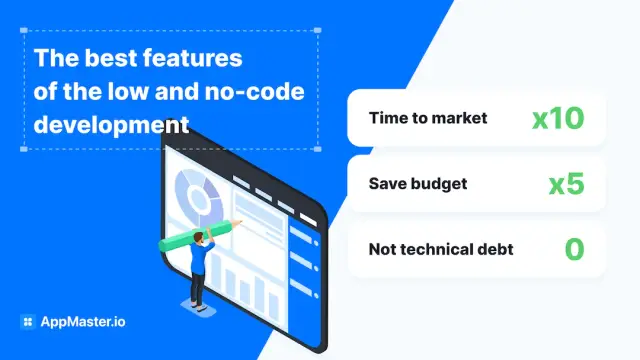
AppMaster, a powerful no-code platform, takes this approach one step further. Users can create backend, web, and mobile applications visually, leveraging a range of features including drag-and-drop UI design, rapid application generation, and easy scalability for various use cases. This combination of low-code techniques and agile development methods ultimately results in applications that are highly responsive to market needs, user feedback, and emerging trends.
When low-code platforms are integrated into agile development processes, software teams experience a range of significant benefits:
Low-code solutions dramatically reduce the time and effort needed to develop software applications by providing pre-designed templates, components, and visual interface designers. This allows teams to create functional prototypes quickly and iterate on them throughout the development lifecycle easily, resulting in increased productivity and faster time to market.
The visual nature of low-code tools enables better collaboration among development team members and stakeholder groups. Non-technical stakeholders can easily participate in the design and development process, fostering better communication and ensuring the alignment of business goals with application features.
By simplifying and automating the software development process, low-code solutions enable agile teams to deliver software applications to end-users more quickly. This accelerated time to market offers a crucial competitive advantage in today's fast-paced business environment.
Low-code and no-code platforms, such as AppMaster, enable developers to create applications that are highly scalable, making it easier to adapt to changing market conditions and evolving user needs. This flexibility is essential for businesses looking to grow and maintain a competitive edge in their respective industries.
Agile development teams can make adjustments to software requirements and priorities more quickly when using low-code solutions, ensuring that applications stay relevant and adaptable in changing environments.
Successfully incorporating low-code platforms into an agile development process requires careful planning and preparation. Here are some practical tips to help you make the most of low-code solutions in your agile practice:
By adopting a no-code solution like AppMaster, you can harness the full potential of agile development and enjoy a marked improvement in productivity, collaboration, and overall software success.
As a leader in the low-code and no-code space, AppMaster has established itself as an essential tool for organizations that want to leverage the power of agile development. Companies of all sizes and industries can benefit from using AppMaster to create custom backend, web, and mobile applications, reduce time to market, and adapt quickly to changing requirements.
With AppMaster, you don't need to be a professional coder to create highly-scalable and functional applications. The platform's visual interface, intuitive drag-and-drop functionality, and support for rapid application generation streamline the software development process. These features are particularly well-suited for agile teams looking to iterate rapidly and deliver value to customers. Here are some key reasons why AppMaster is the perfect no-code solution for agile development:
AppMaster enables faster prototyping, iteration, and deployment with minimal manual coding. By using a visual interface for designing data models, UI components, and business logic, software development teams can rapidly create, test, and iterate on applications. This translates to a dramatic increase in productivity, reducing both the development time and associated costs.
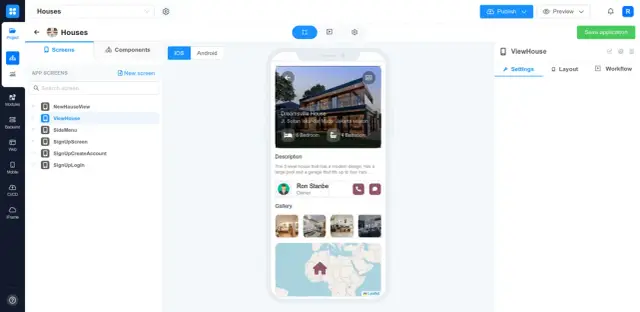
Agile development requires collaboration between various stakeholders, from developers to project managers and end-users. AppMaster promotes collaboration by allowing non-technical team members to participate in the development process, create and modify application components, and contribute their insights without having to code. As a result, the entire team can contribute to the software's development, making informed decisions and fostering greater buy-in for the final product.
Agile projects are designed to adapt and scale with customer needs, and AppMaster is the perfect platform to accommodate such changes. AppMaster-generated applications are built with Go for backend systems, Vue3 for web applications, and Kotlin with Jetpack Compose and SwiftUI for Android and iOS. This combination of technologies ensures high levels of performance and scalability, even for complex enterprise and high-load use cases.
Agile teams often rely on a variety of tools and processes to manage their projects, from collaboration and communication tools to version control systems and automated testing. AppMaster integrates seamlessly with industry-standard tools and supports agile workflows, enabling your team to focus on delivering value rather than wrestling with complex configurations and setups.
The success of any agile project is contingent on the team's ability to learn new skills and adapt. AppMaster provides an extensive range of resources, including detailed documentation, tutorials, and access to a supportive community of over 60,000 users. This ensures that your team will have the necessary knowledge and support as they develop software using the AppMaster platform.
AppMaster is an ideal choice for organizations looking to maximize the benefits of agile development methodologies. By leveraging the power of low-code and no-code platforms like AppMaster, software development teams can iterate quickly, deliver value to customers, and pivot as necessary to align with market needs. In today's fast-paced business environment, the ability to respond and adapt is paramount, and AppMaster equips you with the tools to succeed.
 What is low-code development?
Low-code development is an approach that allows developers and non-technical users to create software applications with minimal hand-coding through visual interfaces, templates, and components.
What is agile development?Agile development is a software development methodology that encourages flexibility, collaboration, and adaptability by breaking down projects into small, incremental stages called sprints.
How can low-code enhance agile development?Low-code platforms can enhance agile development by enabling faster prototyping, iteration, and deployment, while minimizing the need for manual coding.
What are key benefits of combining low-code with agile development?Key benefits include increased productivity, improved collaboration, reduced time to market, enhanced scalability, and better adaptability to change.
How can AppMaster help in implementing low-code solutions for agile development?AppMaster is a powerful no-code platform that allows users to create backend, web, and mobile applications visually, making it ideal for agile development. Its features include rapid application generation, drag-and-drop UI design, and easy scalability for various use cases.
What are some tips for implementing low-code solutions in agile development?Tips include selecting the right low-code platform, integrating with existing tools and workflows, incorporating automated testing, and prioritizing user feedback and collaboration.
Who can benefit from using low-code platforms?Low-code platforms are beneficial for businesses of all sizes, from startups to enterprises, as well as software developers, project managers, and non-technical users looking to create custom applications quickly and efficiently.
Is it possible to customize applications created using low-code/no-code platforms?Yes, many no-code platforms, like AppMaster, offer a high degree of customization and extensibility, allowing users to tailor applications to their specific needs.
Experiment with AppMaster with free plan.
When you will be ready you can choose the proper subscription.
 Jul 14, 20268 min
 Jul 13, 20268 min
 Jul 08, 20268 min