


 Jul 14, 2026
 8 min
8 minEquipment reservation app: prevent conflicts and track returns
Plan an equipment reservation app that prevents double bookings, records returns and damage, and places faulty items on maintenance hold.

Discover the advantages of implementing an ERP system for your business, including improved decision-making, increased efficiency, and enhanced data security. Learn how AppMaster's no-code platform can help.

Enterprise Resource Planning (ERP) systems are software solutions designed to integrate various aspects of a business – such as finance, human resources, sales, manufacturing, and customer relationship management – into a single centralized platform. This consolidation allows businesses to efficiently manage their resources, processes, and information, leading to better decision-making, increased productivity, and improved performance.
Initially, ERP systems were primarily implemented by large enterprises, but with advancements in technology, small and medium-sized businesses have also started adopting these systems to streamline their operations. Modern ERP systems are highly customizable and scalable, able to adapt to the unique needs and preferences of any business.
Implementing an ERP system can offer significant advantages to businesses of all sizes, across various industries. Some of the key benefits include:
Let's delve into each of these advantages and explore how they can improve your business operations.
One of the most significant benefits of an ERP system is its ability to improve decision-making within an organization. By consolidating data from various departments and providing real-time insights and analytics, ERP systems empower managers and stakeholders to make informed decisions based on accurate, up-to-date information.
Additionally, ERP systems often come with powerful reporting and dashboarding tools that allow users to create custom reports and visualize data in meaningful ways. This, in turn, enables better understanding and tracking of key performance indicators (KPIs), helps identify trends and patterns, and ultimately drives more strategic and data-driven decision-making processes, leading to enhanced overall business performance.
One of the primary benefits of implementing an ERP system is the increased efficiency and productivity it brings to an organization. By centralizing and automating various business processes, an ERP system eliminates redundancies and streamlines workflows. Here are some ways ERP systems enhance efficiency and productivity:
Data security is a critical concern for businesses, particularly given the rise in cyber threats and data breaches. Implementing an ERP system can help mitigate these risks by centralizing data storage and implementing stringent access controls. Key benefits of ERP systems related to data security and compliance include:
An effective supply chain is crucial to meeting customer demands and maintaining a competitive edge. ERP systems play a pivotal role in optimizing supply chain operations by providing real-time visibility into inventory levels, manufacturing schedules, and sales forecasts. Benefits of ERP systems for supply chain management are:

By increasing efficiency, enhancing data security, and optimizing supply chain management, ERP systems can provide significant benefits to businesses. Implementing an ERP system is a significant investment, but its long-term value far outweighs the upfront costs. With a solution like AppMaster's no-code platform, custom integrations and automation are made much easier, streamlining the ERP implementation process and allowing businesses to reap the benefits faster.
One of the primary reasons organizations opt for ERP systems is the significant improvements they offer in financial management and reporting capabilities. The implementation of an ERP system brings the following financial benefits:
With an ERP system in place, businesses have access to accurate, real-time financial data from all their departments. This information is crucial for effective financial planning and decision-making, such as budgeting, expense tracking, and maintaining cash flow.
Manual financial tasks can be error-prone and time-consuming. ERP software helps automate various routine financial processes, such as invoicing, payments, and reconciliation. This automation leads to reduced human errors and ensures the consistency and accuracy of financial data.
Municipal, state, and federal regulations often require businesses to maintain accurate financial records and submit reports periodically. ERP systems assist in compliance efforts by providing automated mechanisms for record-keeping, data validation, and timely report generation. As a result, businesses are better equipped to meet regulatory requirements and avoid fines or penalties.
ERP systems come equipped with sophisticated financial analytics tools that allow businesses to analyze their finances using various metrics and gain insights into their financial performance. These tools enable organizations to forecast future financial scenarios, identify potential risks or opportunities, and devise strategies accordingly.
ERP systems can seamlessly integrate with other software solutions, such as CRM, HRMS, or eCommerce platforms. This integration ensures that financial data is consistent across all departments and applications, further improving overall financial management.
Implementing an ERP system has a direct impact on businesses' customer service operations, leading to increased efficiency and better customer experiences. Here are some ways ERP systems contribute to enhanced customer service:
Modern businesses require software solutions that can adapt to their growth and evolving requirements. ERP systems offer scalability and flexibility to accommodate a business's changing needs, contributing to the following advantages:
By integrating a powerful ERP system into your business management toolbox, you can unlock new levels of efficiency, productivity, and growth. AppMaster's no-code platform can help streamline your ERP implementation process by facilitating seamless integration, generating customizable software solutions, and significantly reducing development costs and time. With AppMaster's assistance, your organization can experience the full benefits of an ERP system and achieve its full potential.
Implementing an ERP system can be a complex and time-consuming task, given the need to manage different components, ensure data integrity, smooth integration with existing systems, and customize the solution to align with business requirements. This is where the use of a no-code platform, like AppMaster, can be of immense value.
AppMaster is a powerful no-code tool for creating backend, web, and mobile applications. With its visual data modeling capabilities and drag-and-drop interface, organizations can develop software solutions that streamline the implementation and management of ERP systems, making the process more efficient, cost-effective, and accessible to a broader range of users.
By using AppMaster, businesses can generate the source code, executable binary files, and even Docker containers for applications in minutes, thanks to its advanced application generation capabilities. Furthermore, AppMaster eliminates technical debt by regenerating applications from scratch whenever requirements are modified, ensuring that ERP solutions and integrations remain up to date as business needs evolve.
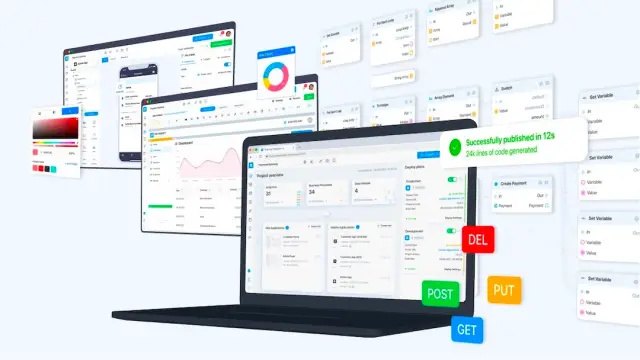
AppMaster's compatibility with Postgresql-based databases and its impressive performance for enterprise and highload use-cases make it a reliable choice for organizations contemplating the adoption of ERP systems. Additionally, the platform offers a variety of subscription plans to suit businesses of all sizes, from startups to large enterprises, enabling organizations to select a plan that best aligns with their requirements and budget.
Moreover, AppMaster has been recognized by G2 as a high performer in numerous categories, including no-code development platforms, rapid application development (RAD), API management, and more. This recognition underscores the platform's ability to deliver cutting-edge technology that simplifies the ERP implementation process and helps businesses optimize their operations.
Enterprise Resource Planning (ERP) systems bring a wealth of benefits to businesses, including improved decision-making, increased productivity, enhanced data security, and more. However, implementing an ERP system can be a complex undertaking, requiring expert knowledge to manage its various aspects adequately.
Utilizing a no-code platform like AppMaster can greatly simplify the process, allowing organizations to create custom software solutions and integrations that streamline ERP implementation and management. With its range of advanced features, powerful application generation capabilities, and flexible subscription plans, AppMaster offers a promising solution that can help organizations of all sizes unlock their business potential through the strategic implementation of ERP systems.
 What is an ERP system?
An ERP (Enterprise Resource Planning) system is a software solution that integrates various aspects of a business, including finance, human resources, sales, manufacturing, and customer relationship management, to provide a centralized platform for managing the business processes.
What are the key benefits of implementing an ERP system?Key benefits include improved decision-making, increased efficiency and productivity, enhanced data security, better supply chain management, financial management and reporting, streamlined customer service, and scalability and flexibility.
How does an ERP system improve decision-making?By consolidating data from various departments, ERP systems provide real-time insights and analytics that help managers and stakeholders make informed decisions based on accurate, up-to-date information.
How do ERP systems enhance data security and compliance?ERP systems centralize data storage and implement access control mechanisms, ensuring that sensitive data is protected and accessible only to authorized users. They also help businesses comply with various regulations by maintaining accurate records and providing automated reporting features.
What is the role of an ERP system in supply chain management?ERP systems help in streamlining supply chain processes by providing visibility into inventory levels, manufacturing schedules, and sales forecasts, allowing businesses to optimize production, distribution, and procurement strategies.
How does an ERP system improve customer service?ERP systems centralize customer data, allowing businesses to track interactions, respond to inquiries more effectively, and provide personalized experiences that boost customer satisfaction and loyalty.
Can ERP systems be flexible and scalable?Yes, modern ERP systems are designed to be scalable and flexible, allowing businesses to grow and adapt while maintaining efficient and reliable operations. They can be customized to meet the specific needs and preferences of the business.
How does AppMaster's no-code solution relate to ERP implementation?AppMaster's powerful no-code platform can be used to create customized software solutions and integrations that streamline the implementation and management of ERP systems, making the process more efficient and cost-effective.
Experiment with AppMaster with free plan.
When you will be ready you can choose the proper subscription.
 Jul 14, 20268 min
 Jul 13, 20268 min
 Jul 08, 20268 min