


 Jul 14, 2026
 8 min
8 minEquipment reservation app: prevent conflicts and track returns
Plan an equipment reservation app that prevents double bookings, records returns and damage, and places faulty items on maintenance hold.

Discover how low-code development is shaping the future of software construction, its impact on businesses, and what it means for AppMaster's no-code platform.

The world of software development has evolved rapidly over the past few years, with low-code development gaining momentum as a compelling solution to building applications faster and more efficiently. Low-code development platforms enable developers to design, build, and deploy applications primarily using visual tools, reducing the manual coding effort associated with traditional programming.
This approach has been embraced by businesses across various industries for its ability to accelerate development cycles, lower costs, and facilitate innovation. In this article, we will examine the current state of low-code development, how it is changing the software development industry, and its potential long-term impact.
Low-code development platforms have been growing in popularity, as they empower developers and non-developers alike to build applications quickly without writing much code. These platforms offer drag-and-drop components, integration capabilities, and various templates, which enable the rapid creation and deployment of web, mobile, and backend applications.
Industry experts predict that low-code development will continue to proliferate, with a recent Gartner report estimating that by 2024, low-code application development will make up more than 65% of application development activity. There are several factors currently driving the growth of low-code development:
The emergence of low-code as a viable software development approach is shaping the industry in several significant ways:
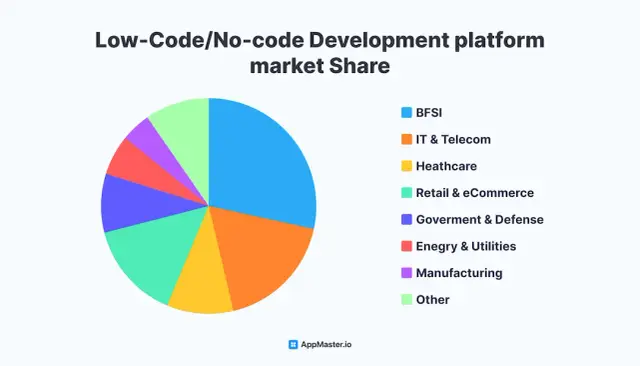
Low-code development's impact on the software construction industry promises to bring about lasting changes in the way businesses approach application development. With increased speed, accessibility, flexibility, and innovation, low-code positions itself as a game-changer in the world of software creation.
Low-code development platforms are significantly influencing the way businesses carry out and design their digital transformation strategies. Companies have been quick to recognize the potential of low-code development to streamline application building while reducing the time and resources needed. The following are some key ways low-code development impacts businesses:
Traditional software development can be a time-consuming and expensive process. With low-code development, businesses can dramatically shorten development timeframes and lower costs by automating complex tasks and streamlining the processes.
Technical debt is a hidden cost of long-term software maintenance that can slow down updates and weigh businesses down. Low-code development tools minimize technical debt as they generate clean code and provide a more accessible way to maintain applications.
The visual approach of low-code platforms offers increased adaptability as companies can quickly respond to market changes or new technologies. Businesses can also scale their applications — whether by adding new functionality or increasing the capacity — much faster and more efficiently than before.
As low-code development democratizes the process of software creation, it creates opportunities for non-technical employees to contribute to the development process. This diversity of perspectives may foster innovation and help businesses come up with new ideas and features for their applications.
Automating workflow, simplifying integrations, and standardizing processes can enhance productivity and reduce operational inefficiencies. Low-code platforms often come with built-in process management tools, offering an all-in-one package to create, streamline, and manage the entire application lifecycle.
As low-code development continues to evolve and gain recognition in the software development world, several key technologies and trends are shaping its future:
As the lines between low-code and no-code platforms begin to blur, solutions that incorporate the advantages of both approaches pave the way for a more comprehensive development ecosystem. One such platform is AppMaster- a powerful no-code tool that lets customers create backend, web, and mobile applications using visual design tools.
AppMaster enables customers to visually design data models, create business logic using the Business Processes (BP) Designer, and define REST API and WSS Endpoints. Web and mobile applications' UI can be created using the drag-and-drop builder, with the business logic being developed in the Web and Mobile BP designers.
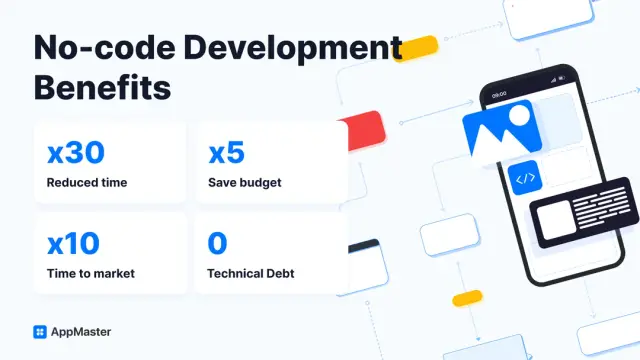
As customers press the 'Publish' button, AppMaster generates the source code for their applications, compiles, runs tests, packages the applications into Docker containers, and deploys them to the cloud. This approach eliminates technical debt since the generated applications are always built from scratch, allowing for a seamless update process.
With its unique approach that combines the benefits of both low-code and no-code concepts, AppMaster is at the forefront of revolutionizing software development, offering a platform that is both developer-friendly and accessible to non-developers. Its ability to generate applications at high speed and with minimal technical debt makes AppMaster an attractive option for businesses of all sizes looking to gain a competitive edge in an ever-evolving digital environment.
Low-code development has emerged as a game-changer in the software construction industry, and its future prospects appear promising. By enabling rapid application development, minimizing technical debt, and making software development accessible to a broader range of users, low-code is revolutionizing the way businesses build and maintain their digital solutions.
The emerging trends and technologies that shape the low-code industry are pushing the boundaries of what's possible in software development. AI-assisted development, advanced integration, cloud-native capabilities, and an emphasis on security and governance will continue to drive adoption and innovation in the low-code market.
However, the most significant development in the low-code arena may be the convergence of low-code and no-code solutions. Platforms like AppMaster prominently highlight this merger, providing substantial benefits for businesses of all sizes. By combining the speed and simplicity of no-code development with the flexibility and power of low-code, AppMaster eliminates technical debt and democratizes software creation even further. In conclusion, the future of low-code development is indeed bright and full of potential.
This revolutionary approach to software construction will continue to evolve, shaping the ways organizations develop, adapt, and maintain their digital solutions. As low-code and no-code platforms merge and grow in sophistication, the possibilities become endless, fundamentally altering how businesses around the world construct and manage software.
 What is low-code development?
Low-code development is an approach to software construction that relies on graphical interfaces, visual modeling, and drag-and-drop components to create applications, reducing the need for traditional coding and enabling quicker application development.
What benefits do businesses gain from low-code development?Businesses benefit from low-code development by saving time, reducing costs, improving flexibility, encouraging innovation, and reducing technical debt as they can build and maintain applications more efficiently than with traditional coding.
What are some key technologies and trends shaping the future of low-code?Key technologies and trends shaping the future of low-code include AI-assisted software development, microservices architecture, cloud-native capabilities, advanced integrations, and an increased focus on low-code security and governance.
How is low-code changing the software development industry?Low-code is changing the software development industry by democratizing software development, allowing non-technical users to participate in the process, speeding up application delivery, promoting adaptability, and creating new possibilities for niche solutions.
What is the role of AppMaster's no-code platform in the future of low-code development?AppMaster's no-code platform showcases the convergence of low-code and no-code solutions, offering an approach that eliminates technical debt and provides rapid development capabilities for web, mobile, and backend applications across industry sectors.
What's the difference between low-code and no-code development?Low-code development relies on visual drag-and-drop components and graphical interfaces but still requires some traditional coding expertise for complex tasks. No-code development, on the other hand, eliminates the need for manual coding altogether, allowing non-developers to build applications using completely visual tools.
Experiment with AppMaster with free plan.
When you will be ready you can choose the proper subscription.
 Jul 14, 20268 min
 Jul 13, 20268 min
 Jul 08, 20268 min