


 Jul 14, 2026
 8 min
8 minEquipment reservation app: prevent conflicts and track returns
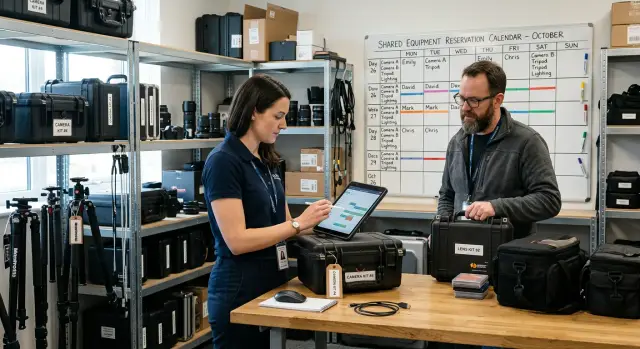
Plan an equipment reservation app that prevents double bookings, records returns and damage, and places faulty items on maintenance hold.

Plan a warranty claim portal that handles registration, proof of purchase, claim review, and clear status updates in one flow.

Most warranty problems do not start with the product. They start with the process.
When a claim begins by phone or email, small delays pile up fast. One person explains the issue, another asks for the serial number, and someone else follows up later for the receipt. If the team is working across inboxes, spreadsheets, and call notes, details get missed, repeated, or lost.
That creates a frustrating loop. The customer thinks, "I already sent that," while the support team is still trying to piece the case together.
A big cause is missing proof at the start. Many customers do not have the receipt ready, or they are not sure what counts as proof of purchase. Some send a screenshot without the order date. Others upload the wrong invoice. Every missing detail leads to another message, another wait, and more frustration.
Claims usually stall for the same reasons. The customer submits only part of the needed information, the agent has to ask follow-up questions one by one, documents need to be checked before anything can move forward, and the customer has no clear idea what happens next.
Status updates are another weak point. If customers hear nothing after submission, they assume the claim is stuck or ignored. Many contact support again just to ask for an update, which adds more work for the team and more noise to the queue.
A simple message like "Received," "Under review," or "Waiting for proof of purchase" removes a lot of stress. Without that visibility, even a normal review time feels too long.
Picture a customer with a faulty blender. They call support, then email photos, then search for a receipt, then wait three days with no update. The claim may be valid and easy to approve, but the path feels messy and uncertain.
That is why a warranty claim portal matters. Instead of spreading the claim across calls, inboxes, and manual checks, one clear workflow can collect the right details, request documents up front, and show progress in one place.
A good warranty claim portal asks for enough detail to help the support team make a decision quickly, without turning the form into homework. Every field should answer a simple question: do we need this to confirm ownership, identify the product, or understand the problem?
Start with basic contact details. Full name, email, phone number, and preferred contact method are usually enough. If shipping or repair is part of the process, collect the address too, but only when it is actually needed.
Next comes product identification. Ask for the product model and serial number exactly as shown on the label or packaging. This helps the team check warranty terms, known issues, and whether the item matches a past registration.
Purchase details matter just as much. Collect the purchase date and the seller or store name. If warranty rules depend on region, ask for the country of purchase as well.
Proof of purchase should be easy to upload, not a barrier. Let people add a receipt, invoice, order confirmation, or a clear photo if that is common for your customers. On mobile, camera upload is often easier than asking someone to find a PDF.
The problem description is where many forms go wrong. Do not ask for a long essay. A few clear prompts work better:
The difference is important. "It stopped working" is vague. "Model X100, bought in March, screen flickers after 10 minutes, issue started last week, factory reset did not help" gives the team something they can use.
If you want cleaner claims, add short guidance beside each field. Show where to find the serial number. Explain what counts as proof of purchase. Tell customers which photos help most, such as the damaged area, the full product, and the serial label.
That is what makes a portal feel simple for customers and useful for the team reviewing each case.
A warranty portal should feel predictable from the first screen to the final update. Customers should always know what to do now, what happens next, and roughly how long each step takes.
Start with two clear entry points: register a product or begin a claim. Some people are planning ahead right after a purchase, while others already have a problem to report. If both paths are visible, people do not waste time guessing where to go.
A typical journey is simple. The customer chooses product registration or claim start, enters basic product and contact details, uploads proof of purchase when needed, submits the case, and then tracks progress through plain-language status updates.
Keep each step light. Do not ask for every possible detail on the first screen. If someone is registering a product, they may only need a serial number, purchase date, and contact info. If they are starting a claim, ask for the issue description and supporting files when those details become relevant.
A save-and-return option matters more than many teams expect. Customers often need time to find a receipt, take a photo of damage, or check the product label. If they lose their progress, some will give up or submit incomplete information.
After submission, remove the mystery. Show a simple timeline such as Received, Under review, Waiting for documents, Approved, or Resolved. These claim status updates should sound human, not internal. "We received your claim and are reviewing your documents" is much clearer than "Case moved to validation queue."
Picture the blender example again. The customer starts a claim on their phone, enters the serial number, describes the issue, and pauses when they realize the receipt is in their email. Later, they return, upload proof of purchase, and submit. The portal confirms the claim, explains that review may take two business days, and shows status changes without the customer needing to call support.
That is the goal: fewer dead ends, fewer support tickets, and a process people can follow without help.
The intake flow should feel easy from the first screen. Most people arrive because something broke, failed, or did not work as expected. If the opening page looks busy, they may leave before they begin.
Start with a simple entry page that answers three questions right away: what this form is for, how long it takes, and what the customer should have ready. For a warranty claim portal, that usually means a product serial number, purchase date, and proof of purchase.
Keep the first action small. Ask the customer to choose one path: register a product, submit a new claim, or check an existing case. That single choice makes the rest of the workflow clearer.
Do not place every field on one long page. Break the form into short steps so the customer can focus on one task at a time. A simple order works well:
This structure also helps your team validate data earlier. Ask only for information that supports a real decision later. Proof of purchase should be required when it matters, and the label should be plain. "Upload receipt or invoice" is better than a vague "Attach document."
Set file upload rules before launch and show them clearly. Customers should know what is accepted before they try. Keep the rules simple: allow common formats like JPG, PNG, and PDF; set a clear size limit; explain whether photos of damage are needed; and show error messages that tell people how to fix the problem.
End with a review screen and a clear confirmation. Show the key details back to the customer, assign a case number after submission, and explain what happens next. That last screen can prevent a surprising number of follow-up emails.
Good triage answers two questions quickly: is this claim ready for review, and who should handle it next? Most delays do not happen when the customer fills out the form. They happen later, when the claim lands in the wrong queue or sits with missing information nobody noticed early.
The first filter should separate valid claims from incomplete ones. If the serial number is missing, the product is outside the warranty period, or the proof of purchase is unreadable, the claim should not move into full review yet. It should go into a short follow-up path with a clear request for what is missing.
That early check saves time for both customers and staff. Instead of passing a weak claim across several teams, the portal can stop it at the start and ask for one corrected date, one better photo, or one missing document.
After the basic check, route the claim using a few simple rules. Most teams only need to sort by product type or model, issue category, urgency, and customer tier if service levels differ.
For example, a damaged consumer device with a valid receipt may go to standard support, while a safety-related issue for industrial equipment should go straight to a senior reviewer. Customers do not need to see all of that logic, but they should feel the result through faster and more accurate handling.
Each stage also needs a clear owner. A support agent may verify documents, a warranty specialist may confirm coverage, and a service team may approve repair, replacement, or rejection. When ownership is vague, claims bounce around and response times grow.
Status updates should go out after every meaningful decision. If documents are missing, send that update right away. If coverage is confirmed, say the claim is under technical review. If a replacement is approved, explain the next step and expected timing.
Automatic updates are better than manual ones whenever possible. They make the process more consistent and reduce the chance that a customer is left waiting without an explanation.
Maria buys a blender from a local home goods store and registers it that evening. The portal asks for a few basics: product model, serial number, purchase date, and contact information. She uploads a photo of the receipt, so the system can confirm that the warranty is active.
A few months later, the blender motor starts making a harsh noise and then stops working. Because Maria already registered the product, she does not need to fill out everything again. She opens her product record, selects Report a problem, writes a short note about the motor failure, and uploads two files: the receipt and a short video showing that the blender will not start.
Right after submission, the status changes from Draft to Submitted. That small change matters. Maria can tell the form went through, and she does not have to wonder whether support received it.
Later that day, the status changes to Under review. A support agent checks the video and the proof of purchase. The failure looks real, but one detail is missing: the serial number label is not visible in the video or receipt photo.
Instead of sending a vague message, the agent adds a clear request inside the case: please upload a photo of the label on the bottom of the blender. The portal changes the status to Action needed. Maria gets the update, logs in, and knows exactly what to do next.
She takes one quick photo on her phone and uploads it. The case status switches back to Under review, which tells her the claim is moving again.
The support team now has what they need to decide. They confirm the product is still within the warranty period and approve the claim. Maria sees the status change to Approved, followed by Replacement processing.
When the new blender ships, the portal updates to Shipped and shows the tracking reference. After delivery, the case is marked Closed.
This kind of flow keeps the process simple for both sides. The customer always sees the next step, and support only asks for missing details when they are truly needed.
A slow claim is often caused by the portal itself, not the product issue. Small design choices can add days of waiting, extra back and forth, and frustrated customers.
One common mistake is asking for too much information at the start. If someone has to fill out a long form before they can even report a problem, many will stop halfway or enter rushed, incomplete answers. Start with the basics: product details, proof of purchase, the issue, and contact information. Ask for more later only if the claim needs deeper review.
Another problem is using internal status labels that make sense only to your team. A customer who sees "Under technical validation" or "Pending classification" may have no idea whether the claim is moving or stuck. Plain labels like Received, Under review, Waiting for documents, Approved, and Rejected work much better.
File uploads also create delays when the rules are unclear. If the portal accepts blurry photos, huge files, or formats your team cannot open, the claim slows down before review even begins. Set clear upload limits and give people basic guidance on what a good file looks like. A quick preview step helps them catch problems before submitting.
Another mistake is forcing customers to call or email just to get an update. That adds work for support and makes the process feel uncertain. A good portal should show status updates inside the workflow itself. Even a short note like "Reviewed within 2 business days" or "Replacement approved, shipping next" gives people confidence that something is happening.
The last big issue is missing deadlines for each review step. If there is no target for first review, document checks, or final decision, claims can sit untouched. Set simple time rules for every stage and make ownership clear.
A warranty portal should feel easy for customers and calm for staff. Before launch, test the full path from first form field to final decision and ask one simple question: can a real person finish this without getting stuck?
Start with speed. A customer should be able to register a product or submit a claim in a few minutes if they have the item, receipt, and serial number nearby. If the form feels long, check whether every field is truly needed at the start.
Upload rules matter more than many teams expect. If people learn too late that a photo is blurry, a file is too large, or proof of purchase is missing, they have to start over. Put those rules next to the upload area, not in small print at the bottom.
Status updates should answer the question the customer is already asking. "Under review" is often too vague on its own. A better message explains whether the team is checking coverage, waiting for documents, arranging repair, or preparing a replacement.
On the internal side, reviewers need a clean queue. If staff cannot quickly spot incomplete claims, duplicates, or high-priority cases, delays build up fast. Even a simple dashboard works well when it makes sorting and handoff clear.
Think through the end of the case too. An approved claim may lead to repair, replacement, refund, or store credit. A denied claim should still give a short reason and a next step, such as uploading missing documents or contacting support.
A good final test is to run three sample cases: one approved, one denied, and one missing proof of purchase. If each case is easy to submit, review, and explain, the launch is in good shape.
The best way to build a customer-facing portal is to start smaller than you think. Do not begin with every exception, every product, and every policy rule. Start with one clear path: product registration, proof of purchase upload, claim submission, and status updates.
That first version should handle the most common cases well. If customers can register a product in minutes and submit a claim without guessing what happens next, you already have something useful.
A smart pilot is usually one product line, one market, or one service region. That keeps the form fields, claim rules, and support process easier to manage. It also gives your team room to spot issues before they affect everyone.
Watch what real users do, not just what the process diagram says they should do. A portal can look simple on paper but still lose people when they are asked for serial numbers, receipts, photos, or dates they do not have ready.
Focus on a few signals first: where people leave the form, which fields are skipped or filled incorrectly, how many claims stay incomplete, how long triage takes after submission, and whether customers open status notifications. These numbers show where the workflow needs work.
Small improvements usually matter more than a full redesign. Shorter form labels, better upload guidance, clearer claim categories, and plain-language notifications remove a lot of friction over time.
If your team wants to build and adjust this kind of workflow without heavy coding, AppMaster is one option to consider. Its visual tools can help teams create customer-facing forms, define business logic for claim routing and status updates, and update the process as requirements change.
Start with one working flow. Measure it. Fix what slows people down. Then expand with confidence.
 What information should a warranty claim portal ask for?
Start with the basics: product model, serial number, purchase date, contact details, a short issue description, and proof of purchase. Ask for extra details only when they help review the claim.
What counts as proof of purchase?Use whatever the company accepts most often, such as a receipt, invoice, order confirmation, or a clear photo of one of those documents. The key is that it should show enough detail to confirm the purchase and date.
Why do warranty claims usually take so long?Because most delays come from missing details, unreadable files, or unclear next steps. A portal speeds things up when it collects the right information early and shows status updates clearly.
Should customers be able to save a claim and finish it later?Yes. Customers often need time to find a receipt, check the serial label, or take photos. A save-and-return option helps them finish the claim later instead of starting over or sending incomplete information.
Which status updates are most useful for customers?Use plain labels that explain where the case is now, such as Received, Under review, Waiting for documents, Approved, or Resolved. Add a short note when possible so the customer knows what happens next.
How can I reduce problems with file uploads?Show accepted file types, size limits, and photo guidance before upload. It also helps to let customers preview files first, so they can catch blurry photos or missing documents before submitting.
How should claim triage work behind the scenes?First check whether the claim is complete and ready for review. Then route it by simple rules like product type, issue category, urgency, and who owns the next step.
What should the problem description section include?Keep it short and focused. Ask what the issue is, when it started, whether it happens all the time or only sometimes, and what the customer already tried. Photos or a short video can help more than a long written explanation.
What should happen if a claim is denied?Give a short, clear reason and the next step. For example, say if the warranty period has ended, a document is missing, or the product details do not match, and explain whether the customer can upload more information or contact support.
What is the best way to launch a warranty claim portal?Build one simple flow first: product registration, proof of purchase upload, claim submission, and status updates. If you want to do this without heavy coding, AppMaster can help you create the forms, routing logic, and customer portal faster.
Experiment with AppMaster with free plan.
When you will be ready you can choose the proper subscription.
 Jul 14, 20268 min
 Jul 13, 20268 min
 Jul 08, 20268 min