


 Jul 14, 2026
 8 min
8 minEquipment reservation app: prevent conflicts and track returns
Plan an equipment reservation app that prevents double bookings, records returns and damage, and places faulty items on maintenance hold.

Discover how zero-code solutions can revolutionize application development, save costs and time, and help you compete in today's innovative tech market. Learn about the benefits and cost effectiveness of platforms like AppMaster.io.

Zero-code solutions, also known as no-code platforms, are development tools that allow users to create fully functional applications without writing a single line of code. These platforms leverage user-friendly visual interfaces, drag-and-drop tools, and visual programming techniques to enable users to design and create applications quickly and efficiently.
Zero-code platforms operate on the principles of visual modeling and abstraction, allowing users with little or no technical background to build and maintain applications. By handling most of the low-level programming tasks, zero-code platforms reduce the need for specialized developers and make it possible for non-technical individuals to play a significant role in the development process. As a result, businesses can bridge the gap between their non-technical stakeholders and the sometimes complex world of application development.
There are several compelling reasons why businesses of all sizes choose to adopt zero-code platforms for their application development. Some of the primary benefits include:
Zero-code platforms streamline the application development process, enabling users to create apps quickly and efficiently. This reduction in development time translates to lower labor costs and quicker time-to-market, which are crucial factors for businesses that need to stay competitive within their industry.
By drastically reducing the need for specialized developers and minimizing the time spent on development tasks, zero-code platforms can lead to significant cost savings. Companies can redirect resources that would have been used on traditional development efforts toward other important business objectives.
Zero-code platforms enable users to iterate and make changes to their applications more easily than traditional development methods. These platforms make it possible to validate ideas, adapt to changing business requirements, and scale applications to accommodate growing demand. As a result, businesses can be more agile and respond to market changes more effectively.
Technical debt is the consequence of taking shortcuts or making compromises during software development that can cause problems later on. Because zero-code platforms automatically generate code from visual blueprints, there is no technical debt accumulated when modifying or updating applications. This leads to higher-quality applications and decreased costs attributed to fixing or maintaining aging codebases.
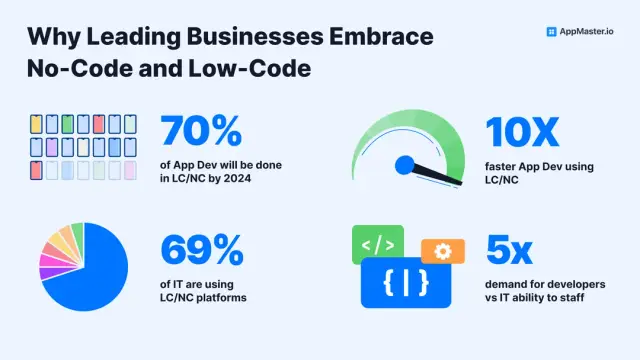
When comparing the costs associated with traditional development to zero-code platforms, several factors come into play. Here is a breakdown of some key cost elements for both approaches:
Zero-code platforms offer a more cost-effective alternative to traditional development. By reducing development costs, shortening time-to-market, and minimizing technical debt, businesses that leverage zero-code solutions can generate higher-quality applications and ultimately achieve better business outcomes.
One of the primary advantages offered by zero-code development platforms is the time efficiency these solutions provide. By eliminating the need to write code, application development becomes faster and simpler. This has direct implications for businesses, as accelerated development times lead to quicker time-to-market and faster response to changing market demands.
With zero-code platforms, users can visually create applications by assembling pre-built components and utilizing drag-and-drop tools. This approach eliminates the need for deep technical knowledge and significantly reduces the learning curve for non-expert users. This means developers and non-developers alike can create fully functional applications with minimal expertise and training.
In traditional development, making changes to a project often requires time-consuming code revisions. With zero-code platforms, the development process is inherently agile and iterative. Revising and refining an application can be accomplished quickly through the visual interface, making it easier and more efficient to iterate on ideas and respond to changing requirements.
The time savings in zero-code development are not limited to the design process. Since zero-code platforms automatically generate and manage the code associated with an application, there is significantly less time spent on debugging, testing, and maintenances practices. This frees up developers to work on other crucial aspects of a project, ultimately leading to more streamlined development timelines.
Many businesses question whether zero-code platforms can scale to meet the demands of growing organizations or handle diverse use cases. Fortunately, modern zero-code platforms are designed with scalability in mind. One key aspect of scalability is the ability to handle high-load scenarios with ease. Zero-code platforms effectively manage resource utilization, enabling applications to perform optimally even as the user base and load on the system expand. This is achieved through efficient code generation and the use of compiled stateless backend applications, which can handle significant loads without faltering.
Zero-code platforms also enable seamless integrations with other systems and services. This aspect of scalability is critical as businesses expand and require more sophisticated applications and workflows that encompass multiple technologies. Integration capabilities offered by zero-code solutions facilitate the rapid provisioning of new services, ensuring that business needs are met consistently.
Furthermore, zero-code platforms often provide support for multi-tenancy, allowing multiple users to work on collaborative projects or different parts of a larger ecosystem simultaneously. This feature is crucial for large organizations and enterprises with extensive development teams and diversified application requirements.
AppMaster.io is a prime example of a powerful zero-code development platform. This comprehensive solution enables users to create backend, web, and mobile applications without writing a single line of code. The platform is designed with efficiency in mind, offering various innovative features and tools that facilitate rapid application development.
With AppMaster.io's visual interface, users can create data models called Business Processes (BPs), REST API endpoints, and WebSocket Secure (WSS) endpoints. This visual approach eliminates the need for deep technical expertise and provides non-expert users with the necessary tools for efficient application development. In addition, AppMaster.io supports the creation of web applications through intuitive drag-and-drop UI builders and web BP designers, which execute directly in the user's browser.
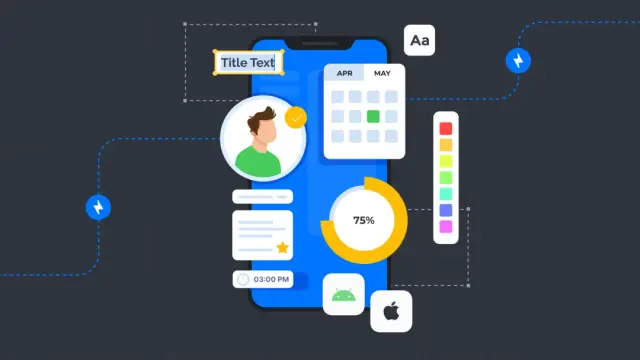
For mobile applications, AppMaster.io features mobile BP designers and UI builders tailored for Android and iOS platforms. These comprehensive tools enable seamless end-to-end application development with minimal hassle. The true power of AppMaster.io lies in its ability to generate applications from scratch whenever there is a change in the application's blueprints. This feature eliminates technical debt and streamlines the development process.
With each update, the platform generates new applications in under 30 seconds, providing updated executables, binary files, or even source code, depending on the subscription tier. With its emphasis on efficiency, visual usability, and scalability, AppMaster.io stands as a prime example of a zero-code powerhouse platform. As more businesses adopt zero-code solutions, development timelines will become shorter, and the focus will shift toward innovation rather than dealing with the complexities of code.
One of the most significant advantages of zero-code development platforms is their ability to maximize return on investment (ROI) for businesses. Leveraging zero-code solutions can lead to a higher return on your development investment by reducing costs, shortening time-to-market, and minimizing technical debt. In this section, we'll explore the different ways zero-code solutions help maximize your ROI and enhance the overall value of your application development projects.
Zero-code platforms eliminate the need for specialized programming skills, making the development process more accessible to a broader range of individuals. By enabling even non-technical team members to contribute to the development process, organizations can save on the expenses typically associated with hiring and training specialized developers — a significant portion of the software development budget. Furthermore, zero-code solutions streamline the development process, reducing the time and effort spent on manual coding tasks. This efficiency translates to cost savings, as teams need fewer resources to complete the same workload that traditional coding methods would require.
One of the critical factors in maximizing ROI is the speed at which a new application can be brought to market. A shorter time-to-market allows businesses to capitalize on emerging opportunities faster and gain a competitive advantage over their rivals. Thanks to drag-and-drop interfaces, visual modeling tools, and reusable components that zero-code platforms offer, the time required to build, test, and deploy applications is significantly reduced. By minimizing the time spent on development, businesses can bring their solutions to market much faster, enabling them to start recouping their investment sooner.
The ability to quickly iterate on and adapt a product is a key driver of success in today's fast-changing business environment. Zero-code development platforms provide the agility needed to make rapid iterations and adaptations, empowering teams to stay ahead of the curve and respond to market changes. Platforms like AppMaster.io, for example, enable users to modify their app blueprints easily, and the system automatically generates updated applications from scratch in under 30 seconds. This rapid iteration allows businesses to experiment with different features and respond to user feedback faster, ultimately leading to a more finely-tuned product that meets the needs of its target audience.
Technical debt is a term that describes the cost of cutting corners in software development or the ongoing maintenance required due to a less-than-optimal development process. This debt can accumulate over time, impacting the long-term performance and stability of an application. Zero-code platforms minimize technical debt by generating clean and efficient code automatically, ensuring that best practices are followed and reducing the likelihood of bugs and other issues arising from manual coding. As a result, organizations can avoid the high costs associated with fixing poorly written or outdated code over time.
Zero-code solutions enable organizations to allocate development resources more strategically by reducing the need for specialized developers and hand-coding. With these platforms, businesses can focus their resources on high-value tasks and invest in other areas, such as customer support, sales, and marketing, that can directly contribute to generating revenue and increasing the overall ROI.
In conclusion, zero-code development platforms play an essential role in maximizing the ROI of application development by reducing development costs, shortening time-to-market, enabling rapid iteration and adaptation, and minimizing technical debt. By investing in zero-code solutions like AppMaster.io, businesses can gain a competitive advantage and better position themselves to capitalize on new opportunities in today's innovative technology market.
 What are zero-code solutions?
Zero-code solutions are platforms that enable users to create applications without writing a single line of code. They use visual interfaces and drag-and-drop tools to help users build applications quickly and efficiently.
What are some benefits of using zero-code solutions?Zero-code solutions offer benefits such as reduced development time, cost savings, increased flexibility and adaptability, easy scalability, and minimized technical debt.
How can zero-code solutions save costs compared to traditional development?Zero-code solutions save costs by reducing the need for specialized developers, minimizing the time spent on development, and allowing for quicker iterations and changes, which result in less technical debt.
Are zero-code solutions scalable?Yes, zero-code solutions like AppMaster.io are specifically designed to handle scalability easily for a diverse range of business needs and use cases, including high-load enterprise scenarios.
What is AppMaster.io?AppMaster.io is a powerful zero-code platform for creating backend, web, and mobile applications. AppMaster.io allows users to visually create data models, business logic, and application interfaces with innovative features like Business Process and Endpoint designers.
How does AppMaster.io save time in development?AppMaster.io saves time by generating applications from scratch with every change in the visual blueprints, allowing developers to receive updated executables, source code, or binary files in under 30 seconds.
What are some features of the AppMaster.io platform?Features of the AppMaster.io platform include database schema visualization, REST API and WSS endpoints, web Business Process designers, and app generation tools for Android and iOS.
How can zero-code solutions maximize ROI?Zero-code solutions can maximize ROI by reducing development costs, shortening time-to-market, enabling rapid iteration and adaptation, and minimizing technical debt, leading to higher-quality applications and better business outcomes.
Experiment with AppMaster with free plan.
When you will be ready you can choose the proper subscription.
 Jul 14, 20268 min
 Jul 13, 20268 min
 Jul 08, 20268 min