


 Jul 14, 2026
 8 min
8 minEquipment reservation app: prevent conflicts and track returns
Plan an equipment reservation app that prevents double bookings, records returns and damage, and places faulty items on maintenance hold.

Discover the power of citizen development in rapid prototyping and how it paves the way for efficient business growth. Learn about its benefits, no-code/low-code platforms, and how AppMaster.io empowers citizen developers.

Citizen development refers to the process where non-technical, domain experts from various departments within an organization use no-code or low-code tools to create their own software applications. These business professionals, known as citizen developers, collaborate with IT teams to develop and deploy solutions that address their specific needs without requiring deep coding expertise.
Citizen developers leverage existing domain expertise, like finance, human resources, or marketing, to create applications that streamline processes, improve decision-making, and ultimately boost business efficiency. This approach democratizes software development, enabling non-technical employees to actively contribute to solving complex problems and enhancing workflows within the organization.
Rapid prototyping is an iterative process that involves creating and testing functional prototypes or applications in a much shorter time frame compared to traditional development methods. This approach plays a vital role in modern software development, as it enables businesses to validate ideas, make data-driven decisions, and implement improvements quickly and effectively.
At its core, rapid prototyping accelerates the software development life cycle. By allowing organizations to test and validate their solutions before bringing them to market, businesses can reduce the risks associated with development, minimize wasted resources, and improve their market competitiveness. Furthermore, rapid prototyping fosters a culture of innovation by encouraging experimentation, adaptation, and continuous refinement.
In the context of citizen development, rapid prototyping is the key to unlocking the full potential of non-technical employees. By empowering citizen developers to build and iterate solutions in a matter of days or even hours, organizations can respond with agility to changing market conditions, adapt to new trends, and experience exponential growth.
Citizen development brings numerous benefits to the process of rapid prototyping. Some of the most significant advantages include:
As businesses continue to embrace digital transformation and look for ways to enhance efficiency, the importance of citizen development and rapid prototyping becomes increasingly apparent. By empowering non-technical professionals to create software solutions, organizations can unlock a wealth of untapped potential and achieve significant competitive advantages.
As the demand for digital transformation grows, organizations are exploring ways to accelerate product development without the high costs and complexities traditionally associated with software engineering. No-code and low-code platforms have emerged as viable solutions to this challenge, filling the gap between traditional development methods and the rapid pace of modern technological innovation.
These platforms are designed to simplify the application development process and empower citizen developers, allowing them to build and deploy applications without comprehensive coding knowledge. By reducing the barriers to entry and enabling a more diverse range of employees to create digital solutions, no-code and low-code platforms help organizations scale their development efforts and act more responsively to changing market conditions.
No-code platforms allow users to create applications using pre-built templates, drag-and-drop interfaces, and other visual tools instead of writing code. These platforms make application development accessible to non-technical employees and promote collaboration between IT and business teams. By removing the dependency on programming skills, no-code platforms allow organizations to leverage the domain expertise of their existing talent and drive business growth.
On the other hand, low-code platforms simplify the coding process by providing reusable components, visual tools, and the ability to add minimal custom code when necessary. Low-code platforms retain the benefits of no-code platforms while offering additional flexibility to developers who have some degree of coding expertise. Both no-code and low-code platforms can accelerate innovation, improve efficiency, and streamline collaboration within organizations. By leveraging these platforms, companies can reduce time-to-market for their digital products and rapidly respond to shifts in customer expectations or market dynamics.
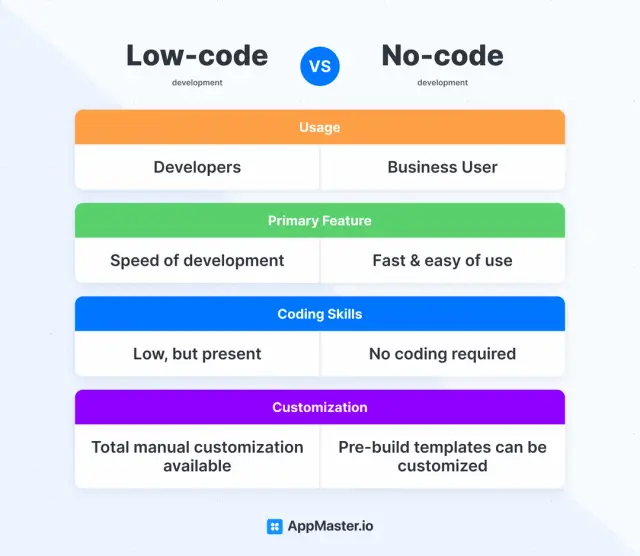
AppMaster.io is a no-code platform that enables citizen developers to build powerful backend, web, and mobile applications without extensive coding skills. By offering a diverse range of features, such as visual data modeling, business process design, REST API and WSS endpoint creation, and drag-and-drop UIs, AppMaster.io empowers users to create comprehensive digital solutions tailored to their organization's needs.
One of the key advantages of AppMaster.io is its ability to eliminate technical debt by generating applications from scratch whenever requirements change. This approach ensures that applications remain optimized and up-to-date, without the need for manual refactoring or extensive rework.
As a result, citizen developers can build and deploy scalable software solutions with confidence and ease. With over 60,000 users and recognition from G2 as a High Performer and Momentum Leader in various categories, including No-Code Development Platforms and Rapid Application Development (RAD), AppMaster.io is quickly becoming a go-to platform for organizations looking to accelerate their digital transformation efforts. In addition to empowering citizen developers, AppMaster.io offers multiple subscription plans, from the free "Learn & Explore" plan to "Enterprise" plans designed for larger organizations and projects. With its comprehensive range of features and intuitive interface, AppMaster.io makes it easy for users of all skill levels to create and manage digital applications that drive business growth.
The transformative potential of citizen development is already being felt across various industries and organizations. By harnessing the power of no-code and low-code platforms, many businesses have experienced significant improvements in efficiency, collaboration, and innovation. Below are some real-life examples of the impact that citizen development is making:
A telecommunications company utilized a no-code platform to build a new mobile application that streamlined their payment collections process. Previously, manual data entry was prone to errors and required significant employee time. By leveraging the platform, the company empowered its citizen developers to automate the payment collections and data processing, reducing errors and dramatically improving the customer experience.
A global manufacturing company turned to a low-code platform to revamp its HR onboarding process, which was characterized by slow approval stages and lengthy documentation requirements. By empowering their citizen developers, the company was able to rapidly prototype and launch a new onboarding application that improved employee engagement and reduced the time taken to bring new hires up to speed.
A multinational pharmaceutical company used a no-code platform to create a custom project management tool that facilitated seamless collaboration between its global teams. By leveraging the platform's rich feature set and ease of use, citizen developers within the company built an application that enabled team members to easily access project data, monitor progress, and make better-informed decisions.
These examples highlight the diverse possibilities and advantages that citizen development brings to organizations. By embracing no-code and low-code platforms, companies can leverage the power of rapid prototyping and citizen development to accelerate growth and stay ahead of the competition.
Implementing citizen development in your organization can empower employees, increase efficiency, and streamline product development. However, it's crucial to create a structured approach that ensures collaboration and maintains proper governance policies. Here are some essential guidelines for implementing citizen development in your organization:
Start by identifying the right use cases where citizen development can be most effective. Focus on specific problems that your employees face regularly or areas where improved processes could lead to significant benefits. Ensure that the chosen use cases align with your organization's strategic objectives. Remember, it's essential to prioritize projects that can demonstrate quick wins to gain buy-in and build momentum.
To maintain the integrity and quality of applications built by citizen developers, establish governance policies and procedures. These should encompass guidelines on software development best practices, application lifecycle management, and compliance with regulatory requirements. A clear framework for governance ensures that applications built by citizen developers are maintainable, secure, and adhere to industry standards.
Data security should be a top priority when implementing citizen development within your organization. Make sure that applications are built with data privacy and security guidelines in mind. Implement proper access controls and permission systems to prevent unauthorized access, and establish clear guidelines on handling sensitive information. An ongoing security testing process should be in place to identify and mitigate potential risks.
Equip your citizen developers with the necessary skills and knowledge to build effective applications. This includes providing training on no-code or low-code platforms like AppMaster.io and educating them on key aspects of software development, such as user experience design, testing, and deployment. It's equally important to offer ongoing support to your citizen developers, which can include mentorship from IT professionals and access to learning resources.
Foster collaboration between IT professionals and citizen developers to ensure successful application development. Hierarchical or siloed work environments can hinder progress and lead to suboptimal outcomes. Encourage open communication, regular check-ins, and feedback loops to bridge the gap between domain experts and IT teams, resulting in better decision-making and product innovation.
Implement a continuous monitoring and evaluation process to track the progress of citizen developer projects and assess their impact on your organization. Identify key performance metrics that align with your strategic objectives, and use them to evaluate the success of your citizen development initiatives. Doing so will help you identify and address bottlenecks, iterate on your approach, and ensure that your citizen development program delivers tangible results.
Introducing citizen development within your organization should not be an all-or-nothing approach. Instead, consider starting with pilot projects and gradually expanding the program as you refine your processes and gain a deeper understanding of the value that citizen developers can provide. This phased approach allows you to minimize risks and incrementally build the necessary infrastructure to support a successful citizen development program.
By following these guidelines, you can harness the power of citizen development to drive rapid prototyping and unlock the full potential of your organization. Embrace the era of citizen development with platforms like AppMaster.io to empower your employees, enhance collaboration, and accelerate your organization's growth.
 What is citizen development?
Citizen development refers to the process where non-technical, business professionals use no-code or low-code tools to create their own software applications to solve problems or improve existing processes within their organization. Citizen developers are employees who possess domain expertise and collaborate with IT teams to build applications more efficiently, without deep coding skills.
What is rapid prototyping?Rapid prototyping is an iterative process where businesses create a working prototype or application in a short span of time. This approach helps organizations to test and validate their ideas, making necessary adjustments before deploying a final product. Rapid prototyping accelerates the software development lifecycle, making it a crucial aspect of modern software engineering practices.
Why is citizen development important for rapid prototyping?Citizen development enables rapid prototyping by leveraging no-code or low-code platforms that simplify software development. By allowing non-technical employees to create and manage their own applications, citizen development reduces the time and cost involved in traditional development processes. As a result, iterative testing, validation, and continuous improvements can be executed much more efficiently.
What are no-code and low-code platforms?No-code platforms allow users to create applications by utilizing pre-built templates, drag-and-drop interfaces, and visual tools, completely eliminating the need for writing code. Low-code platforms, on the other hand, simplify the coding process with reusable components, visual tools, and minimal custom coding. These platforms empower citizen developers to build and deploy applications more rapidly.
How does AppMaster.io empower citizen developers?AppMaster.io is a no-code platform that offers users a wide range of features, including visual data modeling, business process design, REST API, and WSS endpoint creation, drag-and-drop UIs, and other interactive features. AppMaster.io accelerates application development and eliminates technical debt by generating applications from scratch every time requirements change. This approach empowers citizen developers to create comprehensive, scalable software solutions with ease.
What are some benefits of using AppMaster.io for citizen development?Using AppMaster.io for citizen development brings numerous benefits such as accelerated development, cost-efficiency, reduced technical debt, powerful integration capabilities, improved collaboration between IT and domain experts, and enhanced scalability for high-demand enterprise use cases.
What are some guidelines for implementing citizen development in an organization?Essential guidelines for implementing citizen development in an organization include identifying suitable use cases, establishing governance policies, ensuring data security, providing training and support, and taking a phased approach to implementing citizen development with continuous monitoring and evaluation.
Can I trial AppMaster.io for free?Yes, AppMaster.io offers a Learn & Explore subscription plan which allows you to test the platform and learn how it works for free. Simply create an account to get started.
Experiment with AppMaster with free plan.
When you will be ready you can choose the proper subscription.
 Jul 14, 20268 min
 Jul 13, 20268 min
 Jul 08, 20268 min