


 Jul 14, 2026
 8 min
8 minEquipment reservation app: prevent conflicts and track returns
Plan an equipment reservation app that prevents double bookings, records returns and damage, and places faulty items on maintenance hold.

Discover how custom CRM solutions can significantly boost your business growth, improving sales processes, customer retention, and decision-making while reducing costs.
Customer Relationship Management (CRM) systems have become an indispensable part of modern businesses. A well-implemented CRM solution can streamline sales processes, improve customer retention, and aid in decision-making. However, off-the-shelf CRM systems often fall short in addressing the unique requirements of each business, and this is where custom CRM solutions come into play.
A custom CRM solution is a tailored software system designed specifically for your business, allowing you to manage customer data, sales processes, marketing efforts, and customer service more effectively. By developing a custom CRM solution that caters to your business's specific needs, you can create unique workflows and features that help you achieve your strategic goals, drive growth, and outperform your competitors.
There are several compelling reasons why custom CRM solutions are critical for business growth. Here are some of the key advantages:
By streamlining processes, improving customer retention, and enabling data-driven decisions, custom CRM systems allow businesses to outperform their competitors and achieve continued growth.
While the specific features of a custom CRM solution will vary depending on the unique needs of your business, there are several essential features that most custom CRM systems should include:

By incorporating these key features, a custom CRM solution can provide the foundation for business growth and serve as a valuable tool for driving success.
As businesses realize the competitive advantage offered by custom CRM solutions, the demand for rapid and cost-effective development methods has grown. No-code development platforms have emerged as a popular choice for building custom CRM systems, allowing companies to create powerful applications without extensive coding. No-code platforms like AppMaster enable businesses to develop their CRM solutions using a user-friendly, visual interface.
The platform's features and functionalities allow for the rapid creation of data models, business process design, user interfaces, and API integrations, resulting in a fully-functional custom CRM solution tailored to the organization's needs. The key benefits of adopting a no-code approach for custom CRM development include:
No-code platforms dramatically simplify CRM development, allowing users to build and deploy applications quickly and easily. This translates into shorter development cycles and faster time-to-market, which is crucial for businesses seeking to stay ahead of the competition.
Traditional CRM development can be an expensive endeavor, requiring teams of developers and months of work. No-code platforms save time and resources by streamlining the development process, allowing organizations to allocate resources elsewhere, leading to overall cost savings.
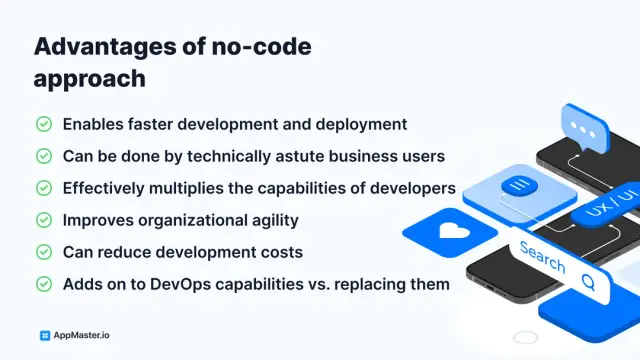
No-code platforms enable businesses to modify their CRM solutions as per the evolving requirements and market changes. The ease of updating and scaling applications improves overall business agility and adaptability, which is crucial in today's dynamic market.
No-code CRM development encourages collaboration between team members, as it eliminates the reliance on specialized developers for every aspect of the project. This fosters innovation and improves overall team productivity.
By removing the barrier of needing complex programming skills, no-code platforms enable non-technical staff members to build custom CRM solutions. This paves the way for a larger pool of talent within the organization and cultivates a culture of innovation and problem-solving.
For maximum effectiveness, a custom CRM solution should be seamlessly integrated with other mission-critical business systems. This allows organizations to streamline operations, improve data sharing, and gain valuable insights across the entire business ecosystem. The most common business systems that organizations typically integrate with their custom CRM solution include:
Integrating the custom CRM with the organization's ERP system enables seamless data flow between sales, marketing, customer service, finance, and other departments. This leads to better collaboration, informed decision-making, and improved efficiency across the entire organization.
An integration between the custom CRM and HRM systems can streamline employee management and help sales managers gauge team performance, set realistic targets, or identify training needs.
By integrating marketing tools with the custom CRM solution, businesses can better target their marketing efforts, segment the customer base, automate personalized content, and track campaign performance. This enhances marketing effectiveness and helps drive customer acquisition, engagement, and retention.
Linking custom CRM solutions with e-commerce platforms allows businesses to gain insights into customer behavior, preferences, and purchase history. This data can be used to inform marketing strategies, product recommendations, and improve overall customer experience.
A seamless CRM and customer support integration can help businesses track support tickets, monitor service quality, and streamline communication between different departments addressing customer issues. This leads to higher customer satisfaction rates and loyalty.
Implementing a custom CRM system is a significant investment and requires careful planning and execution to ensure successful adoption throughout the organization. Here are some essential steps to follow for a fruitful custom CRM deployment:
Ensure that the custom CRM system is developed to address specific business challenges and aligns with your organization's overall objectives. This alignment creates a foundation for the CRM system to drive measurable, meaningful results.
Proper training is essential for the successful utilization of the custom CRM system. Employees should be educated on how the CRM system can improve their daily tasks, streamline processes, and contribute to the overall business growth.
Keep a close eye on CRM usage and effectiveness by analyzing key performance indicators (KPIs). This data can help identify areas for improvement and ensure that the CRM system is delivering tangible business value.
Collect feedback from CRM users within the organization to identify pain points, concerns, or suggestions for improvement. This feedback can be invaluable when optimizing the system to meet the specific needs and requirements of your workforce.
Custom CRM solutions should continuously evolve alongside the organization's growth and changing needs. Regularly gather data insights, evaluate performance, and adapt the CRM system to attain maximum benefits and improve overall user experience. By adopting a no-code approach to developing and integrating custom CRM solutions, businesses can enjoy a competitive edge in the market, streamline operations, and drive sustainable growth. The key to success lies in effectively implementing and managing your custom CRM solution with an emphasis on proper staff training, continuous improvement, and alignment with organizational goals.
In today's competitive business environment, implementing custom CRM solutions has become a necessity for organizations seeking sustainable growth. A well-designed custom CRM helps companies streamline their sales processes, improve customer retention, enable targeted marketing efforts, and ultimately increase revenue. By leveraging the capabilities of platforms like AppMaster, organizations can create tailored CRM systems that focus on their specific workflows and goals.
By choosing a no-code platform like AppMaster, businesses can develop custom CRM solutions at a fraction of the cost and time associated with traditional development methods. This approach also provides the flexibility to iterate and improve the CRM system based on user feedback and evolving business needs. Integrating the custom CRM solution with other business systems can further amplify the benefits, driving efficiency and better decision-making capabilities across the organization.
To ensure success, it's crucial to align your CRM strategy with your organization's overarching goals, train your team effectively, and monitor performance continuously. As you enhance and customize your CRM solution, you'll unlock the full potential of your business, achieving not only growth but also long-term success.
 What is a custom CRM solution?
A custom CRM (Customer Relationship Management) solution is a tailored software system designed specifically for a business to manage customer data, sales processes, marketing efforts, and customer service. It allows businesses to create unique workflows and features catering to their specific needs.
How does custom CRM contribute to business growth?Custom CRM solutions can drive business growth by streamlining sales processes, improving customer retention, enabling personalized marketing efforts, enhancing decision-making capabilities, and reducing operational costs.
What are some key features of custom CRM solutions?Key features of custom CRM solutions include customer data management, sales funnel optimization, contact management, marketing automation, reporting and analytics, customer service and support, and integrations with other business systems.
How do no-code platforms like AppMaster help in custom CRM development?No-code platforms like AppMaster enable rapid development of custom CRM solutions by offering drag-and-drop interface, visual data models, business process designers, and integrations with other systems. This allows businesses to develop powerful custom CRM solutions without the need for extensive coding, reducing time and cost.
What are the benefits of integrating custom CRM with other business systems?Integrating custom CRM with other business systems (such as ERP, HRM, or marketing tools) allows for seamless data sharing, efficient workflows, and better decision-making, ultimately enhancing the overall business performance.
How can an organization successfully adopt a custom CRM solution?Successful adoption of a custom CRM solution requires aligning the CRM with the organization's goals, ensuring proper staff training, continuously monitoring performance, gathering user feedback, and making iterative improvements based on data insights and user needs.
Experiment with AppMaster with free plan.
When you will be ready you can choose the proper subscription.
 Jul 14, 20268 min
 Jul 13, 20268 min
 Jul 08, 20268 min