


 Jul 14, 2026
 8 min
8 minEquipment reservation app: prevent conflicts and track returns
Plan an equipment reservation app that prevents double bookings, records returns and damage, and places faulty items on maintenance hold.

Discover the top no-code platforms that prioritize HIPAA compliance, allowing healthcare organizations to build software quickly, securely, and cost-effectively.

The Health Insurance Portability and Accountability Act (HIPAA) is a US federal law that sets guidelines for maintaining the security and privacy of medical records and protected health information (PHI). Healthcare providers, insurance companies, and other organizations dealing with PHI must adhere to these regulations and implement strong safeguards to protect sensitive data.
The need for secure, scalable, and cost-effective software solutions grows exponentially as the healthcare industry continues to digitize and adopt new technologies. No-code platforms have emerged as an essential tool for creating custom healthcare applications that adhere to HIPAA regulations. These platforms enable stakeholders to build applications quickly and securely, without needing deep programming skills.
No-code platforms offer built-in security and privacy features, simplifying the process of developing HIPAA-compliant applications and making it easy for healthcare organizations to deploy secure, scalable, cost-effective software that meets their unique needs and requirements.
AppMaster is one of the leading no-code platforms for developing backend, web, and mobile applications, including those requiring HIPAA compliance. With its visual Business Process (BP) Designer and drag-and-drop interface, AppMaster allows users to create powerful applications quickly and cost-effectively across various sectors, including healthcare.
The platform provides powerful features that streamline application development while emphasizing compliance. AppMaster supports PostgreSQL-compatible databases as the primary database and generates stateless backend applications with Go (golang). This approach allows the platform to handle enterprise and high-load use cases, ensuring the scalability and performance required for healthcare applications.
AppMaster is a catalyst for developing HIPAA-compliant healthcare applications, providing a dedicated solution through its Enterprise subscription plan. This premium plan extends a unique advantage to customers by granting them access to the source code of their applications. This accessibility empowers users to take control of their applications, enabling them to host and manage apps on their infrastructure.
By allowing users to delve into the source code, AppMaster facilitates a seamless integration process, ensuring that healthcare applications align with the stringent HIPAA and HITECH regulations standards. This capability enhances the interoperability of healthcare solutions, promoting secure data exchange and comprehensive patient care.
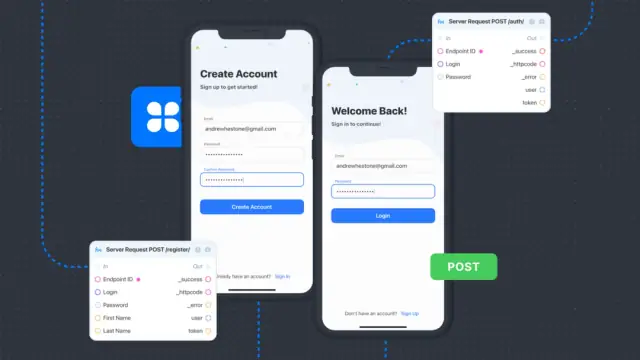
No-code development platforms like AppMaster offer many benefits for healthcare organizations seeking to build HIPAA-compliant applications. Some of the key advantages include:
By leveraging no-code platforms like AppMaster to develop HIPAA-compliant applications, healthcare organizations can enjoy improved efficiency, reduced costs, and enhanced security, benefiting their operations and patients.
Security is a paramount concern in the realm of no-code platforms, and top-tier solutions, including AppMaster, employ measures to safeguard sensitive data and comply with regulatory standards. Encryption is a cornerstone, where data in transit and at rest undergoes rigorous encryption protocols, bolstering protection against unauthorized access.
Access control mechanisms play a pivotal role in restricting user permissions, ensuring that only authorized personnel can manipulate critical components of the application. No-code platforms implement detailed authorization hierarchies, dictating who can view, modify, or manage specific elements within the application, aligning with the principle of least privilege.
Regular security audits and assessments are integral to the operational framework of no-code platforms. Continuous monitoring, vulnerability assessments, and penetration testing are conducted to identify and address potential security vulnerabilities promptly. This proactive approach enhances the resilience of the platform against emerging threats.
Moreover, secure integrations with external services and APIs are a priority. No-code platforms incorporate stringent validation processes to ensure that data exchanges with external systems adhere to security best practices. This proactive stance fortifies the platform against potential breaches and fosters trust among users in sensitive sectors like healthcare, where regulatory compliance, especially with standards like HIPAA, is non-negotiable.
The security measures integrated into no-code platforms go beyond conventional standards, reflecting a commitment to providing a powerful and trustworthy environment for users to develop and deploy applications, even in the most security-sensitive domains.
While AppMaster provides a powerful no-code platform for HIPAA-compliant applications, several other platforms also excel in this area. Each platform offers different features and capabilities that cater to various needs, making them an ideal solution for various healthcare projects. Here are a few notable HIPAA-compliant no-code platforms:
OutSystems is an established low-code platform known for its versatility and ease of use. It boasts a wide range of HIPAA-compliant features and tools, ensuring that healthcare organizations can develop software applications without worrying about compliance issues. The platform offers pre-built connectors, templates, and modules for quick and secure development, along with support for multiple databases and backends.
Caspio is a no-code development platform specializing in creating custom web applications and automating complex business processes. Its primary focus is on data-driven applications, and it ensures that users adhere to strict HIPAA compliance standards. By offering advanced data security measures, encryption options, and secure audit logs, Caspio enables healthcare organizations to deliver secure, compliant applications to their users.
Betty Blocks is a no-code platform designed for rapid application development, emphasizing ease of use and scalability. It offers a range of built-in HIPAA-compliant features, such as role-based access control, data encryption, secure API integrations, privacy-focused consent management, and more. This combination of features makes it a strong choice for healthcare organizations looking to build and deploy applications that comply with HIPAA requirements.
Mendix is an all-in-one low-code platform that allows developers to create and deploy applications quickly and efficiently. Its emphasis on collaboration and integration makes it ideal for organizations with diverse teams and requirements. It also offers comprehensive security and privacy developments to satisfy stringent HIPAA regulations, making it a reliable choice for healthcare organizations seeking a no-code platform for compliant application development.

When choosing a no-code platform for your HIPAA-compliant project, consider the following factors to ensure the solution best fits your organization's needs:
Considering these factors, you can find the no-code platform that best suits your organization's unique needs and effectively meets HIPAA compliance requirements.
The industry of no-code healthcare development is poised for exciting advancements with several future trends shaping the industry's trajectory. One prominent trend is the integration of artificial intelligence (AI) and machine learning (ML) capabilities into no-code platforms. This convergence allows healthcare professionals, even without extensive coding expertise, to leverage AI-driven features for tasks such as predictive analytics, personalized patient care, and automated decision support.
Interoperability is another key trend on the horizon. No-code platforms are expected to evolve in facilitating seamless integration with existing healthcare systems, Electronic Health Records (EHR), and Health Information Exchanges (HIE). This interoperability not only streamlines data exchange but also enhances the efficiency and effectiveness of healthcare workflows.
Furthermore, the emphasis on compliance with industry-specific regulations, such as HIPAA in the United States, will likely intensify. No-code platforms catering to healthcare will continue to refine and expand their compliance features, ensuring that applications developed on these platforms adhere to the highest data privacy and security standards.
Telemedicine and remote patient monitoring are areas where no-code healthcare development is anticipated to play a pivotal role. As healthcare delivery continues to evolve, no-code platforms will empower healthcare providers to rapidly prototype and deploy applications that facilitate remote consultations, patient monitoring, and the seamless exchange of medical information.
The democratization of healthcare application development is a broader trend, with no-code platforms at its forefront. The vision is to empower diverse healthcare professionals, including clinicians, administrators, and researchers, to actively contribute to creating innovative solutions without the barriers of traditional coding complexities.
The future of no-code healthcare development promises increased sophistication, accessibility, and impact, ushering in a new era of technological empowerment within the healthcare domain.
HIPAA-compliant no-code platforms revolutionize healthcare software development by providing a cost-effective, secure, and accessible way to build applications. AppMaster stands out for its comprehensive features, user-friendly interface, and compliant approach to healthcare application development. Still, other notable platforms, such as OutSystems, Caspio, Betty Blocks, and Mendix, also excel in delivering HIPAA compliance solutions.
As you evaluate your organization's needs, compare each platform's functionality, ease of use, scalability, compliance features, and pricing to find the best fit for your project. By adopting a HIPAA-compliant no-code platform, you can streamline the development process, reduce your technical debt, and ensure the privacy and security of your healthcare application users.
 What is HIPAA Compliance?
HIPAA Compliance refers to adhering to the regulations and guidelines set by the Health Insurance Portability and Accountability Act (HIPAA), a US law enacted to ensure the protection of individuals' medical records and personal health information.
How do no-code platforms help with HIPAA Compliance?No-code platforms can simplify the process of developing HIPAA-compliant software for healthcare organizations by providing built-in security and privacy features, enabling stakeholders to quickly build secure applications without requiring extensive programming knowledge.
What are the benefits of using no-code platforms for HIPAA Compliance?No-code platforms offer benefits such as cost-effective development, faster time-to-market, reduced technical debt, simplified maintenance, and increased accessibility for non-technical stakeholders, making it easier for healthcare organizations to implement HIPAA-compliant applications.
What is AppMaster?AppMaster is a no-code platform that enables users to visually create database schema, business logic (business processes), REST API, and WSS Endpoints for backend, web, and mobile applications. The platform employs a visual BP Designer and drag-and-drop interface, streamlining the development process and ensuring HIPAA compliant applications.
How does AppMaster support HIPAA compliance?AppMaster's platform incorporates robust security and privacy features, including support for Postgresql-compatible databases, Go (golang) compiled stateless backend applications, and scalability designed with enterprise and high-load use-cases in mind. These features ensure compliant and secure healthcare application development.
What are some other notable HIPAA-compliant no-code platforms?Other HIPAA-compliant no-code platforms include OutSystems, Caspio, Betty Blocks, and Mendix. These platforms cater to various needs and can help streamline the development of healthcare applications while meeting HIPAA standards.
How do I choose the right no-code platform?When selecting a no-code platform for HIPAA-compliant applications, consider factors such as ease of use, functionality, integration capabilities, scalability, and platform pricing. Look for a platform that aligns with your organization's needs and requirements for both the present and future growth.
Can healthcare organizations benefit from AppMaster's special offers?Yes, AppMaster offers various special offers for startups, educational, non-profit, and open-source organizations. These offers can help healthcare organizations adopt AppMaster's platform at a reduced cost and build HIPAA-compliant applications more affordably.
Experiment with AppMaster with free plan.
When you will be ready you can choose the proper subscription.
 Jul 14, 20268 min
 Jul 13, 20268 min
 Jul 08, 20268 min