


 Jul 14, 2026
 8 min
8 minEquipment reservation app: prevent conflicts and track returns
Plan an equipment reservation app that prevents double bookings, records returns and damage, and places faulty items on maintenance hold.

Explore the no-code revolution in the SaaS industry: current trends, expectations for the future, and the potential impact on businesses and individuals.

The Software as a Service (SaaS) industry has experienced exponential growth over the past decade, fueled by advancements in cloud technology and an increasingly digital workforce. One standout trend within this industry is the rise of no-code platforms, which offer an innovative approach to software development that allows businesses to build and iterate on applications without writing code. No-code platforms emerged in response to a growing demand for greater efficiency, agility, and accessibility within the SaaS market.
As businesses strive to keep pace with rapid technological advancements, they increasingly seek cost-effective, user-friendly solutions to accelerate digital transformation efforts. By enabling non-developers to create and deploy applications, no-code tools dramatically reduce development time and lower the barriers to entry for those without technical programming skills. This movement has gained further momentum in the face of the ongoing IT talent shortage, as organizations grapple with a limited pool of qualified developers and skyrocketing development costs. The no-code revolution has the potential to alleviate the strain on IT teams, offering a more streamlined approach to software development that empowers non-technical employees to take the reins.
The no-code industry is diverse and evolving, with many platforms catering to different niches and use cases. These platforms generally share some core features: they're built on a cloud-based architecture, use drag-and-drop interfaces, and provide pre-built components and templates for easier development. They offer a seamless user experience and promote collaboration between team members, encouraging a more agile approach to application development.
Notable no-code platforms include AppMaster, Bubble, Webflow, and Adalo. Some platforms focus specifically on backend, web, or mobile applications, while others offer comprehensive solutions covering every application development aspect, like AppMaster. A key aspect of no-code platforms is their ability to eliminate technical debt, which refers to the buildup of suboptimal programming decisions that can slow down development and affect application performance. No-code tools avoid this issue by dynamically regenerating applications from scratch whenever requirements change, ensuring a clean, optimized codebase devoid of any outdated code segments.
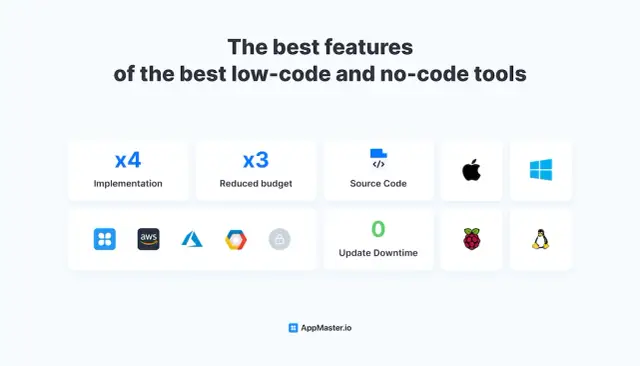
No-code platforms are experiencing widespread adoption, and the trend is expected to continue. The market for no-code development platforms is estimated to grow at a compound annual growth rate (CAGR) of around 22%, reaching a valuation of $45 billion by 2025.
As the no-code revolution continues to reshape the SaaS industry, several emerging trends are poised to propel this movement in the coming years further:
Integrating artificial intelligence (AI) into no-code platforms is expected to enhance their capabilities, streamline workflows, and improve decision-making processes. AI-powered features like natural language processing, machine learning, and automation can help simplify complex development tasks and generate insights, making it easier for non-developers to build sophisticated applications.
Low-code platforms bridge the gap between no-code and traditional software development, offering more flexibility and customization while still simplifying the process. A hybrid approach, low-code solutions provide developers with a visual interface to build applications, while also allowing for manual code modifications when necessary. This trend will likely grow in popularity, especially among enterprises that need a balance between rapid application development and deep customization.
With rising demand for efficient, cost-effective software development, more large-scale enterprises are expected to adopt no-code platforms for their digital transformation efforts. As these platforms become more powerful and capable of handling complex enterprise workloads, adoption rates are expected to soar.
As no-code platforms continue to evolve, they will likely accommodate an even more diverse range of use cases, from customer relationship management (CRM) solutions to internet of things (IoT) applications. This increased versatility will further establish no-code platforms as essential tools for organizations seeking to harness the power of technology and drive innovation.
The no-code revolution is transforming the SaaS industry by providing accessible, efficient, and cost-effective solutions for application development. As technology evolves, upcoming trends like AI integration, low-code platforms, and enterprise adoption are expected to reinforce the impact of no-code approaches on the software development industry.
Adopting no-code platforms has dramatically accelerated the development process for businesses seeking to create and deploy software applications. By reducing the reliance on traditional programming languages and extensive development teams, no-code platforms have made it faster and more cost-effective for organizations to build and maintain their applications.
One of the key factors behind this increased efficiency is the accessible, user-friendly nature of no-code solutions. By providing visual development tools, such as drag-and-drop interfaces and pre-built components, anyone can create applications without the need for extensive programming knowledge. This democratization of application development means that a wider range of staff, including non-technical employees and citizen developers, can contribute to creating software solutions — leading to faster turnaround times and increased agility in responding to market needs.
Another significant advantage of no-code platforms is their ability to eliminate technical debt. No-code platforms regenerate applications from scratch whenever requirements change, ensuring they always meet the latest specifications without burdening organizations with legacy code and cumbersome maintenance processes. This streamlined approach saves time and substantially reduces the risk of errors and inefficiencies associated with software development projects, making it more cost-effective over the long term.
No-code platforms enable businesses to develop and deliver software applications with remarkable speed and efficiency. The combination of user-friendly tools, increased accessibility, and reduced technical debt means that companies can build and maintain their software solutions far more quickly and cost-effectively than ever before.
As the no-code revolution unfolds, an increasing number of platforms target enterprise customers, looking to provide the scalability, customization, and performance these large organizations demand. One such platform is AppMaster, whose no-code approach to application development has made it a popular choice for businesses of all sizes. AppMaster is a powerful, comprehensive no-code tool that enables users to create backend, web, and mobile applications without writing a single line of code.
Among its many features, AppMaster allows customers to visually create data models, define business logic through its Business Processes (BPs) Designer, and configure REST API and Websocket endpoints. AppMaster streamlines the application development process for users of all technical backgrounds by offering a full suite of tools. One of the key differentiators of AppMaster is its impressive scalability. Thanks to its use of compiled, stateless backend applications generated with Go, AppMaster applications exhibit exceptional performance, even for high-load, enterprise use-cases.
Moreover, its compatibility with any PostgreSQL-compatible database as the primary backend ensures that organizations can build applications with the requisite flexibility and adaptability for enterprise environments. Furthermore, AppMaster allows customers to export executable binary files or even source code for their applications. It enables on-premises hosting and integrations with existing systems, a crucial consideration for many large organizations with stringent security or compliance requirements.
AppMaster caters to the diverse needs of enterprise customers by providing this level of customization and adaptability. With accolades such as being named a Momentum Leader in No-Code Development Platforms by G2, AppMaster has solidified its reputation as a powerful, reliable no-code solution for building scalable, high-performing applications suited to a broad spectrum of enterprise use-cases.
While no-code platforms have undeniable advantages, they have their risks and challenges. Adopting any new technology requires careful consideration of potential downsides, and understanding these risks can help organizations make informed decisions about whether no-code is the right fit for their needs.
One potential challenge associated with no-code platforms is their limitations in functionality. Although no-code solutions have come a long way, they may not always support highly complex or custom features, requiring some organizations to rely on traditional programming tools to achieve the desired outcomes. This is where low-code platforms, which offer a middle ground between no-code and conventional development, can serve as a viable alternative.
Another risk is the increased reliance on third-party providers inherent in many no-code platforms. As organizations build their software solutions using pre-built components or services, they must trust that these providers will remain dependable, secure, and compliant with relevant regulations. This reliance on external parties can create a potential point of vulnerability in an organization's technology stack and make it difficult to switch platforms or modify applications as needed.
Security and compliance considerations are also important when employing no-code platforms. Businesses must ensure that the applications built using no-code tools adequately fulfill their security, privacy, and compliance requirements, while also considering how the platform itself aligns with these criteria.
While no-code platforms can provide tremendous benefits in terms of speed, cost-effectiveness, and accessibility, they also introduce their own set of challenges and risks. Organizations considering adopting these tools should carefully evaluate their specific needs, understand the potential downsides, and strive to select a platform that offers the best balance of features, scalability, and security to mitigate these risks.
The rise of no-code platforms has shifted the job market, bringing both opportunities and challenges for individuals and organizations. As no-code adoption accelerates, the demand for skilled technologists skilled in managing, configuring, and implementing these platforms is surging.
Traditional software developers may need to adapt their skills to stay relevant in a world increasingly dominated by no-code solutions. Developers will be expected to leverage no-code platforms for rapid prototyping and application development, relying on their coding expertise when advanced customization or integration is required. Moreover, developers will need to transition into roles such as business analysts, product managers, and low-code developers. These positions demand a deep understanding of both technology and business processes, enabling them to bridge the gap between no-code platforms and the complex world of IT infrastructure and development.
No-code platforms have democratized the software development process by enabling non-technical users to create and maintain applications. This has given rise to a new class of "citizen developers" who can bring fresh ideas and innovations to businesses of all sizes. Professionals from various backgrounds, including marketing, sales, HR, and finance, can now actively participate in the software development lifecycle, bypassing traditional barriers posed by limited technical expertise. This increased accessibility to software development can potentially enhance company-wide collaboration, innovation, and problem-solving.
The no-code revolution has also opened new doors for those looking to enter or advance in the IT sector. As more organizations adopt no-code platforms, the need for platform specialists who can navigate technical and business aspects will increase. This will create more job opportunities and shape new roles and career paths in the IT industry. Furthermore, as no-code platforms become more sophisticated, positions such as no-code architects and platform administrators will become commonplace. These roles will require a mix of technical and non-technical skills to ensure organizations' successful implementation, management, and maintenance of no-code solutions.
The rise of no-code solutions in the SaaS industry signals an ongoing shift towards agile, cost-effective, and inclusive software development. As platforms like AppMaster continue to revolutionize the way applications are conceived, built, and maintained, we can expect to see a growing impact on businesses and the technology ecosystem.
Organizations that embrace no-code development stand to benefit from its ability to speed up software delivery, eliminate technical debt, reduce costs, and empower non-technical professionals. Still, enterprises must remain vigilant in managing the risks and challenges associated with no-code adoption, ensuring strong security and compliance measures are in place.
The no-code revolution is poised to reshape job opportunities in the IT field, placing a heightened emphasis on the skillsets and adaptability of software professionals. By harnessing the full potential of no-code platforms, businesses and individuals can stay ahead in an ever-evolving tech world, driving innovation and growth for years to come.
 What is a no-code platform?
A no-code platform is a software development tool that enables users to create applications without writing any code, using visual tools such as drag-and-drop interfaces and pre-built components.
What are the benefits of using no-code platforms?No-code platforms allow non-developers to create applications, speeding up development time, reducing costs, and increasing business agility. They also eliminate technical debt by regenerating applications from scratch when requirements change.
How do no-code platforms fit into the SaaS industry?No-code platforms are a rapidly growing sector within the SaaS industry, as they empower users to create, deploy, and maintain software solutions without extensive coding skills or large development teams.
What are some upcoming trends in no-code development?Upcoming trends in no-code development include increased integration with artificial intelligence, wider adoption in enterprises, and the growth of low-code platforms that bridge the gap between no-code and traditional development.
How does AppMaster fit into the no-code landscape?AppMaster is a powerful no-code platform that enables users to create backend, web, and mobile applications through visual tools. It is highly regarded for its scalability and the ability to eliminate technical debt, making it ideal for a wide range of customers, from small businesses to enterprises.
Are there any risks or challenges associated with using no-code platforms?Risks and challenges associated with using no-code platforms can include potential limitations in functionality, increased reliance on third-party providers, and concerns around the security and compliance of no-code applications.
How does the no-code revolution impact job opportunities in the IT field?The no-code revolution is expected to transform job opportunities in the IT field, emphasizing the need for skilled technologists who can manage, configure, and implement no-code platforms, as well as professionals who can adapt to roles such as business analysts, product managers, and low-code developers.
Experiment with AppMaster with free plan.
When you will be ready you can choose the proper subscription.
 Jul 14, 20268 min
 Jul 13, 20268 min
 Jul 08, 20268 min