


 Jul 14, 2026
 8 min
8 minEquipment reservation app: prevent conflicts and track returns
Plan an equipment reservation app that prevents double bookings, records returns and damage, and places faulty items on maintenance hold.

Explore how IT democratization has evolved, empowering businesses and individuals through accessible technology in 2024.

Information Technology (IT) democratization is a transformative force that is enabling businesses and individuals to benefit from advanced technology without needing to rely on IT professionals. Over the years, the adoption of IT democratization has grown exponentially, driven by the maturation of key technologies and the increasing accessibility of technical knowledge.
One significant catalyst in the evolution of IT democratization has been the rapid growth and adoption of cloud computing. Cloud platforms have made IT resources more affordable, flexible, and scalable for businesses of all sizes. With the ability to access sophisticated infrastructure, software, and services on a pay-as-you-go basis, organizations no longer need to invest heavily in setting up and maintaining complex IT systems.
Beyond cloud computing, the emergence of Artificial Intelligence (AI) and automation technologies has further enabled IT democratization. AI-powered tools, such as chatbots and virtual assistants, make it easier for non-technical users to interact with and benefit from advanced IT systems. On the other hand, automation technologies enable businesses to streamline various IT-related tasks and processes without requiring extensive technical expertise.
The increasingly cognizant value of data has also played a significant role in driving IT democratization. Data analytics and business intelligence tools have become more user-friendly, empowering decision-makers with insights and information previously reserved for IT specialists and data scientists.
Low-code and no-code platforms have emerged as essential drivers of IT democratization. These intuitive tools enable businesses and individual users to create applications, software, and websites with little or no programming knowledge.
Low-code platforms simplify the development process by providing visual tools that eliminate the need for writing complex code, while still offering a level of customization for more experienced developers. No-code platforms take this one step further, eliminating the need for coding expertise.
Founded in 2020, AppMaster is a no-code platform that is essential in propelling IT democratization. The platform allows customers to create visually engaging and interactive backend, web, and mobile applications without writing a single line of code. AppMaster's visual data modeling, business process design, and REST API support make it an ideal choice for businesses that want to embrace IT democratization.
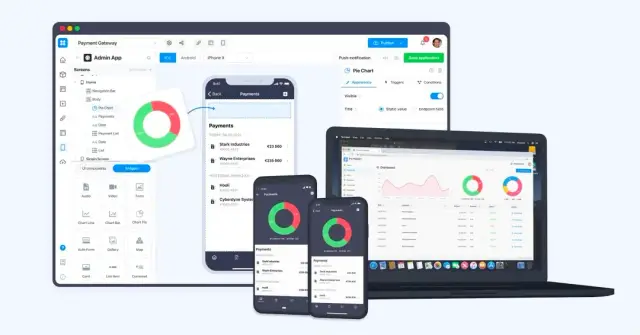
Low-code and no-code platforms like AppMaster have made application development more attainable for businesses and individuals with minimal technical expertise. By removing significant barriers to entry, these platforms have paved the way for greater innovation and inclusivity in the world of IT.
IT democratization has leveled the playing field for small businesses by providing access to technology tools and resources that were previously reserved for large corporations. By reducing the technical barriers to entry, IT democratization has empowered small businesses in numerous ways.
Firstly, small businesses can leverage advanced IT solutions to improve operational efficiency and productivity. As the costs of IT resources have become more affordable, small businesses can access powerful software and infrastructure offerings without breaking the bank. Furthermore, the availability of user-friendly platforms and tools makes it simpler for small businesses to customize and adapt technology according to their specific requirements.
Secondly, IT democratization has enabled small businesses to compete more effectively within their respective markets. The ability to create professional, feature-rich applications and websites with low-code and no-code platforms allows small businesses to establish a strong digital presence. This, in turn, helps them to reach more customers, build brand awareness, and generate higher revenues.
Lastly, IT democratization has fostered innovation among small business owners, who can experiment with different technologies without always relying on IT professionals. With many tools and resources available at their disposal, small business owners are empowered to think creatively and strategically about their digital offerings and IT systems, leading to novel solutions that cater to their specific needs.
It's crucial to recognize that while IT democratization has provided many benefits for small businesses, it also comes with a learning curve and potential pitfalls. Businesses should carefully evaluate their options and select technology solutions that align with their operational, strategic, and financial goals. However, the fact remains that IT democratization has unlocked incredible opportunities for small businesses to enhance their operations, compete globally, and drive growth.
IT democratization has been instrumental in bridging the digital divide, a significant challenge facing societies worldwide. The digital divide refers to the disparities between those with access to digital technologies and those without access or skills to utilize them effectively. By making technologies more accessible and user-friendly, IT democratization helps promote digital inclusion and reduce the digital gap, opening up opportunities for individuals and communities to participate in the digital economy.
Access to technology is a crucial factor in reducing the digital divide. Traditionally, advanced technologies and high-end resources were exclusive to large corporations or wealthy individuals. However, recent innovations in cloud computing and software development have enabled even small businesses and individuals to tap into powerful communication, collaboration, and analytics tools without breaking the bank. For instance, cloud-based solutions, such as Infrastructure as a Service (IaaS) and Software as a Service (SaaS), enable organizations and individuals to leverage extensive resources and applications that are accessible remotely on demand. This model eliminates the need to invest in expensive hardware or complex software installation, thus making it more accessible to everyone.
Digital skills are critical in today's digital economy, and IT democratization plays a significant role in empowering individuals with the necessary abilities to thrive. Through the use of low-code and no-code platforms, people can develop digital solutions without acquiring professional programming skills, removing a significant barrier to entry in the tech industry. Furthermore, the rise of online educational resources such as Massive Open Online Courses (MOOCs) and coding boot camps has made it easier for individuals to learn software development and data manipulation skills, regardless of their background or location.
Another aspect of bridging the digital divide is improving connectivity in rural areas. IT democratization can contribute to this effort by supporting technological innovations in internet access and communication infrastructure development. For example, deploying lower-cost communication technologies like mesh networks and white space networks can improve rural connectivity and help address the digital gap. By enhancing connectivity in underserved areas, IT democratization can foster locally driven innovations and help create economic opportunities in rural communities.
Despite the numerous benefits of IT democratization, it also introduces some security and regulatory challenges. As more people access digital tools and platforms, the potential for cyber threats and data breaches increases. Adequate measures must be taken to address these challenges and maintain trust among technology users.
With IT democratization's wide adoption, organizations must invest in powerful security measures to protect their digital assets. Implementing encryption technologies, securely managing access rights to data, and promoting a security-aware culture within the organization are essential to addressing the cybersecurity challenge. Moreover, no-code and low-code platforms should implement security by design, ensuring that applications developed on these platforms adhere to best data protection and privacy practices.
As IT democratization continues to grow, so does the need for businesses to adhere to varying data protection and privacy regulations worldwide, such as the General Data Protection Regulation (GDPR) in the European Union and the California Consumer Privacy Act (CCPA) in the United States. Organizations must stay up-to-date with changing regulations and ensure compliance throughout their digital operations. Furthermore, low-code and no-code platforms must accommodate these regulatory requirements and provide tools to incorporate compliance features into their applications easily.
The human factor is often cited as one of the most significant challenges in IT security. With IT democratization empowering non-technical individuals to access and develop digital solutions, there's a risk that they may inadvertently introduce security vulnerabilities into applications. To mitigate this risk, educating and training users about security best practices when utilizing digital tools is essential. Moreover, organizations should consider involving professional security analysts or developers in reviewing and securing applications developed through IT democratization platforms.
The impact of IT democratization on businesses, individuals, and societies is undeniable, and its evolution will undoubtedly continue to shape the future of technology. Here are some trends to watch for in the coming years:
The growing popularity of low-code and no-code platforms, such as AppMaster, has the potential to accelerate IT democratization even further. As these platforms continue to evolve and cater to the needs of a broader range of industries, businesses will likely embrace them wholeheartedly, resulting in more user-friendly tools and comprehensive features for non-technical users.
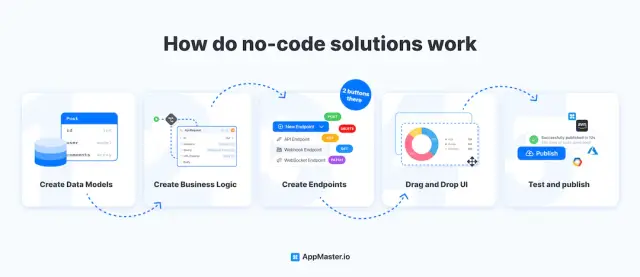
As IT democratization progresses, we expect increased collaboration between non-technical users and professional developers. This collaboration will drive a more inclusive approach to software development and empower businesses to capitalize on the strengths of both groups, creating better solutions that cater to diverse needs.
IT democratization promises to impact virtually every industry, from healthcare and education to manufacturing and retail. As digital tools become more accessible and the digital divide narrows, we can expect to see an influx of innovations in different sectors, transforming how we live, work, and interact with technology.
IT democratization in 2024 profoundly influences the tech industry, empowering businesses and individuals across the globe. By addressing security and regulatory challenges and fostering greater digital inclusion, IT democratization paves the way for a future where technology is an enabler for everyone, regardless of their technical expertise.
 What is IT democratization?
IT democratization refers to the process of making information technology (IT) resources more accessible, affordable, and user-friendly for non-technical users, empowering businesses and individuals to take advantage of technology without relying on expertise from IT professionals.
How has IT democratization evolved?IT democratization has evolved through significant advancements in various technologies, including cloud computing, automation, and low-code/no-code platforms. This has led to greater accessibility, affordability, and ease of use for non-technical users.
How do low-code and no-code platforms contribute to IT democratization?Low-code and no-code platforms provide businesses and individuals with tools that simplify app and software development processes. By removing the need for programming knowledge, these platforms play a significant role in IT democratization, enabling more people to harness technology effectively.
What is the impact of IT democratization on small businesses?IT democratization enables small businesses to thrive in competitive markets by providing them access to technology tools previously reserved for larger corporations. By reducing the technical barriers to entry, IT democratization levels the playing field and fosters innovation among small businesses.
How has IT democratization helped bridge the digital divide?IT democratization has helped bridge the digital divide by increasing internet access and making technologies more accessible to different socio-economic groups. By lowering the barriers to entry and making technology user-friendly, IT democratization fosters digital inclusion for everyone.
What are the security and regulatory challenges associated with IT democratization?With the increased adoption of IT democratization, security and data privacy concerns arise, and organizations must ensure compliance with various regulations. It's essential to adequately address these challenges to safeguard data and maintain trust among users.
What is the future of IT democratization?The future of IT democratization will likely include further advancements in low-code/no-code platforms, increased collaboration between non-technical users and developers, and greater digital inclusion. It's expected to impact various industries and drive continuous innovation.
Experiment with AppMaster with free plan.
When you will be ready you can choose the proper subscription.
 Jul 14, 20268 min
 Jul 13, 20268 min
 Jul 08, 20268 min