


 Jul 14, 2026
 8 min
8 minEquipment reservation app: prevent conflicts and track returns
Plan an equipment reservation app that prevents double bookings, records returns and damage, and places faulty items on maintenance hold.

Discover the transformative impact of integrating apps creator software into educational settings, enhancing teaching methods and learning processes for better outcomes.

Education is an ever-evolving domain, continually adopting new methodologies and tools to improve the teaching and learning processes. In a time when technology plays a pivotal role in nearly every aspect of life, it is no surprise that the education sector is also tapping into its vast potential. Among the most significant innovations in educational technology is the adoption of no-code platforms.
No-code platforms are a revolutionary tool for educators and students alike. These platforms empower individuals without extensive programming knowledge to create apps, websites, and other digital tools. This new wave isn't just about simplifying the creation process; it's about opening the door to a new world of possibilities in the classroom and beyond.
For teachers, no-code platforms represent an opportunity to tailor the learning experience to the needs of their students. Educators can design applications that cater to various learning styles and provide personalized learning paths. This customization can include interactive coursework, educational games, or even virtual simulations to explain complex topics better.
But the role of no-code platforms extends well beyond the hands of the faculty. Students can utilize these tools to take control of their education, building apps that reflect their understanding of a subject or solve real-world problems they're passionate about. Project-based learning, a popular educational approach, can be significantly enhanced through no-code app development, as it provides a practical, hands-on experience for students to apply their knowledge creatively.
Moreover, no-code platforms can help bridge the gap between educational tools and systems. Through APIs and other integration features, educators can develop customized applications that sync with existing educational software and databases, creating a more coherent technological ecosystem within the institution.
Administration and management within educational institutions also benefit from no-code app development. As these platforms simplify complex programming tasks, administrative personnel can design systems for streamlining processes like admissions, grading, scheduling, and communication with stakeholders. As such, efficiency is boosted, errors are minimized, and valuable time is saved — all contributing to a more effective educational environment.
In the broader scope, the rise of no-code platforms also anticipates a significant shift in future skill sets. As traditional barriers to software development are eliminated, the emphasis on coding as a core skill may lessen, making room for a focus on design thinking, problem-solving, and project management — skills that no-code development naturally nurtures.
Its role becomes clear when considering platforms like AppMaster within the educational context. By providing a platform that allows for the design of back-end systems, web, and mobile applications, AppMaster equates to having an extended IT team at one's fingertips. The no-code approach demystifies software development, ensuring that the creation of digital tools is no longer the exclusive domain of computer scientists but a skill accessible to educators and students, reshaping the educational experience for the better.
Educational institutions are constantly in search of innovative methods that can enhance the learning experience and improve student outcomes. One powerful shift in the educational paradigm is the integration of custom applications developed through no-code and low-code platforms. These platforms offer many opportunities for creating interactive, engaging, and personalized educational experiences.
Custom applications offer a means to move beyond the one-size-fits-all approach. Educators can tailor the learning materials and methods to suit their students' varied learning styles and paces. For instance, an educator can create an app that presents complex scientific concepts through interactive simulations and practical examples, making abstract content more tangible and easier to understand.
Another way custom applications enhance learning is by providing platforms for self-assessment and feedback. Applications can be programmed to deliver quizzes and tests that adapt to the student's performance, offering additional resources or challenges as needed. This fosters a self-paced learning environment and helps educators easily track progress and identify areas where students might need extra support.
Custom applications also lend themselves well to the gamification of learning, which can significantly boost student motivation and engagement. By incorporating elements commonly found in games — such as scoring systems, challenges, and rewards — students are more inclined to participate and invest effort in the learning process.

Collaboration is another critical aspect of learning that can be augmented with custom applications. With the right tools, educators can develop apps that facilitate group work and peer-to-peer interaction, regardless of physical location. This can be particularly beneficial in fostering collaboration skills essential in today's global and digital workforce.
Accessibility is also a significant factor in education, and with custom applications, educational content can be made accessible to students with different needs and abilities. No-code platforms enable the creation of applications with adjustable text sizes, alternative text for images, and speech-to-text capabilities, ensuring that all students have equal access to learning materials.
In the context of career and technical education (CTE), custom applications developed on no-code platforms like AppMaster can simulate real-world scenarios and tools used in various industries. This practical approach to learning can better prepare students for the workforce by giving them hands-on experience with the types of digital environments and tasks they may encounter in their future careers.
Finally, integrating apps creator software in education can empower students to become makers and creators themselves. By giving students the tools to create their own applications, they learn valuable STEM skills, design thinking, and problem-solving abilities. This contributes to their technical literacy and encourages a sense of ownership and pride in their learning achievements.
The capacity to create custom applications through no-code platforms like AppMaster is not just a convenience but a transformative force in education. These tools can enhance the learning process, engage students in new ways, and provide valuable skills that are increasingly relevant in our technologically driven society.
Incorporating apps creator software like no-code platforms into the educational ecosystem is challenging. One of the most significant hurdles is ensuring these applications seamlessly integrate with existing educational technologies and data systems. Given the diverse industry of educational software tools, from student information systems to online learning management systems, no-code applications must be designed to work in conjunction with these tools to add value rather than create silos of information.
Another essential aspect is adaptability. Educational needs are constantly evolving, and so too must the applications that serve them. No-code solutions offer an inherent advantage here, with the capability for rapid modifications and updates. Yet, educators must remain vigilant to avoid feature-creep, where the addition of too many features complicates the user experience or, worse, renders the application unusable.
Here are ways to navigate these challenges effectively:
AppMaster aids in addressing these challenges by offering a platform that integrates well with other systems and scales efficiently. The platform stands out by enabling users to define complex data relationships easily and automate workflows to accommodate the dynamic needs of the education sector. By keeping adaptability and integration at the forefront, AppMaster provides a solid foundation for educators to build and maintain various educational tools.
For educators who recognize the potential of no-code platforms to enhance the learning environment, leaping may seem challenging. Below are practical steps educators can follow to effectively integrate no-code solutions into their educational frameworks:
Begin by assessing the specific needs of your classroom or institution. What pain points could be alleviated by a custom application? Perhaps there's a need for better communication channels, or maybe an interactive quiz platform could benefit your students. Understand the requirements to ensure software solutions align with learning objectives and institutional strategies.
With several no-code platforms available, research is vital. Look for a user-friendly platform that offers education-specific templates and features, and provides support. AppMaster, for instance, is known for its comprehensive development environment that can suit varied educational outcomes. Compare various options and select what best fits your educational goals.
Even with no-code platforms designed to be intuitive, some training can be beneficial. Take advantage of available tutorials, webinars, or courses to get acquainted with the platform's interface and capabilities. If the platform offers a free version or trial, such as AppMaster's Learn & Explore subscription, utilize it to build your confidence through hands-on experience.
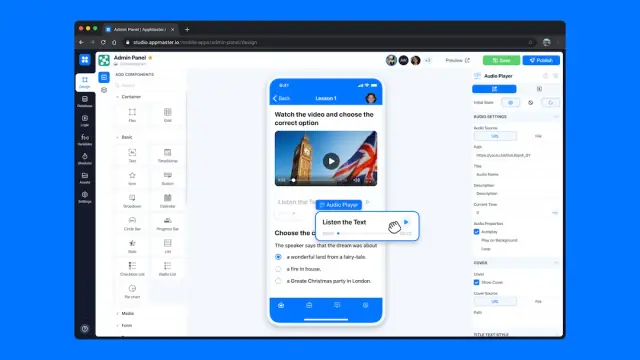
Your first project doesn't have to be a grand endeavor. Start with a simple app that serves a clear, yet impactful, purpose. This could be an app for tracking homework assignments or a resource repository for students. A successful small-scale project can build momentum and buy-in from stakeholders.
Collaboration is key in the education sector. Discuss your initiatives with fellow educators and IT staff. You might find that your colleagues have insight or can provide feedback to improve your app. Moreover, many platforms have their own communities where you can share ideas and get advice.
Once your app is in use, seek feedback from fellow educators and students. Use this information to make iterative improvements. With no-code solutions, updating your app can be done quickly and without lengthy development cycles.
After experiencing initial success and refining your app through several iterations, consider expanding its scope. This might mean adding new features, taking on more ambitious projects, or scaling up the number of users. Remember, scalability is one of the advantages of using platforms like AppMaster.
The power of no-code solutions is magnified when they work seamlessly with existing systems. Investigate how your platform can integrate with your institution's existing software. Many no-code platforms offer API connectivity, allowing easy data exchange between applications.
For your application to be successful, it's important that the end users - whether they be students, faculty, or staff - understand how to use it properly. Provide training sessions, create user guides, and offer support to ensure a smooth adoption process.
Finally, continuously monitor the performance and utility of your no-code solutions. Evaluation is an ongoing process that can help ensure your applications remain relevant, beneficial, and aligned with educational standards.
By following these practical steps, educators can not only take full advantage of no-code app development, but also pioneer innovative learning experiences that can evolve over time to better meet the demands of both teaching and learning.
Education is constantly evolving, responding to societal changes and technological advancements. One shift gaining momentum is the rise of student-created apps, a trend largely facilitated by no-code and low-code development platforms. These tools reshape how educators teach and students learn and express their creativity.
In the classroom ecosystems primed for the 21st century, we're witnessing a surge in technological literacy demands. Students today are not just passive recipients of information; they are innovators, creators, and problem-solvers. With apps creator software becoming readily accessible, the potential for a more interactive and individualized educational experience is vast and rich with possibilities.
Students using no-code platforms for app development embark on a journey that involves conceptual understanding, design thinking, and practical implementation. This experience promotes a deep understanding of the subject matter at hand, whether it be mathematics, science, humanities or arts. Integrating software development into the curriculum allows students to build tools that solve real-world problems, engage with their community, or enhance learning processes for themselves and their peers.
The implications of this trend are significant. It encourages a learning environment where students take ownership of their education. By directly engaging in the creation process, they can develop solutions tailored to their learning styles, addressing challenges they face firsthand. Moreover, student-created apps foster an entrepreneurial mindset, equipping learners with the skills to thrive in a rapidly digitalizing economy. As educators, promoting student agency in this way prepares younger generations for the intricacies of an increasingly complex and tech-centric world.
No-code platforms, such as AppMaster, are instrumental in this educational evolution. They provide the stepping stones for students to leap from consumers to creators without the barrier of needing to know complex coding languages. With intuitive interfaces, drag-and-drop functionalities, and comprehensive guidance, these no-code solutions democratize app development and invite students of all backgrounds to participate in technological creation.
Looking to the future, we can anticipate curriculums integrating app creation projects, coding clubs focusing on no-code development, and competitions inspiring innovation beyond traditional academic confines. The focus shifts from merely using technology to understanding and molding it to one's needs. This revolution is much more than teaching students to use software; it's about nurturing critical thinkers, skillful communicators, and adaptive individuals who can leverage technology to carve out a path for themselves and societal advancement.
As education continues to infuse technology into its practices, the partnership with no-code platforms will become a cornerstone of learning. By enabling this partnership, institutions stand to redefine the educational paradigm to one that is truly interactive, responsive, and future-ready. The rise of student-created apps is not just a trend but a transformative movement toward an empowered and adept generation capable of tackling the challenges and harnessing tomorrow's opportunities.
Turning the page on traditional educational software development, AppMaster, a no-code platform, is revolutionizing how educational apps are created and integrated into the learning environment. AppMaster enables educators to craft customized applications that support their unique curriculum and administrative needs by providing a user-friendly interface and powerful tools. The impact of AppMaster on education stretches from the classroom to the administration office, underscoring the versatility and potential that such software holds for the sector.
The contribution of AppMaster to educational software development is clear. It simplifies complex processes, brings efficiency to administrative duties, invigorates the learning experience, and equips future generations with necessary technological skills. Through its no-code offering, AppMaster is actively participating in transforming education, making it more dynamic, accessible, and tailored to the digital era. By leveraging such platforms, educators and students are positioned at the forefront of innovative learning and operational excellence.
As educational needs continue to evolve, platforms like AppMaster will pave the way for a more cohesive, interactive, and efficient approach to software development in the academic sphere. With these tools, educators and learners can expect a smoother and more enriched journey through the ever-changing education technology sphere.
 How can no-code platforms benefit educators and students?
No-code platforms can empower educators to create custom software solutions without needing deep technical expertise. This democratizes the development process, enabling teachers to design applications that cater to their pedagogical needs. Students can also use these platforms to build their projects, enhancing their problem-solving and critical thinking skills.
What are some examples of applications created with no-code tools in education?Examples may include interactive learning modules, student management systems, e-learning platforms, and custom applications for classroom engagement or tracking academic progress.
How do no-code platforms ensure the educational apps meet institutional standards?No-code platforms like AppMaster typically allow educators to define custom data models and logic, which help align the created applications with institutional standards. Plus, they generate comprehensive documentation and allow for granular control over the app's functionality.
Can educational institutions integrate these apps with existing data systems?Yes, most no-code platforms provide API integrations that facilitate seamless connections between newly created apps and existing educational databases, student information systems, and other software tools.
Are there any case studies of successful no-code app deployments in education?There are numerous instances where educational institutions have successfully implemented no-code solutions. These case studies illustrate increased efficiency in administrative tasks, improved student engagement, and the facilitation of remote learning.
What skills do educators need to create their own educational apps using no-code platforms?Educators typically need basic technical literacy to navigate no-code platforms effectively. Understanding the logical flow of application functionality, as well as being able to conceptualize the end-user experience, is also important.
What future trends are anticipated in the use of no-code app development in education?It is anticipated that there will be an increase in the use of no-code app development by students as a learning tool and for personal projects. Integration of AI and machine learning within these platforms is also expected to grow, offering more advanced capabilities in educational app development.
How does AppMaster facilitate the development of educational software?AppMaster offers a comprehensive no-code platform that provides educators the tools to create backend, web, and mobile applications tailored for educational purposes. It streamlines the development process, making it faster and more cost-effective to build custom software solutions.
Can no-code app development improve productivity in educational administrative tasks?Yes, by automating routine tasks and streamlining processes, no-code apps can significantly improve productivity in educational administration, allowing institutions to focus more on teaching and learning outcomes.
What considerations should educators keep in mind when choosing a no-code platform?Educators should consider the platform's ease of use, flexibility in design, scalability, compatibility with existing systems, and the support provided for deploying and maintaining applications.
Is it possible for educators to prototype apps with no-code tools before full deployment?Yes, no-code platforms often provide an environment where educators can prototype and test applications before a full-scale deployment, ensuring the app meets its intended purpose and is user-friendly.
Do no-code platforms require ongoing maintenance for the apps created?While no-code platforms simplify the maintenance process, regular updates may still be needed to ensure the app stays current with educational needs and technological advancements.
Experiment with AppMaster with free plan.
When you will be ready you can choose the proper subscription.
 Jul 14, 20268 min
 Jul 13, 20268 min
 Jul 08, 20268 min