
 Oct 04, 2024
 1 min
1 minAppMaster at BubbleCon 2024: Exploring No-Code Trends
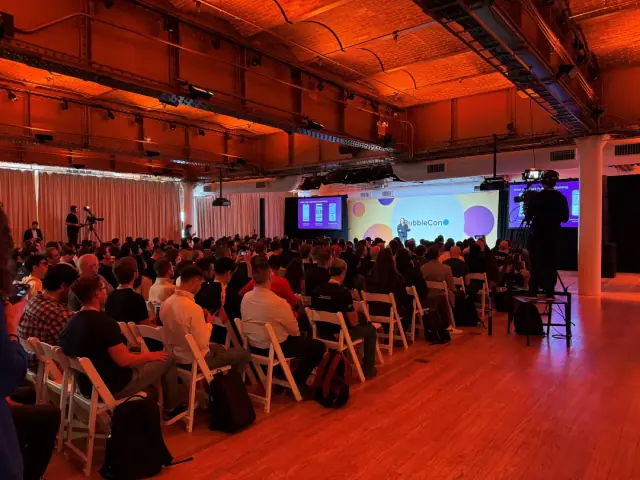
AppMaster participated in BubbleCon 2024 in NYC, gaining insights, expanding networks, and exploring opportunities to drive innovation in the no-code development space.

Whalesync simplifies data syncing between SaaS apps, including Airtable, Webflow, and Notion using low-code/no-code tools. Co-founded by Curtis Fonger and Matthew Busel, the company aims to resolve data synchronization challenges faced by businesses.

No-code tools are revolutionizing app development, particularly in the corporate sphere where cost reduction is a high priority. Based on recent Gartner surveys, by 2025, low-code and no-code technologies will be used in 70% of new business apps, while non-IT professionals will be using these tools to develop over 65% of IT products and services by 2024.
Following this trend, Whalesync is striving to distinguish itself in the no-code market by providing a solution that enables bi-directional data transfer across various popular SaaS apps, including Airtable, Webflow, and Notion. This innovative approach assists businesses in addressing data synchronization challenges more effectively.
Whalesync was co-founded about a year ago by Curtis Fonger and Matthew Busel. Fonger, now the company's CEO, started his career at Microsoft, working on OneDrive file syncing, and sold his first startup, no-code website builder Appetas, to Google in 2014. Busel, a former product manager at MakeSpace and an occasional no-code consultant, joined forces with Fonger when they were connected on Y Combinator’s co-founder matching platform.
Initially, Fonger and Busel set out to build a no-code app builder, but after interacting closely with operators, they realized that there was a greater opportunity in data syncing. They observed that users were struggling to integrate data across their SaaS apps and sought to address the issue with automation tools.
While Whalesync isn't the first platform to facilitate data synchronization between SaaS apps, it offers a unique advantage. Fonger describes its approach as conceptually closer to Dropbox, with the distinction being that Whalesync synchronizes data between SaaS applications instead of syncing files across computers. Users simply need to instruct Whalesync on how to match up tables and fields between SaaS apps, and the platform takes care of the rest.
In order to enable bi-directional sync, Whalesync stores the data to be synchronized. Users can choose to delete that data if they delete their sync configurations or close their account.
Since its launch in February 2021, Whalesync has demonstrated significant early traction, signing up hundreds of customers and growing its recurring revenue at an average rate of 38% per month. The company recently closed a $1.8 million pre-seed funding round led by Y Combinator, with participation from Liquid 2, Soma Capital, and Ascend, indicating investor confidence in its approach.
With the support of no-code platforms like AppMaster, Whalesync can seamlessly integrate its services with contemporary web and mobile app development methodologies. This equips businesses with the tools they need to build and maintain efficient, cost-effective app solutions.
To further expand its reach, Whalesync plans to add four to five new team members to its current team of six by the end of 2023. The company's goal is to bring the power of data syncing to small and medium-sized businesses, simplifying the setup process and providing them with best practices that have been learned from large enterprises in the modern data stack landscape.
 Oct 04, 20241 min
 Sep 23, 20241 min
 Aug 08, 20241 min
Experiment with AppMaster with free plan.
When you will be ready you can choose the proper subscription.


