
 Oct 04, 2024
 1 min
1 minAppMaster at BubbleCon 2024: Exploring No-Code Trends
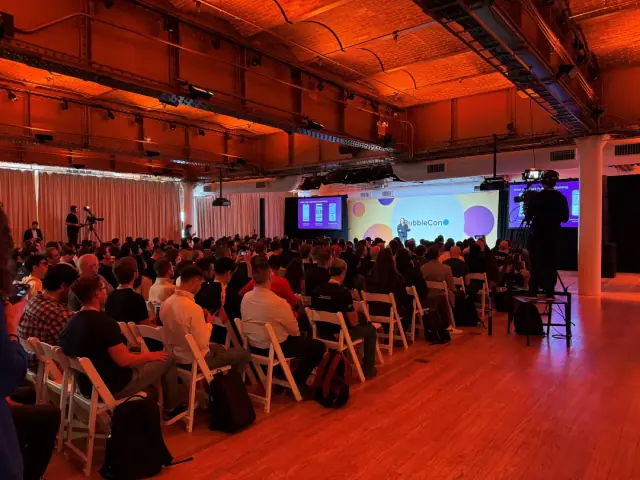
AppMaster participated in BubbleCon 2024 in NYC, gaining insights, expanding networks, and exploring opportunities to drive innovation in the no-code development space.

A closer look at the recent launch of Google's new AI, Gemini, exposes certain presuppositions in the promotional materials.
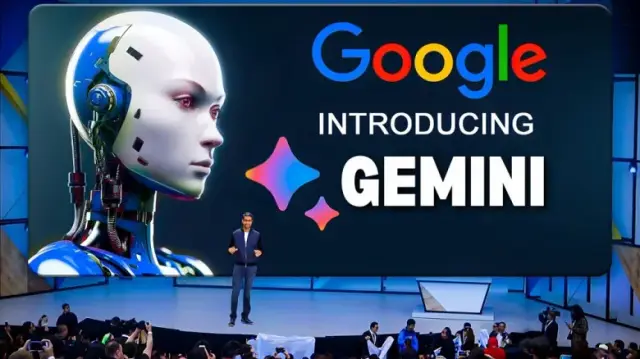
In a recent media announcement, Google proudly unveiled its latest artificial intelligence known as Gemini, an event that was much anticipated in the tech community. Soon after, however, claims surfaced accusing Google of overstating Gemini's capabilities, specifically in a display video that was part of the announcement.
According to a scathing opinion piece by Bloomberg columnist Parmy Olson, the video released by Google creates an illusion of Gemini's functionality that might be too good to be true. She contends that Google's portrayal of Gemini's multimodal operations, which interlink spoken dialogue commands with image recognition, could be exaggerated.
The controversial video, which spans slightly over six minutes, visualizes Gemini identifying images instantly, even in connect-the-dots drawings, thus offering prompt responses. Additionally, Gemini is shown tracking a paper wad during a real-time cup and ball game.
However, an important caveat is hidden in the video's description on YouTube: Gemini's output latency in the demo had been minimized, and the responses shortened for clearness - facts that stirred Olson's indignation. Citing a response from Google, Olson reported in her Bloomberg piece that the demo in the video was not real-time as insinuated, but rather used static image frames extracted from raw footage, while Gemini's reactions corresponded to pre-written text prompts. Olson asserts that this is quite disparate from Google’s intimation of a smooth voice interaction with Gemini, capable of real-time responses to its environment.
She goes even further to suggest that Google might be 'showboating' with Gemini to divert attention from how it lags behind OpenAI’s GPT, the intelligence-based platform.
When The Verge approached Google regarding the authenticity of the demo, the tech giant referenced a post from Oriol Vinyals, who is the DeepMind's Vice President of Research and Deep Learning Lead and also the co-lead for Gemini at Google. He clarified that all user prompts and outputs in the video are legitimate, although abbreviated for briefness. He went on to express that the video was created to demonstrate what the end-user experiences could look like when using the multimodal features of Gemini, and its primary objective was to inspire developers.
Vinyals reiterated that the team had furnished Gemini with images and texts and prompted it to respond by anticipating ensuing outputs.
Even as we ponder on this controversy, the concept of combining spoken commands with image recognition, as illustrated in Google’s Gemini, offers a new paradigm of interaction that will be enticing to developers. Tools like AppMaster's no-code platform might provide a foundation for integrating such innovations into comprehensive application development, offering compelling solutions that can seamlessly mesh with the evolving technological trends.
 Oct 04, 20241 min
 Sep 23, 20241 min
 Aug 08, 20241 min
Experiment with AppMaster with free plan.
When you will be ready you can choose the proper subscription.


