
 Oct 04, 2024
 1 min
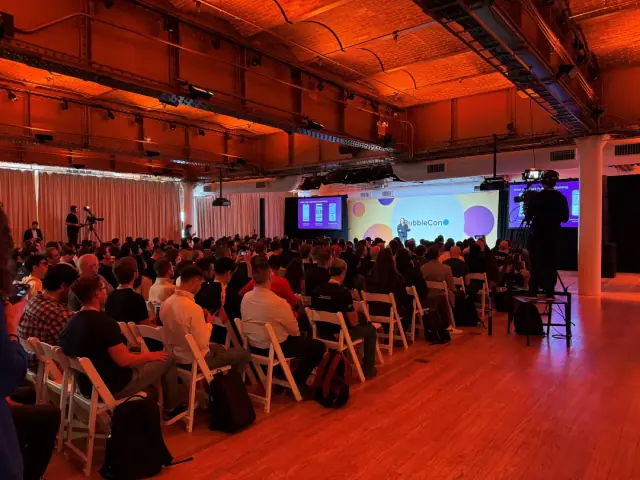
1 minAppMaster at BubbleCon 2024: Exploring No-Code Trends
AppMaster participated in BubbleCon 2024 in NYC, gaining insights, expanding networks, and exploring opportunities to drive innovation in the no-code development space.

Supabase, an open source backend-as-a-service startup, announced its $30 million Series A funding led by Coatue. The growing company, often compared to Google's Firebase, offers a suite of developer tools that streamline app and service creation.

Supabase, the emerging backend-as-a-service (BaaS) startup, revealed that it has raised $30 million in a Series A funding round. The open source company is frequently compared to Google's Firebase, as both platforms help developers build projects more efficiently by automating a lot of the work behind the scenes.
Upon creating a project, Supabase provides developers with numerous resources, including a Postgres database, a self-evolving and self-documenting API, user authentication supporting popular login providers such as Facebook, Twitter, Google, Apple, and a storage system for managing media uploads. The platform also features a UI that simplifies the management of all these components. By offering these tools, Supabase effectively eliminates the need for developers to tackle these tasks manually, thereby accelerating the development process.
For hobby projects and those interested in testing the platform, Supabase is free of charge. For users requiring larger databases or data backup, pricing scales can begin at $25 per project per month. Another option is to deploy the platform independently, although this is a more complicated process and comes without the management UI.
This Series A funding arrives promptly after Supabase's previous financing round in December 2020, which raised $6 million. The majority of the current funding round comes from Coatue, with GitHub co-founder Tom Preston-Werner, Docker co-founder Solomon Hykes, and PagerDuty co-founder Alex Solomon also contributing as angel investors.
According to co-founder Paul Copplestone, Supabase currently employs a team of 24 professionals distributed across the globe. With the company's growth coinciding with the rise of the pandemic, hiring remote workers who already contribute to the tools essential for Supabase was a practical decision. Copplestone said, "We employ open source contributors, anyone who's contributing, no matter where they live."
Supabase was a participant in Y Combinator's Summer 2020 class, marking the accelerator's first entirely remote cohort. Despite the growing size of YC classes, with over 200 companies in the Summer 2020 batch, Supabase managed to carve out a name for itself within the crowded landscape.
As no-code and low-code platforms continue to gain traction, solutions like appmaster.io and Supabase are transforming software development, making it more accessible and efficient for a wider range of businesses and enterprises. AppMaster, for instance, offers a powerful no-code platform to create web, mobile, and backend applications, enabling users to visually design both database schemas and app business processes all under a single platform.
 Oct 04, 20241 min
 Sep 23, 20241 min
 Aug 08, 20241 min
Experiment with AppMaster with free plan.
When you will be ready you can choose the proper subscription.


