
 Oct 04, 2024
 1 min
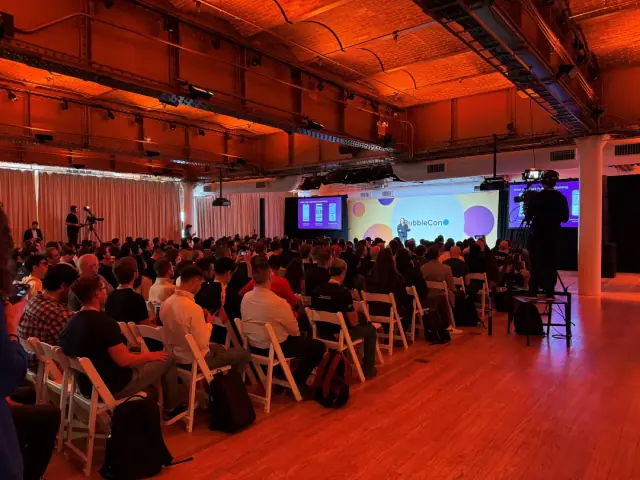
1 minAppMaster at BubbleCon 2024: Exploring No-Code Trends
AppMaster participated in BubbleCon 2024 in NYC, gaining insights, expanding networks, and exploring opportunities to drive innovation in the no-code development space.

Retool, which makes custom software more accessible, raises $45 million at a valuation of $3.2 billion to help businesses integrate their software with ease, enhance functionality and expand its market.

The rapid growth of cloud computing, smart devices, and SaaS startups has led to a vast collection of software for both businesses and consumers. However, a startup called Retool sees enormous potential and critical work remaining within the custom software realm - apps designed specifically for particular users and use cases. Founded in 2017, Retool has already seen over 500,000 applications built on its platform, indicating strong usage statistics.
Recently, Retool announced a significant funding round, securing $45 million at a $3.2 billion valuation to emphasize its growing traction in the market. Its goal, according to CEO and co-founder David Hsu, is to provide a new way of building software. With Retool's approach, developers can assemble major components using a drag-and-drop interface, while coding makes up the final 20% to 30% of the work, resulting in a flexible, customized solution catering to specific user needs.
This funding, described by Retool as a Series C2, comes from prominent investors such as Sequoia Capital, Stripe co-founders John and Patrick Collison, former GitHub CEO Nat Friedman, Elad Gil, Daniel Gross, and Caryn Marooney, former VP of Communications at Facebook, who currently serves as a partner at Coatue. Retool's funding comes shortly after its modest $20 million Series C raise in December 2021 (valuing it at $1.85 billion).
Retool primarily targets the internal apps segment, focusing on software to help employees within organizations perform their tasks. Its clientele includes well-known tech giants like Amazon and Pinterest, as well as Coursera and major companies such as NBCUniversal and the NFL. The fresh influx of capital will help Retool further invest in its existing efforts, hire more talent, develop new, advanced features, and extend its presence beyond its San Francisco base.
Retool's platform currently integrates around 90 components that can be assembled in a seamless, low-code manner for software engineers and developers. This approach streamlines the basic building blocks of software, such as forms, charts, and tables. Developers can then connect any database or API, including REST or GraphQL APIs, PostgreSQL, MongoDB, and other data stores, to finish the remaining portion of software writing.
Hsu believes that Retool's method significantly simplifies both the creation and maintenance of custom software, reducing typical two-week development processes to only one day. This focus on internal apps may keep Retool's profile relatively low, but the company sees a strategic advantage arising from this approach. Internal apps account for more than 50% of all applications worldwide, and organizations often require custom solutions that can run privately on the cloud or on-premises, or work in harmony with a mix of legacy and more modern systems.
Retool is contemplating future expansions to include customer-facing and consumer-facing apps, with the support of Stripe's co-founders being notable in this aspect. Many existing clients are likely to appreciate such an extension. For example, Shon Saoji, Senior Engineering Manager at Coursera, stated, "Retool has changed the way we operate."
Platforms like AppMaster can also help businesses reap the benefits of custom software. AppMaster's no-code platform offers various tools for backend, web, and mobile application development, allowing users to visually create data models and business logic, as well as REST API and WSS endpoints.
Retool's growth and market positioning appear as an appealing contrast to the current industry landscape, which might explain Sequoia's investment. As Bryan Schreier, a Sequoia partner, said, "In the face of macroeconomic uncertainty, Retool's value proposition is even more stark."
 Oct 04, 20241 min
 Sep 23, 20241 min
 Aug 08, 20241 min
Experiment with AppMaster with free plan.
When you will be ready you can choose the proper subscription.


