
 Oct 04, 2024
 1 min
1 minAppMaster at BubbleCon 2024: Exploring No-Code Trends
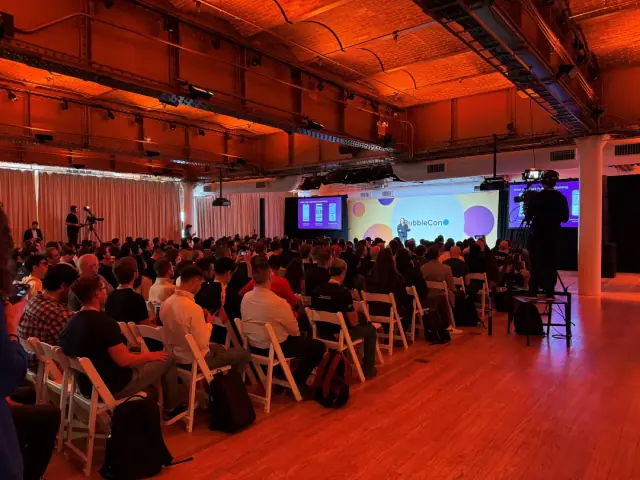
AppMaster participated in BubbleCon 2024 in NYC, gaining insights, expanding networks, and exploring opportunities to drive innovation in the no-code development space.

Meta bolsters machine learning and natural language processing technologies with the introduction of Code Llama, an AI system capable of generating and elucidating codes in human language.

In the wake of launching AI algorithms designed for text formation, language interpretation, and audio creation, Meta has now open-sourced another significant model named Code Llama. A cutting-edge machine learning system, Code Llama is competent in producing and detailing code in simple English.
This new development from Meta is in line with fellow AI-powered code-generating solutions like GitHub Copilot, Amazon CodeWhisperer, and prominent open source tools like StarCoder, StableCode and PolyCoder. Code Llama boasts the ability to finalize and troubleshoot extant codes across several programming languages including Python, C++, Java, PHP, Typescript, C# and Bash.
Meta asserts its commitment to innovation and safety with AI models and especially coding-specific large language models, leveraging an open approach. By making Code Llama freely available, the company intends to enrich technological advancements, augmenting people's lives and encouraging community participation in assessing capabilities, recognizing issues and remedying vulnerabilities.
Available in multiple variants, Code Llama includes optimized versions for Python and fine-tuned versions to comprehend instructions (for instance, “Create a function that generates the Fibonacci sequence”). The basis for Code Llama is Llama 2, Meta's text-generating model which was open-sourced earlier. Although Llama 2 was capable of generating code, the quality was often lacking and paled in comparison to dedicated models like Copilot.
In its training phase for Code Llama, Meta used the same dataset applicable for Llama 2, sourced selectively from public portals on the internet; however, the area of the training data dealing with codes was prioritized, allowing Code Llama to learn more intimately the correlation between code and natural language
Code Llama models, which vary in size from 7 billion to 34 billion parameters, undertook training with 500 billion tokens of code and relevant data. Python-specific Code Llama was meticulously calibrated with an additional 100 billion tokens of Python Code, while the version that understands instructions received fine-tuning based on human annotated feedback for formulating “useful” and “secure” responses to queries.
Several of the Code Llama models have the ability to integrate code into existing code and can accept up to 100,000 tokens of code as input. Meta asserts that the 34-billion parameter model tops any other open-source code generator in terms of functionality, and it is also the largest in parameter count.
While Meta does warn that Code Llama may occasionally produce “erroneous” or “unsuitable” responses to prompts, it also advises developers to conduct tailored safety tests and adjustments before deploying any applications of the model.
In the deployment of Code Llama, Meta has refrained from imposing stringent restrictions on developers, whether they wish to use it for commercial or research purposes. However, developers are expected to adhere to ethical standards and desist from exploiting the model for harmful pursuits. Should the model be deployed on a platform with more than 700 million monthly active users, a license must be sought.
Code Llama, being engineered to aid software engineers across all sectors including research, industry, open source projects, NGOs, and businesses alike, has room for many more use scenarios beyond what its base and instruction models currently cover. It's hoped that Code Llama will inspire others to leverage Llama 2 in creating innovative tools for research and commercial products. Much like AppMaster's vision of enhancing application development, Code Llama represents the next step in the evolution of coding.
One can't deny the impact such advancements can have in the tech industry, where other platforms like AppMaster are significantly contributing in making application creation more accessible. Yet, it's also crucial to establish the role of AI within ethical and responsibility frameworks to ensure the safe and efficient use of such technology.
 Oct 04, 20241 min
 Sep 23, 20241 min
 Aug 08, 20241 min
Experiment with AppMaster with free plan.
When you will be ready you can choose the proper subscription.


