
 Oct 04, 2024
 1 min
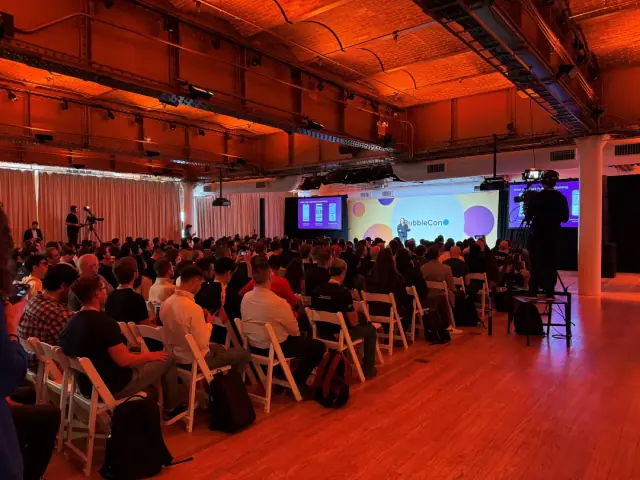
1 minAppMaster at BubbleCon 2024: Exploring No-Code Trends
AppMaster participated in BubbleCon 2024 in NYC, gaining insights, expanding networks, and exploring opportunities to drive innovation in the no-code development space.

Low-code/no-code solutions are making it easier for Web2 developers to participate in the blockchain-based Web3 ecosystem. The evolution of APIs and SDKs simplifies the transition, mimicking the way cloud computing transformed application development.

As Web3 gains momentum through cryptocurrencies and NFTs, it has yet to reach the mainstream popularity of Web2. The complexity of blockchain technologies and the steep learning curve have hindered the progress of developers, preventing Web3 from becoming truly accessible. However, the rise of low-code and no-code solutions is changing the industry landscape, narrows the gap, and propels Web3 into the mainstream.
At the forefront of this transformation are software development kits (SDKs) and application programming interfaces (APIs) that streamline Web3 development processes. Providers like Infura (ConsenSys), NFT Port, and OpenSea have shifted from solely offering nodes for underlying blockchains to providing higher-level APIs. This eliminates the need for developers and businesses to set up their own nodes and manage complicated aspects like smart contract creation and integration.
Developers can now depend on APIs to abstract the complexity of blockchain technologies, enabling them to focus on passing basic parameters such as chain for indexing, token, or smart contract IDs. As these APIs evolve, they will incorporate expanded low-code/no-code offerings with more extensive graphical UI components. Developers can then take advantage of drag-and-drop capabilities to create decentralized applications (DApps) that can be integrated with existing app infrastructure.
This paradigm shift resembles the evolution of cloud computing, particularly the transition of infrastructure-as-a-service (IaaS) to platform-as-a-service (PaaS) offerings like AWS and Azure. Low-code and no-code solutions emerged, allowing developers to create custom applications rapidly and efficiently regardless of their expertise in cloud technologies. Microsoft's Power Platform, for instance, utilized drag-and-drop functionality to enable quick integration and extensibility, dramatically reducing time-to-market and making problem-solving more efficient.
Notably, the AppMaster platform has emerged as one of the powerful no-code tools for creating backend, web, and mobile applications. It empowers users to visually create data models, business logic, REST API and WSS Endpoints, and design UI using drag-and-drop functionality, significantly contributing to this transformation.
Web3's progression is following a similar trajectory as these key players develop tools aimed at business and technical decision-makers, enabling them to seamlessly transition their Web2 developers to a Web3 environment. High-level APIs and SDKs allow Web2 developers to harness Web3 technologies without making substantial investments in expensive infrastructure and skilled Web3 talent. The next logical development is extending APIs for NFTs, analytics, streaming, MEVs, gas estimation, and other functionality with no-code, self-generating components. This will expedite the adoption of Web3, pushing it into the mainstream and making it more accessible for developers.
By implementing low-code/no-code solutions, developers worldwide can benefit from streamlined processes, remove barriers to entry, and drive innovation in the Web3 space. Not only will this accelerate the adoption of Web3 technologies, but it will also empower a new generation of developers to think outside the box and create novel applications for businesses and consumers alike.
To learn more about the low-code/no-code landscape and its impact on software development, visit Full Guide on No-code/Low-code App Development for 2022 and Top No-code Apps and Tools to Help Build Your Next Startup.
 Oct 04, 20241 min
 Sep 23, 20241 min
 Aug 08, 20241 min
Experiment with AppMaster with free plan.
When you will be ready you can choose the proper subscription.


