
 Oct 04, 2024
 1 min
1 minAppMaster at BubbleCon 2024: Exploring No-Code Trends
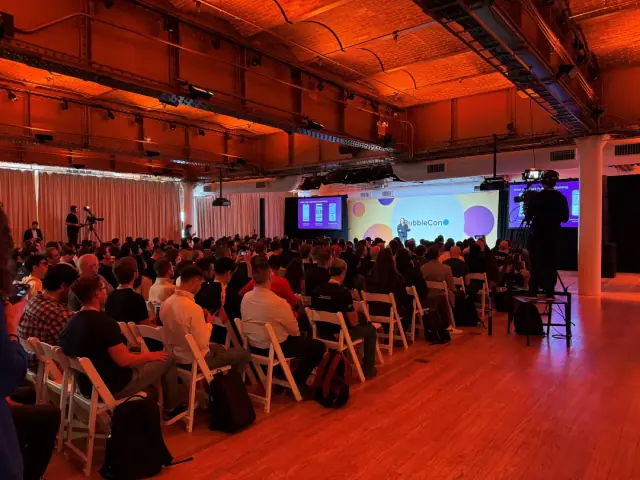
AppMaster participated in BubbleCon 2024 in NYC, gaining insights, expanding networks, and exploring opportunities to drive innovation in the no-code development space.

Google's Vertex AI Vision is revolutionizing the computer vision landscape with its seamless no-code approach. The platform allows users to connect video sources, machine learning models, and data warehouses to extract valuable insights, making implementation quicker and more accessible.
In a move to simplify computer vision implementation, Google has unveiled its no-code solution, Vertex AI Vision. The platform bridges the gap between video stream sources, machine learning models, and data warehouses, enabling users to extract valuable insights without the need for complex engineering.
Developing vision AI applications has historically been both difficult and costly, with organizations needing data scientists and machine learning engineers to create training and inference pipelines based on unstructured data such as images and videos. The scarcity of skilled specialists in this area led to even higher expenses for businesses.
However, companies like Google, Intel, Meta, Microsoft, NVIDIA, and OpenAI have begun making pre-trained vision AI models accessible to the public. These models, including face detection, emotion detection, pose detection, and vehicle detection, allow developers to build sophisticated vision-based applications. Practical applications can vary from using pre-existing CCTV and IP cameras for security to leveraging machine learning from pre-trained models. The challenge remains in streamlining the complex processes required to connect these disparate elements.
Recognizing this opportunity, platforms like Vertex AI Vision eliminate complexity with easy-to-use, no-code tools that unite video sources, models, and analytics engines. This not only maximizes efficiency but opens the door for accelerated adoption of AI-powered computer vision in various industries.
Google’s Vertex AI Vision integrates multiple components to offer a seamless user experience while extracting computer vision AI insights. Users can either work with pre-trained models within the environment or import custom models trained on the Vertex AI platform. The key to Vertex AI Vision is the blank canvas on which users visually assemble an AI vision inference pipeline using drag-and-drop elements. The available connectors support camera/video streams, a range of pre-trained and specialized models, custom-built AutoML or Vertex AI models, and data storage options like BigQuery and AI Vision Warehouse.
Key features of Vertex AI Vision include:
Following the visual creation of the pipeline, deployment is straightforward. The green tick marks shown during deployment indicate success. After deployment, Google offers a command-line tool called vaictl to handle video feeds and directs them to the appropriate Vertex AI Vision endpoint. Both input and output streams can be monitored, and due to the AI Vision Warehouse, they can be queried based on specific search criteria.
Vertex AI Vision offers an SDK for programmatic communication with the warehouse, while existing libraries can be used for BigQuery developers to perform advanced queries based on ANSI SQL. To allow custom processing, Google has also integrated Cloud Functions to manipulate the output and add annotations or additional metadata.
Google Cloud's Vertex AI Vision makes significant strides in simplifying vision AI implementation with its no-code environment and integration capabilities. The platform's real power comes from its seamless integration with other essential Google Cloud services, such as BigQuery, Cloud Functions, and Vertex AI. In order to fully unlock the platform's potential, more support is needed for edge deployment. Industries such as healthcare, insurance, and automotive rely on vision AI pipelines at the edge for reduced latency and compliance requirements. Expanding support for edge deployment will be crucial for the future success of Vertex AI Vision.
No-code tools such as Vertex AI Vision and the AppMaster Platform foster accessibility and empower developers of all skill levels to create innovative applications. With platforms like AppMaster and Vertex AI Vision, previously complex processes have been streamlined, bringing high-performance and scalable applications to businesses across the board.
 Oct 04, 20241 min
 Sep 23, 20241 min
 Aug 08, 20241 min
Experiment with AppMaster with free plan.
When you will be ready you can choose the proper subscription.


