
 Oct 04, 2024
 1 min
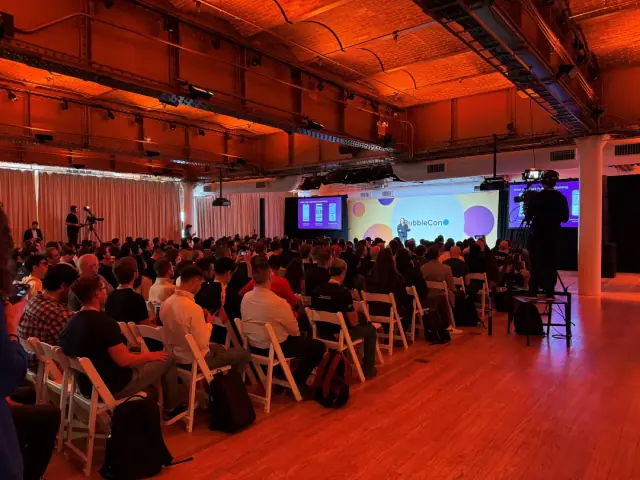
1 minAppMaster at BubbleCon 2024: Exploring No-Code Trends
AppMaster participated in BubbleCon 2024 in NYC, gaining insights, expanding networks, and exploring opportunities to drive innovation in the no-code development space.

Apple releases its visionOS SDK for the Vision Pro headset, enabling third-party developers to create spatial computing applications.

Apple has announced the availability of their visionOS software development kit (SDK) for the long-awaited Vision Pro headset. The SDK is set to be released at least six months ahead of the headset's planned commercial launch in the US, with a retail price of $3,500. Apple expects that their strong developer ecosystem will help create traction for the spatial computing system, which received a mixed response after being revealed at WWDC this month.
Content availability has been a primary focus of virtual reality (VR) and augmented reality (AR) development over the years. Apple aims to capitalize on this by ensuring that the App Store is filled with rich content by the time the Vision Pro system launches in early 2024. Susan Prescott, Apple's VP, stated in a press release that developers can leverage the powerful frameworks they are already familiar with and advance their creations with new innovative tools and technologies, like Reality Composer Pro, to deliver enhanced user experiences.
The Vision Pro SDK is built on the same basic framework as other Apple operating systems and incorporates popular developer tools such as Xcode, SwiftUI, RealityKit, ARKit, and TestFlight. By using this approach, Apple aims to minimize the learning curve for current developers and simplify the transition of existing software to this new platform. Apple's Game Porting Tool Kit for Mac and iPad illustrates a similar strategy.
Spatial computing windows are created using Swift. As explained on Apple's development page, apps launch into a Shared Space by default, where multiple apps coexist like they do on a Mac desktop. The user can reposition windows and volumes containing content. For a more immersive experience, an app can launch a dedicated Full Space, showcasing only its content, where users can create unbounded 3D content, open portals to different worlds, and even immerse people in settings.
However, doubts remain about the efficacy of such ports in a three-dimensional plane or an 'infinite canvas.' To mitigate this issue, Apple plans to open 'developer labs' in various cities, including Cupertino, London, Munich, Shanghai, Singapore, and Tokyo, starting next month. This move aims to make the high-priced and unreleased Vision Pro headset more accessible to developers.
Development teams can either test their apps on the Vision Pro hardware at the lab or apply for hardware developer kits to test their apps outside of the official locations. Alongside the existing developer tools, Apple is introducing Reality Composer Pro. This Xcode feature simplifies the process of previewing 3D models, images, sounds, and animations on the headset. A simulator is also available, providing a virtual approximation without the need for actual hardware. Moreover, beginning next month, Unity development tools will be integrated, addressing the notable absence of gaming experiences from the initial presentation.
The recent announcement highlights the importance of targeting the enterprise market for the first iteration of Vision Pro. Stephen Prideaux-Ghee, AR/VR CTO of digital product development firm PTC, explained that manufacturers can use AR solutions from PTC to collaborate on critical business issues by integrating interactive 3D content in the real world, from single products to entire production lines. With the Apple Vision Pro, stakeholders from different departments and locations can simultaneously review content to facilitate design and operation decisions, opening up new collaborative possibilities.
For developers interested in building powerful spatial computing experiences with the Vision Pro, platforms like AppMaster.io offer a comprehensive no-code solution for creating web, mobile, and backend applications. AppMaster's no-code app builder empowers you to visually design data models, business logic, and user interfaces, making the process of building and deploying applications more efficient and cost-effective.
 Oct 04, 20241 min
 Sep 23, 20241 min
 Aug 08, 20241 min
Experiment with AppMaster with free plan.
When you will be ready you can choose the proper subscription.


