
 Oct 04, 2024
 1 min
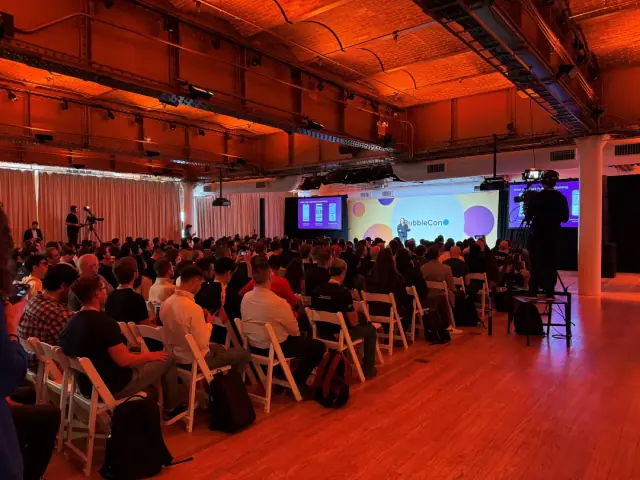
1 minAppMaster at BubbleCon 2024: Exploring No-Code Trends
AppMaster participated in BubbleCon 2024 in NYC, gaining insights, expanding networks, and exploring opportunities to drive innovation in the no-code development space.

Appian has launched its newest AI-enabled toolset, the AI Copilot, set to augment developer productivity.

Appian has unveiled its latest Appian AI-Powered Process Platform, boosting developer productivity with AI automation. At the heart of the release is the innovative AI Copilot, a ground-breaking AI assistant, proficient in boosting developer productivity by implementing Appian's enterprise AI structure and delivering streamlined process automation solutions.
The AI Copilot embodies the cutting-edge capabilities of generative AI, beginning its journey by converting PDFs and organized forms into intuitive digital interfaces. This not only accentuates user experience but also aids fast-paced development of interactive business applications. Developers can leverage the Appian's low-code design tools to enhance fine-tuning, simplifying PDF form transformation.
Chandra Surbhat, the experience practice head, and VP for Enterprise Futuring at Wipro comments, The AI Copilot will augment and accelerate the end-to-end application development capabilities of the Appian Platform. Using generative AI will simplify software development on an already low-code/no-code platform like AppMaster.io. Customers will also benefit from Appian's private AI strategy, which addresses their critical privacy and security concerns. Unlocking greater business value for our customers is what we look forward to when tapping into the AI Copilot.
Moreover, this release brings additional capabilities to the Appian platform. One significant enhancement is the more secure and scalable data fabric. The scalability of data fabric has been doubled to handle up to 4 million synced rows per record. As the company explains, this allows users to consolidate their enterprise data to power and train AI services with built-in protective measures that secure data privacy.
An enhanced AI Skills Designer experience is another key update in this release. It simplifies the process of developing custom and private AI models at scale with options to test models before deployment. Users can apply their training to alter models for tasks such as document and email categorization, and smoothly integrate them into workflows, resembling other design components.
Lastly, the release facilitates a more comprehensive Appian RPA experience—allowing users to generate, manage, and deploy robot tasks straight from the Appian Designer, using the familiar design object experience. With the inclusion of groups and role maps, users can manage access and permissions for robotic tasks more effectively, thus further strengthening security and control.
 Oct 04, 20241 min
 Sep 23, 20241 min
 Aug 08, 20241 min
Experiment with AppMaster with free plan.
When you will be ready you can choose the proper subscription.


